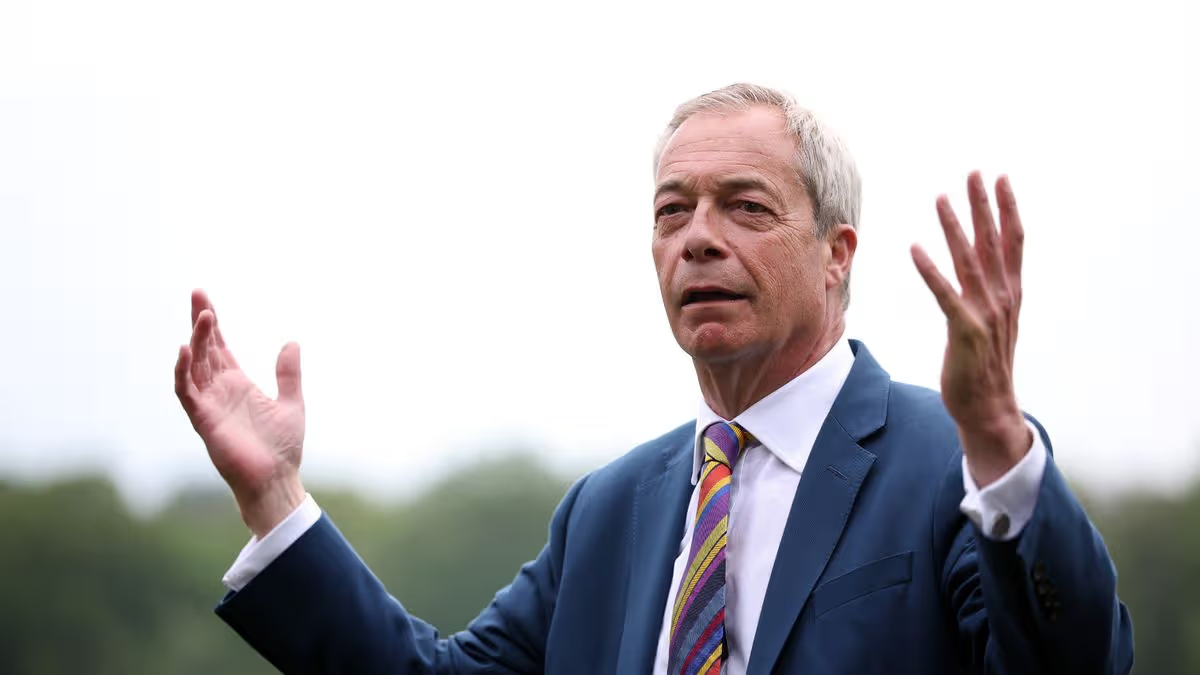



In the complex and fragmented political landscape of modern Britain, the recent local and devolved elections have delivered a tapestry of results that defy simple narratives. With five significant parties competing in England, and six each in Wales and Scotland, the traditional two-party, winner-takes-all system is under extraordinary strain. While Nigel Farage’s Reform UK has emerged with the largest share of the minority vote, this moment of apparent strength is riddled with profound and telling weaknesses. The backslapping and triumphalism within Reform circles cannot mask a critical reality: their projected national vote share has actually fallen by five percentage points to 27% compared to the previous year. This decline, identified by political analysts, should sound general election alarm bells for Farage, even as his party celebrates gaining over 1,400 council seats and claiming symbolic victories in places like Sunderland. The underlying numbers suggest not a bandwagon gathering unstoppable momentum, but a movement that may have already peaked, revealing a ceiling of support that sits well below what is needed to secure real power.
Behind this statistical dip lies a deeper vulnerability for Reform. The party, funded by controversial sources and led by a wealthy elite, faces growing public scrutiny over its financial dealings, broken local promises, and the extreme rhetoric of some within its ranks. This has sparked revulsion among a decent majority of voters, creating a natural barrier to broader appeal. Furthermore, as former Labour deputy leader Tom Watson astutely observes, a general election would likely transform into a ‘Stop Farage’ contest, galvanising tactical voting across the political spectrum. In such a scenario, Reform’s 27% national vote share would not translate into a parliamentary majority. Expert extrapolations from the local results suggest a nation more polarized than during the Brexit referendum, with 51% of voters leaning towards left and centre-left parties (Labour, Greens, Lib Dems) and 43% leaning right (Reform and Conservatives)—a split that charts a path not to Downing Street for Farage, but potentially to the dustbin of history.
The path forward for the Labour Party, though currently fraught with internal noise and civil war, is illuminated by these same results. Political scientist Rob Ford highlighted a crucial nuance: while Labour lost seats to Reform, it lost votes primarily to the Greens. This indicates that the strategy of echoing Reform’s rhetoric on certain issues has failed. The clear answer for Labour is to tack leftward, rediscovering a more authentic and principled stance that can win back progressive voters. This shift would not only solidify Labour’s own base but would also facilitate the very tactical voting pacts—between Labour, the Greens, and the Lib Dems—needed to defeat Faragist candidates in individual constituencies. Keir Starmer’s survival and success may depend on his ability to cut through the deafening din of his party’s infighting and articulate a compelling, values-driven vision for the country that unites this broader coalition.
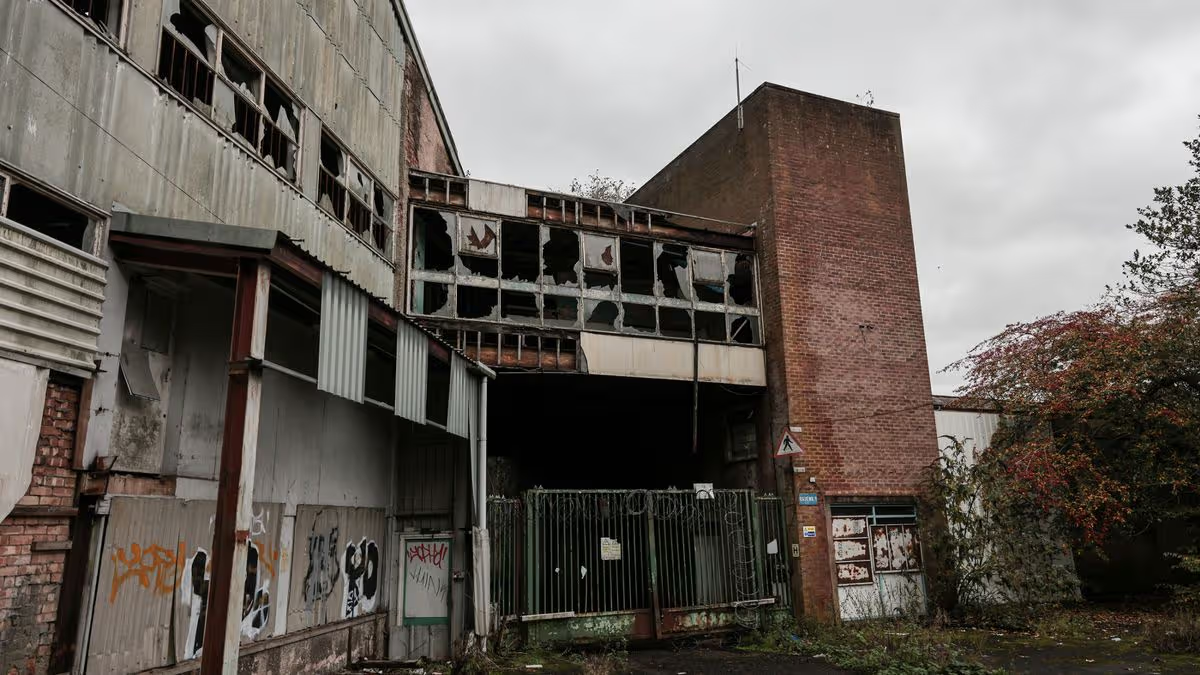
Starmer has a critical opportunity to define that vision in the imminent King’s Speech, detailing a tangible agenda for national renewal. A powerful symbolic move would be the renationalisation of the steel industry, specifically the Scunthorpe plant and Britain’s last blast furnaces, to save a cornerstone of sovereign manufacturing. While some argue this action would have been smarter last year to pre-empt crisis, the bottom line remains that taking a stand for vital industries demonstrates a commitment to the national interest that Reform’s populism often lacks. Such concrete propositions are what prove a party’s value and can cut through abstract political battles.
History offers a sobering precedent for Reform’s current euphoria. In 1999, William Hague’s Conservatives won a then-record number of council seats, only to be crushed by Tony Blair’s Labour in the subsequent general election. This cycle demonstrates that local election successes are not a reliable predictor of national triumph. The future is inherently uncertain, and this uncertainty is likely what most unsettles Nigel Farage. Despite his crypto-funded war chest and his party’s current status as the largest minority faction, he is not guaranteed power—either alone or in a fractious alliance with the Conservative Party he once abandoned. The next Parliament remains odds-on to be hung, promising either a complex coalition or a weak government struggling to enact change, a scenario that frustrates voters across the board.
Ultimately, the electoral map reveals a nation in a state of fluid renegotiation, rejecting traditional monopolies but not yet yielding to new extremes. Reform UK’s moment in the sun is real but may be brief, constrained by its own contradictions and the strategic adaptations of its opponents. Labour’s challenge is to find its voice and its courage amidst internal chaos. For all voters, the coming general election is shaping up to be a profound choice about the character of the nation, defined less by a surge for any single party and more by a collective decision to limit the influence of those seen as destabilizing and divisive. The dustbin of history or the doorstep of Number 10 await—and the outcome hinges on the silent calculations of millions in the voting booth.