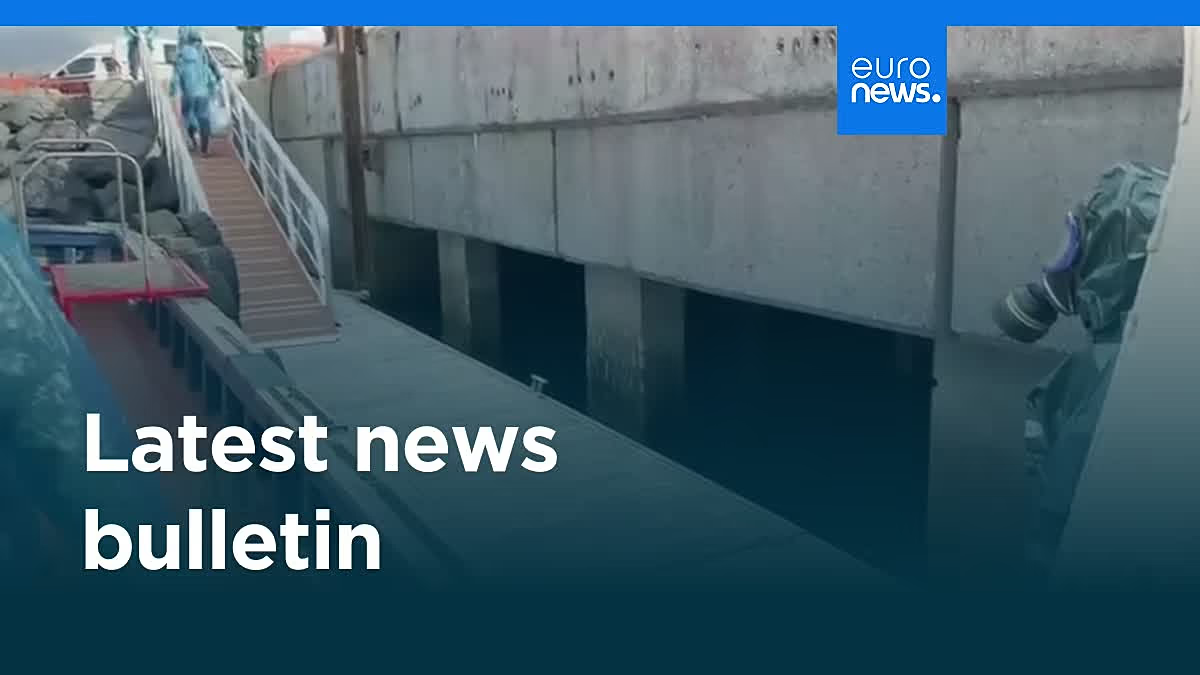



In a remarkable feat of medical evacuation on one of the planet’s most isolated frontiers, a team of British Army medics recently parachuted onto the rugged shores of Tristan da Cunha. This remote South Atlantic archipelago, a British Overseas Territory, is home to just 221 residents and holds the distinction of being the most remote permanently inhabited settlement on Earth. The urgent mission was launched in response to a suspected case of hantavirus, a serious rodent-borne illness, in one of the islanders—a passenger who had disembarked from the MV Hondius cruise ship the previous month. With limited local medical facilities, the island community faced a critical situation demanding an extraordinary external response.
The sheer isolation of Tristan da Cunha dictated the dramatic nature of the rescue. Located approximately 2,400 kilometers from its nearest inhabited neighbor, St. Helena, the volcanic island group possesses no airstrip. For its tight-knit community, the outside world is normally a six-day voyage by sea from Cape Town, South Africa. This profound remoteness means that routine medical emergencies can become life-threatening crises, as timely evacuation is nearly impossible under normal circumstances. In this instance, with a patient suspected of a potentially severe viral infection, the usual maritime timetable was an unaffordable luxury, compelling authorities to devise a high-risk, airborne solution.
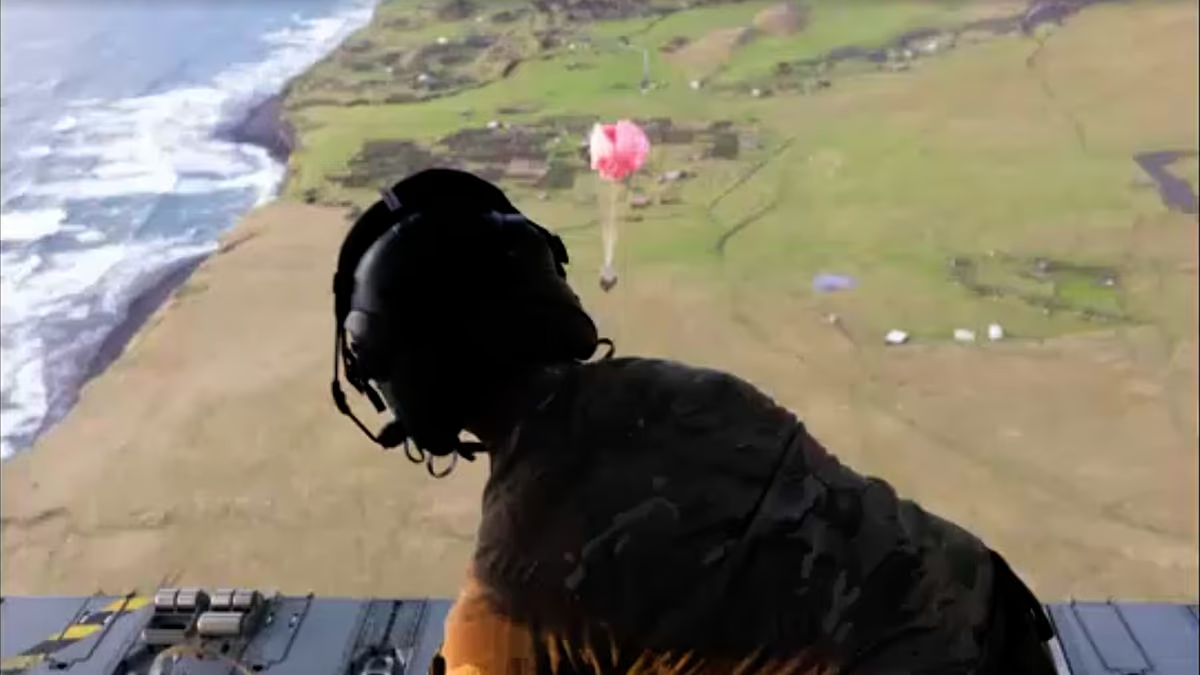
That solution was Operation VITAL POINT, a mission executed with precision by the United Kingdom’s defense ministry. On a decisive Saturday, a Royal Air Force A400M Atlas transport aircraft embarked on a lengthy transoceanic flight. Aboard were a specialized team of six paratroopers from the 16 Medical Regiment and two expert medical clinicians. As the aircraft circled the island’s dramatic, green-clad peaks, the team, along with vital pallets of oxygen supplies and sophisticated medical equipment, launched themselves into the sky. Their parachute descent onto the island’s limited open ground was not just a logistical maneuver but a powerful symbol of the reach and commitment of the British state to its citizens, no matter how far-flung.
Upon landing, the military-medical team immediately integrated with the local island health services. Their first priority was to assess and stabilize the patient suspected of hantavirus, a disease that can cause severe respiratory distress and hemorrhagic fever. The delivered equipment, including advanced oxygen support, was crucial for managing such symptoms. Beyond the single case, the team also conducted a broader assessment of the island’s health posture, ensuring no other potential cases had emerged and that containment protocols were in place. For the residents, the arrival of the parachuting medics was likely a moment of profound reassurance, a tangible connection to a distant homeland promising not to leave them unaided.
This extraordinary mission underscores the unique challenges of sustaining communities in extreme isolation. Life on Tristan da Cunha, centered around the small settlement of Edinburgh of the Seven Seas, is one of rugged self-reliance, built on fishing and conservation. Yet, this incident highlights their inescapable vulnerability to health emergencies. The operation also serves as a modern testament to the evolving role of military assets in global health and humanitarian aid, where rapid response teams can bridge distances otherwise insurmountable, turning remote islands from forgotten outposts into places within reach of lifesaving care.
As the patient receives ongoing treatment from the specialist team, the community of Tristan da Cunha returns to its rhythm, albeit with the unforgettable memory of the day help fell from the sky. The mission’s success demonstrates a seamless fusion of military operational prowess and medical humanitarian intent. It stands as a powerful example of how nations can honor their duty to protect all citizens, leveraging technology, courage, and planning to ensure that even the most remote individual is not beyond hope or help when crisis strikes. The parachutes that dotted the island’s sky did more than deliver personnel; they delivered a promise of connection, care, and commitment across the vast expanse of the South Atlantic.