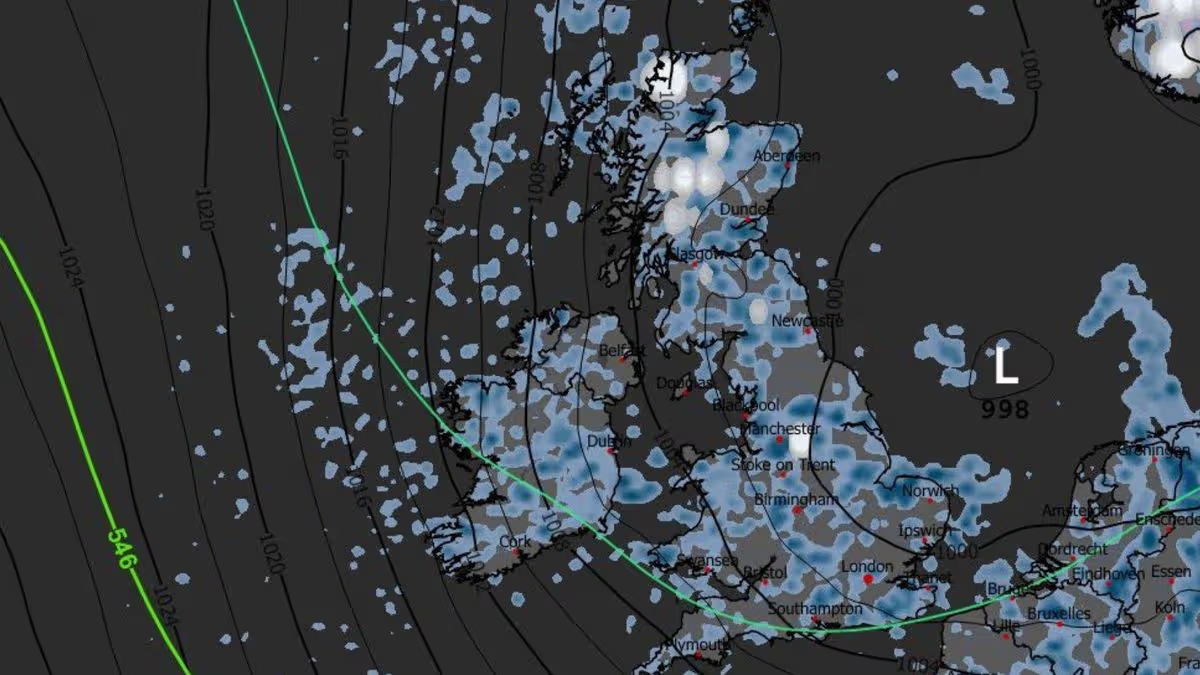




As May unfolds across the United Kingdom, residents are experiencing a dramatic and unseasonal clash of seasons. After a taste of delightful warmth, with many areas recently basking in temperatures comfortably in the 20s, the weather is taking a sharp turn towards winter. The nation is now bracing for a significant cold snap, forecast to deliver a surprising 36-hour episode of snow across parts of the country, with temperatures threatening to plunge to a startling 0°C. This stark contrast serves as a potent reminder of the UK’s famously variable spring climate, where the promise of summer can be swiftly upended by reminders of winter’s bite.
According to detailed predictions from weather service WXCharts, this wintry blast is scheduled to commence at midday on Tuesday, 12th May, and persist through until midnight on Thursday, 14th May. The snowfall is expected to first take hold in the Grampian mountains of Scotland before advancing across western and eastern regions, including areas around Aberdeen and Fort William, by Tuesday evening. As night falls, the system is projected to push further south, potentially blanketing the West Coast of Scotland and parts of northern England, such as Dumfries, Kendal, and even coastal Blackpool, in a rare May dusting. The event will reach its peak on Wednesday morning, with central and southeastern Scotland, much of northern England—encompassing cities like Manchester, York, and Hull—and northern Wales all in line for disruptive snow showers.
Accompanying this unusual snowfall will be a widespread and significant drop in temperature, making the conditions feel particularly raw for mid-May. Wednesday morning is anticipated to be the coldest point, with central Scotland potentially seeing the mercury hover near freezing at 0°C. A broader chill will grip the entire country: Scotland generally will experience temperatures between 0°C and 10°C, northern England between 3°C and 12°C, and the Midlands between 5°C and 13°C. While southern England may see slightly milder conditions ranging from 6°C to 15°C, even Wales and Northern Ireland are forecast to shiver through temperatures of just 4°C to 10°C. This pervasive cold will be exacerbated by persistent rainfall across most of the UK, which will turn to snow where conditions are coldest, with the heaviest combined precipitation expected on Wednesday afternoon.
The national forecaster, the Met Office, corroborates this unsettled outlook. For the core period, they describe a picture of rain moving southeastwards on Tuesday, followed by days of sunshine and heavy, potentially thundery showers on Wednesday and Thursday. They emphasize the “rather cool and often breezy” conditions, along with the risk of further overnight frosts, which could pose a threat to tender plants that have begun to flourish in the recent warmth. Looking ahead to the immediate weekend and the following week, the forecast suggests that changeable and often unsettled weather will dominate the middle of May, with low pressure systems frequently bringing periods of rain or showers—some heavy—to many regions, interspersed with only brief drier interludes.
Beyond this immediate wintry interlude, the Met Office provides a glimpse into the latter part of the month and the transition into June. There is some hope for more settled patterns to establish themselves towards the end of May, increasing the likelihood of longer spells of fine and dry weather, particularly in the southwest. Temperatures are expected to recover closer to the seasonal average, potentially becoming warm at times, offering a reprieve from the current chill. However, as the calendar flips to June, the forecast indicates a return to more mixed conditions, with typical British summertime weather of spells of rain and showers alternating with drier, brighter periods, suggesting that the path to sustained summer warmth may be a gradual one.
Ultimately, this forecast of May snow encapsulates the unpredictable nature of British weather. It is a jarring shift that requires a mental and practical re-adjustment, prompting people to retrieve winter coats they had hopefully stored away and to once again consider travel disruptions. While frustrating for those eager for consistent sunshine, such events are woven into the fabric of the UK’s climate narrative. This cold snap underscores the complex interplay of atmospheric forces—hinted at by broader global patterns like shifting ocean temperatures—that dictate daily weather. For now, the nation must navigate a brief return to winter’s grasp, holding onto the Met Office’s longer-range prediction that warmer, more stable days are still on the horizon for the weeks to come.