

The Spark and the Shadow: Vienna Welcomes Eurovision Amidst Celebration and Controversy
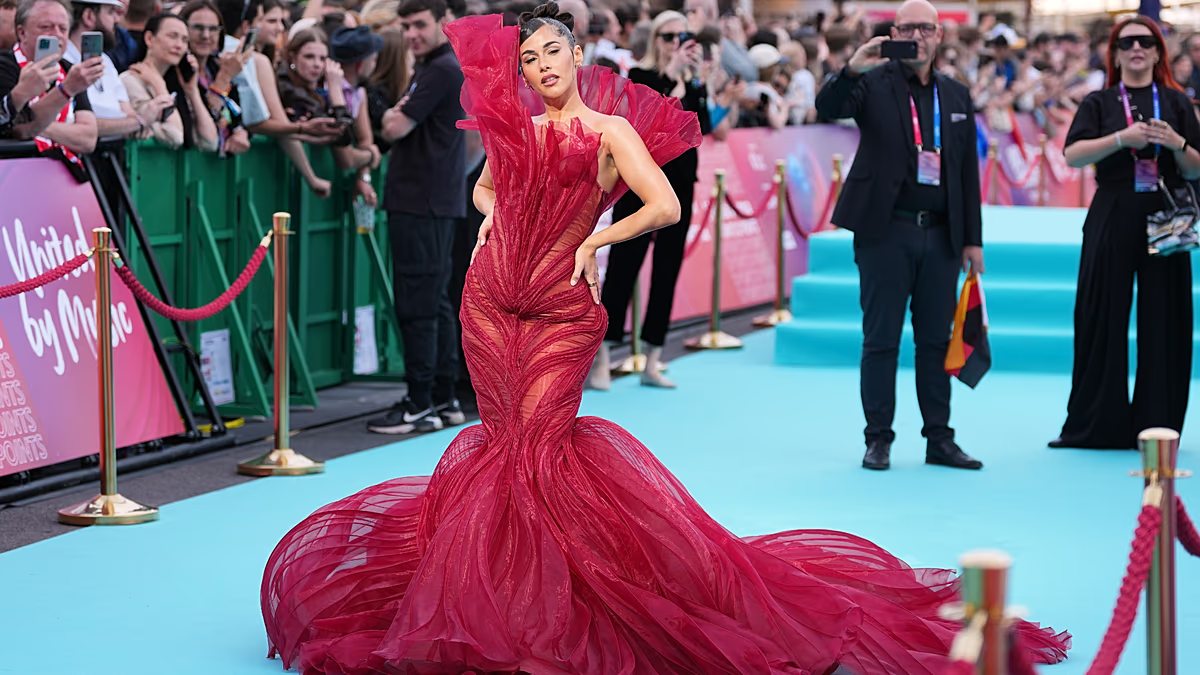
The city of Vienna, with its grand architecture and musical heritage, opened its arms this Sunday to the vibrant, chaotic spectacle of the Eurovision Song Contest. The annual event, a beloved tradition celebrating pop music and pan-European camaraderie, commenced with the ceremonial “turquoise carpet” arrivals. Thousands of enthusiastic fans, a sea of colorful outfits and national flags, gathered outside the city’s neo-Gothic hall, their cheers creating a palpable wave of excitement. The artists, embodying the spirit of the contest, engaged with this adoration in their own ways; Denmark’s Søren Torpegaard Lund lingered to share dance moves and selfies, while others like Sweden’s Felicia made a more brisk passage. This opening scene was a familiar, joyful ritual—the first step in a week-long journey where 35 performers will ultimately compete for the iconic trophy on Saturday night. Yet, beneath this glittering surface and the collective celebration of music, a significant and sobering tension simmered, casting a shadow over the festivities.
This tension stems from the ongoing and deeply tragic conflict in Gaza, and specifically from the decision by the Eurovision organizers to allow Israel’s participation in this year’s contest. For many viewers, artists, and national delegations, Eurovision is not just a musical party but an event founded on principles of unity and a “bridge across nations.” The inclusion of a country engaged in a widely criticized military campaign has struck many as a profound contradiction to these values. Consequently, this edition has become perhaps the most politically charged in the contest’s long history. The calls for a boycott, which have grown steadily since the war’s onset, have translated into tangible action: several countries, including Spain, Ireland, Iceland, the Netherlands, and Slovenia, have chosen to officially snub the event. Their absence is a silent but powerful statement on the stage, a withdrawal of cultural fellowship intended to signal moral protest and apply pressure on the contest’s governance.
The boycott represents a complex and painful dilemma, particularly for the artists and fans involved. For participants from the abstaining nations, it means sacrificing a cherished career milestone—the chance to perform on one of the world’s most watched stages and connect with a global audience. For their supporters, it means missing the opportunity to cheer for their national entry in a shared moment of pride. Their choice is a principled sacrifice, underscoring that for them, solidarity and a stance against violence outweigh the spectacle. Meanwhile, for the participating artists, especially those from other nations, the week is fraught with an added emotional weight. They must navigate the typical pressures of performance while operating in an atmosphere where their mere presence could be interpreted as complicity. Every interview, every social media post, becomes a potential site for political questioning, forcing musicians into a reluctant spotlight far beyond their songs.
Yet, within the contest halls and streets of Vienna, the relentless engine of Eurovision fan culture continues to hum. For the thousands who have traveled there, it is a pilgrimage of joy. They celebrate the music, the outrageous costumes, the sheer fun of a competition that can feature a power ballad alongside a surreal folk-techno hybrid. This community, often a model of inclusivity and acceptance, finds itself in a difficult position—wanting to preserve the event’s unique magic while being unavoidably aware of the real-world context framing it. Their experience is thus bifurcated: moments of pure, unadulterated festivity as they greet performers on the carpet, contrasted with discussions and debates over news headlines in the queues and cafes. They embody the contest’s internal conflict—the desire to escape into a world of song versus the impossibility of ignoring the world beyond it.
The situation places an immense burden on the European Broadcasting Union (EBU), the organizers of Eurovision. Their stated mandate is to be a non-political, cultural union, a mission that has historically allowed them to navigate complex geopolitical landscapes, including past participations from controversial regimes. The current crisis, however, tests this neutrality to its limits. By maintaining Israel’s inclusion, they argue they are adhering to rules that separate states from their governments and keep the contest open to all member broadcasters. This decision, however, is seen by critics as a failure of moral leadership, an evasion of responsibility that prioritizes procedural continuity over ethical consistency. The resulting schism—with countries withdrawing and public trust eroded—may have lasting repercussions for the contest’s future legitimacy and its cherished image as a light-hearted, unifying force.
As Vienna moves through a week of rehearsals, semi-finals, and parties towards the grand final, this year’s Eurovision will unfold as a deeply paradoxical event. It will be a showcase of remarkable musical talent and cross-cultural exchange, witnessed by millions seeking entertainment and connection. Simultaneously, it will serve as a stark mirror reflecting a fractured international community. The cheers for the winning song on Saturday night will be genuine, but they will be accompanied by the silent absence of several nations and the echoed voices of protest from outside the hall. Ultimately, Eurovision 2026 may be remembered not for its winning entry, but for the painful questions it raised about where art ends and politics begin, and whether a song contest can—or should—attempt to build bridges when real wars are tearing them down.