

In a world where neurological landscapes are as diverse as humanity itself, autism spectrum disorder (ASD) is a fundamental part of the human experience for an estimated 75 million individuals globally. According to the World Health Organisation, this translates to approximately one in every 100 children receiving a diagnosis. Autism is not an illness to be cured with medication, but a different way of processing the world that requires understanding, tailored support, and pathways to development. For many children on the spectrum, navigating the complexities of communication and social interaction can be profoundly challenging, leading families and caregivers to seek out supportive strategies that bridge these gaps. Increasingly, one of the most powerful and transformative tools being embraced is not found in a therapist’s office alone, but on playing fields, in pools, and on cycling paths: the world of sports and structured physical activity.
The transformative power of sports for autistic children is multifaceted, addressing core challenges in a holistic manner. From adaptive cycling and running to swimming and tennis, structured physical activity helps improve focus, regulate overwhelming emotions, and develop both motor and communication skills. The story of Fatima Amerzhanova and her ten-year-old son, Amir, from Astana, Kazakhstan, beautifully illustrates this journey. Diagnosed at four and non-verbal, Amir found a new channel for expression and calm through sport. Fatima recalls that at age six, they shifted their focus to physical activity and saw immediate results. “We realised that through physical activity, the child starts to calm down, it helps correct aggression and self-aggression,” she explains. For Amir, who sometimes engages in self-injurious behavior, the movement provides a crucial connection between mind and body. “Through physical activity and movement, the child begins to better feel and understand their body,” Fatima notes, highlighting a foundational benefit that extends far beyond physical fitness.
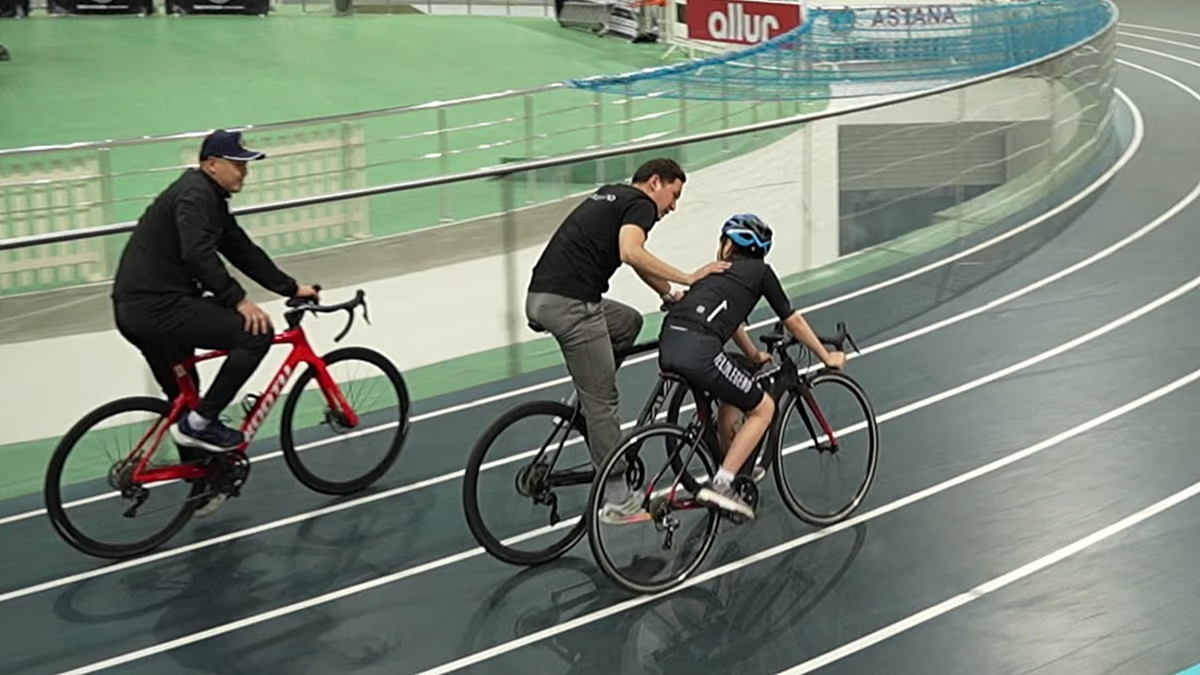
This journey often begins with a single, adaptive sport that opens a door. For Amir, that door was adaptive cycling, first discovered at a summer camp in Turkey. Upon returning to Kazakhstan, what began as individual training evolved into a courageous step toward socialisation when Fatima moved him into a group class. The transition was stressful, a common experience not just for autistic children but for neurotypical peers learning about inclusion. Yet, the breakthrough was profound. “On the 23rd session, he got on a road bike for the first time, and I cried because we had finally done it,” Fatima shares, her words echoing the emotional milestones that redefine success for so many families. Behind such achievements are dedicated coaches like Kairat Khaldybek of the Velolegend Centre in Astana, who works daily with children on the spectrum. His philosophy is inclusive and hopeful: “Autism comes in different forms, but we do not select children. We work with everyone from the very beginning, and some are already taking part in competitions.”
Despite these inspiring individual successes, access to such life-changing programmes remains starkly uneven across Central Asia and many regions worldwide. Most specialised, inclusive sports programmes are concentrated in major urban centers like Astana, leaving families in smaller towns and rural areas with severely limited options. This geographical disparity creates a painful gap between those who can access supportive communities and those left to navigate their challenges in isolation. Yet, the demand and hunger for these services are undeniable. As Coach Kairat notes, his centre, one of the few of its kind in Central Asia, receives messages from across the region pleading for them to open branches. This growing demand signals a societal shift—a recognition of the need and a testament to the visible benefits these activities provide, pushing against the boundaries of current availability.
The movement toward inclusion is gaining powerful momentum through community-wide initiatives that raise awareness on a grand scale. A landmark example is the ‘Run for Autism’ event in Astana, one of Central Asia’s largest inclusive running events, which drew around 5,000 participants last month. Launched in 2023 by the Bolashak Charity Foundation, the initiative has already united over 6,400 participants and raised significant funds—approximately €80,000—all directed toward professional education programmes for teenagers with autism and Down syndrome. Dinara Gaplan, Chairwoman of the foundation, articulates the broader mission: “When we launched the project, our goal was to draw public attention to autism and mental health… Today, thousands of people join us, and this shows that society is becoming more open, more aware, and more willing to support important social initiatives.” The foundation has already fostered tangible structural support by helping to open 25 inclusion support rooms in schools and colleges across Kazakhstan.
Ultimately, the narrative emerging from Central Asia and mirrored globally is that sports are evolving into something far greater than mere recreation for autistic children and their families. It is becoming a vital conduit for connection, self-regulation, and independence. In the rhythmic stroke of a swim, the focused balance on a bike, or the shared exertion of a run, children who often feel disconnected from the world around them find a tangible point of contact. It reduces anxiety, builds confidence, and fosters a sense of capability. For parents like Fatima, it offers hope and visible progress. For societies, as shown by the thousands at the starting line in Astana, it represents a growing commitment to embrace neurological diversity. This journey, propelled by pedal strokes and footsteps, is not just about teaching children to navigate a track or a pool; it is about helping them navigate their place in the world, and helping the world make space for them.