


Paragraph 1: A Fragile Truce
Last July, amidst the political turbulence of a potential second Trump administration, an unlikely pair sat down to forge a critical agreement. Then-President Donald Trump and European Commission President Ursula von der Leyen met in Scotland, aiming to secure a transatlantic trade deal. On the surface, the math seemed straightforward and mutually beneficial: the United States would eliminate tariffs on European industrial goods, while the European Union would agree to cap its exports to the U.S. at a ceiling of 15%. This framework wasn’t merely about tariffs; it was a strategic gambit designed to protect a monumental economic relationship. The annual trade flow between these two giants of the global economy is worth nearly 1.68 trillion euros, a lifeline for countless industries and jobs on both sides of the Atlantic. The deal was envisioned as a stabilizing force, a diplomatic shield against the unpredictable winds of protectionism.
Paragraph 2: The Deal Unravels
However, the delicate truce began to fracture almost immediately. The catalyst was a ruling by the U.S. Supreme Court, which struck down the legal basis for the existing tariffs the deal was meant to replace. In response, and in a move that stunned European officials, the Washington administration introduced a new wave of duties specifically targeting steel and aluminium imports from the EU. To Brussels, this was not just an aggressive policy shift; it was a direct violation of the spirit, if not the letter, of the impending Scotland agreement. European lawmakers felt betrayed. The new American tariffs were seen as a blatant act of bad faith, effectively nullifying the core concession Europe had negotiated—the promise of zero tariffs for its industrial goods. The foundation of the deal was crumbling before the ink could even dry.
Paragraph 3: Europe’s Defensive Stand
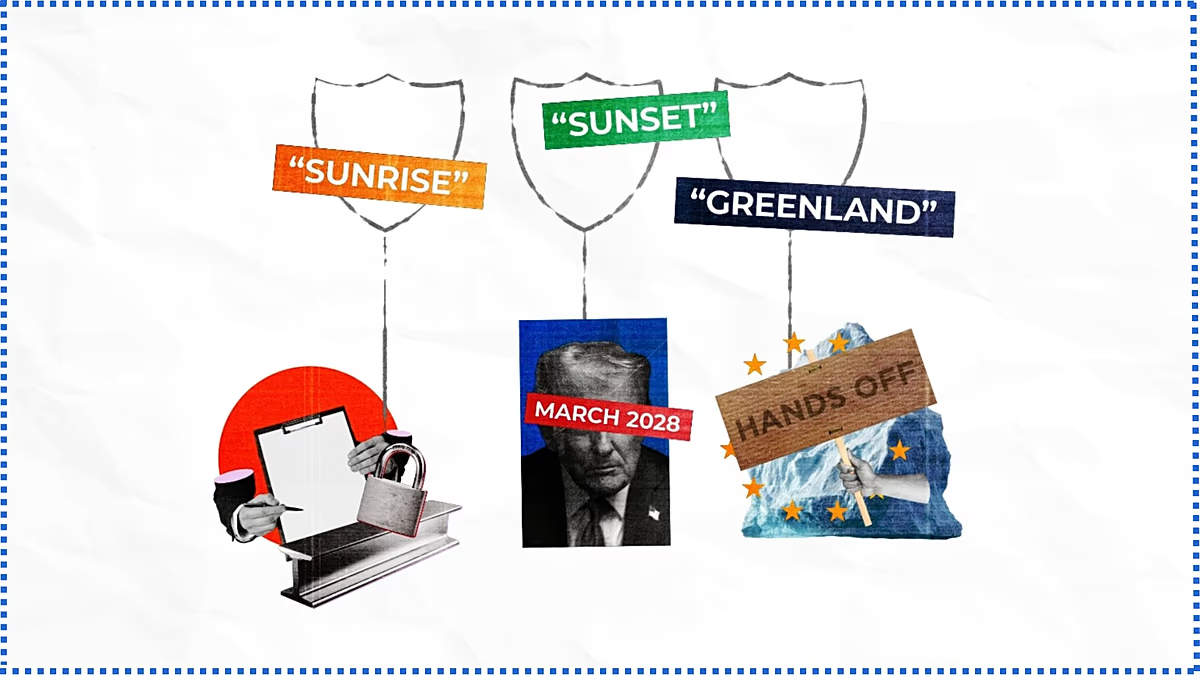
Refusing to be passive in the face of what they perceive as economic bullying, the European Parliament is now mounting a vigorous pushback. Lawmakers are moving to amend the proposed trade agreement, weaving into its text three powerful defensive mechanisms dubbed “clauses.” These are not minor adjustments but strategic safeguards designed to reclaim European sovereignty. The first, known as the “Sunrise Clause,” acts as a firm precondition: the entire trade deal will be stalled and will not take effect until Washington formally rescinds its controversial steel and aluminium duties. It’s Europe’s opening gambit, a clear message that new tariffs and old promises cannot coexist.
Paragraph 4: The Shields Are Raised
The second and third clauses look further into the uncertain future. The “Sunset Clause” is a built-in expiration date, automatically terminating the agreement in March 2028. This timing is highly strategic, coinciding with the end of a potential second Trump term, thereby preventing any last-minute adversarial moves. The most politically charged safeguard is the “Greenland Clause.” This provision grants Brussels the unilateral right to suspend the entire trade pact if the U.S. administration again threatens European territorial integrity—a direct reference to Trump’s past, surprising offer to purchase Greenland from Denmark. Together, these clauses form a legislative fortress, aimed at ensuring Europe cannot be cornered or coerced.
Paragraph 5: A Divided Europe
Predictably, this assertive stance has ignited a fierce debate within the European Union itself, revealing deep political fissures. The centre-right European People’s Party (EPP) argues for pragmatism and speed, warning that failure to secure a deal quickly will plunge key industries into chaos and uncertainty as the July deadline looms. On the other side, the Socialists and others are digging in their heels, championing principle over expediency. Leading the charge is Bernd Lange, the European Parliament’s chief negotiator, who insists that European legislation must never be drafted under the shadow of external threats. For him and his allies, this is about more than trade; it’s about defending the very integrity of the EU’s democratic and legal process from foreign pressure.
Paragraph 6: The Cliff’s Edge
The situation has now reached a critical juncture. Negotiators are racing against the clock, and the path forward splits in two. If a last-minute compromise is brokered, the revised text will proceed to a final plenary vote in the European Parliament in June. If, however, the deadlock holds and no agreement is ratified, the consequences are severe. The entire massive trade relationship will hurtle toward a regulatory cliff-edge. The ominous deadline of July 4th—a date charged with symbolism—will trigger a automatic wave of American tariffs, crashing directly onto Europe’s economic shores. The stakes extend far beyond steel and aluminium; they encompass the stability of the Western economic alliance and the future of cooperative transatlantic relations in an increasingly volatile world.