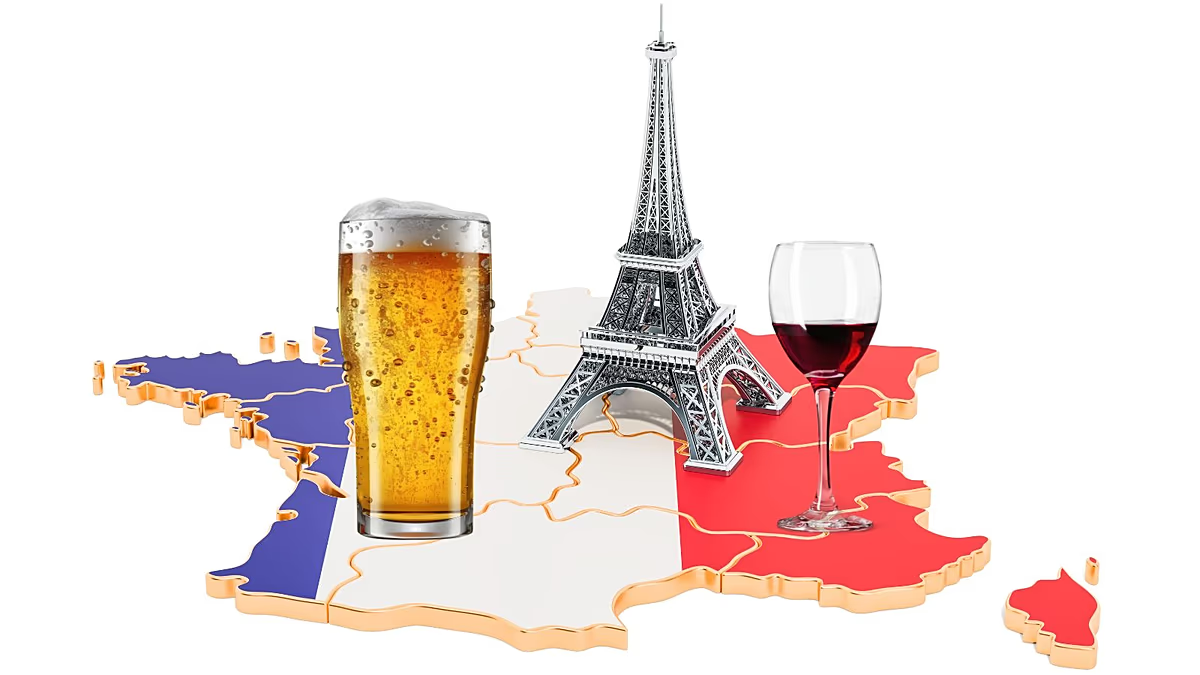


For generations, the French culinary soul has been inseparable from the vineyard. “Repas sans vin, repas chagrin,” goes the old saying—a meal without wine is a sad meal. This is more than just a preference; it is a cornerstone of national identity, as fundamental as the crisp baguette, the dizzying array of cheeses, and the sacred culinary trinity of garlic, butter, and disdain for inaccurate cultural portrayals. Wine was not merely a beverage but a philosopher’s companion, with Louis Pasteur himself declaring that a single bottle contained more wisdom than all the books in the world. It represented tradition, terroir, and the art of living, a non-negotiable element of the shared table. This deep-seated identity made the notion of beer, often casually assigned to neighboring Germany, Belgium, and “ze rosbifs” across the Channel, as the French drink of choice almost unthinkable. Yet, in a quiet cultural revolution, the unthinkable has now happened.
According to recent data, France has reached a historical tipping point. The International Organisation of Vine and Wine (OIV) reports that in 2025, the French consumed 22 million hectolitres of wine. In that same year, however, the French brewery association, Brasseurs de France, recorded consumption of 22.1 million hectolitres of beer. For the first time in modern history, beer has officially overtaken wine as the drink of choice in France. More strikingly, wine consumption has fallen to its lowest level since 1957. This is not merely a statistical blip but a significant marker of shifting habits, challenging the very Gallic narrative that has been poured into glasses for centuries. The world’s most iconic wine culture is now, numerically at least, a beer-drinking nation.
What is driving this profound shift? The reasons are a blend of evolving social habits, economic pressures, and changing values. Culturally, wine has long been tied to the ritual of the seated, multi-course meal—a tradition that is itself eroding in the face of faster, more informal lifestyles. As a lecturer from Sciences Po noted, the classic 75cl wine bottle is a symbol of dining at the table, and people are doing that less often. Beer, by contrast, is increasingly associated with casual “convivial moments”: watching sports, socializing at a bar, or enjoying a single, lighter drink without the ceremony. Its typically lower alcohol content also aligns with a growing, health-conscious trend towards moderation, even if some studies have championed wine’s specific benefits. The French beer scene itself has matured dramatically, with a boom in craft microbreweries offering sophisticated, locally-made alternatives that appeal to a new generation.
Beneath these social trends lies a more urgent, sobering economic reality. La bière is generally cheaper than wine, and in a period of prolonged cost-of-living crises, affordability is a powerful deciding factor. This is especially true for younger people, who are shaping the future market. Furthermore, the global wine trade is under strain. The OIV has pointed to external pressures like U.S. tariff policies, which have disrupted exports and added uncertainty, while the existential threat of climate change looms over vineyards worldwide, affecting yields and traditions. In this context, the rise of beer is partly a pragmatic adaptation—a choice shaped by the weight of the present as much as by a changing palate.
It is crucial, however, to view this transition with nuance. France remains, by a significant margin, the largest consumer of wine in Europe. The centuries-old culture of viticulture is not disappearing; it is being recontextualized. Wine is becoming more of a conscious choice for particular occasions, perhaps valued more for its quality and heritage than as a daily staple. Ordering a pint in a Parisian brasserie no longer carries the risk of appearing uncouth; it simply reflects the new normal. The national identity is expanding to make room for a frosty pression alongside the glass of Bordeaux.
Ultimately, this story is about more than beverage sales. It is a lens through which to view a society in motion—balancing cherished heritage with contemporary constraints, global pressures with local innovation, and the formal with the casual. Les temps changent: times are changing. The French table may now more often feature a beer stein, but the enduring commitment to conviviality, debate, and good taste remains utterly unchanged. The spirit of the meal, whether accompanied by the complex notes of a vintage wine or the refreshing crispness of a blonde ale, is ultimately what banishes chagrin. And that is a philosophy Pasteur himself might have appreciated.