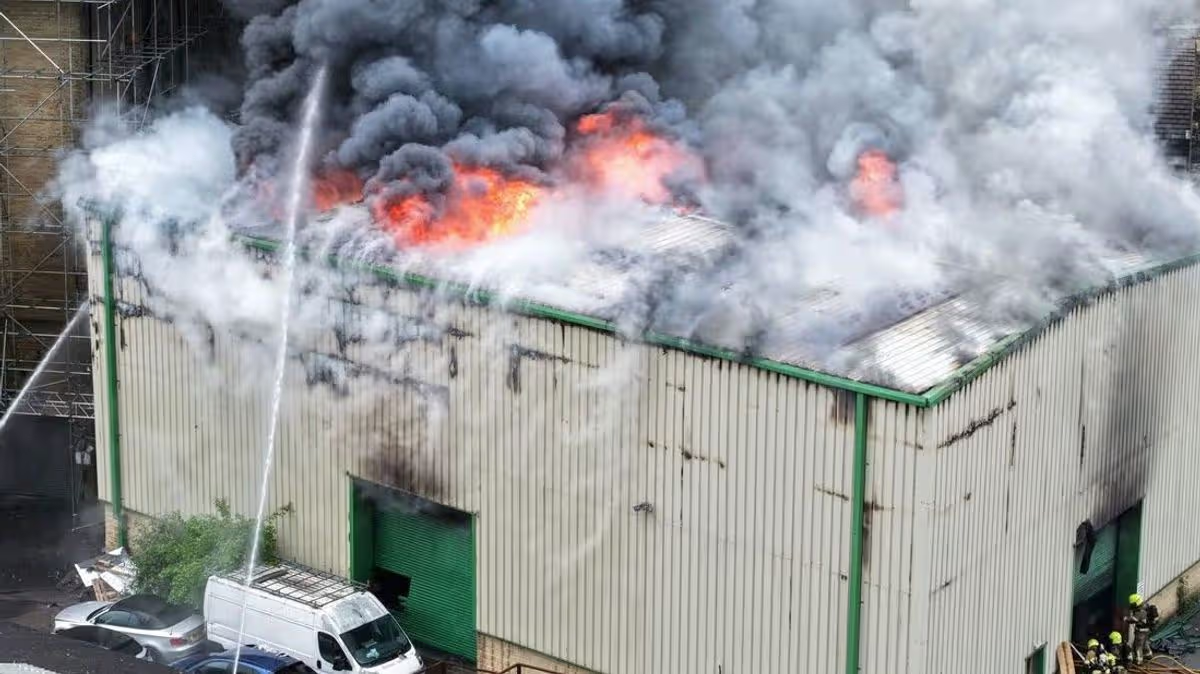




A major industrial fire erupted at Stobarts Body Shop in Bradford on Mulgrave Street, prompting a massive and urgent response from the local fire service. The scale of the incident was immediately evident as firefighters dispatched a significant contingent of twelve fire engines, or “pumps,” along with their supporting crews, to tackle the blaze. This deployment indicates a serious and potentially dangerous situation, requiring a considerable concentration of personnel and equipment to manage. The body shop, a facility likely dealing with vehicle repairs and potentially storing flammable materials like paints, solvents, and fuels, presents a unique set of hazards that firefighters must confront with caution and specialized tactics.
The immediate concern for public safety led authorities to issue clear and direct guidance to the community. Residents in the vicinity were urgently advised to keep all doors and windows closed to protect themselves from the smoke and any potentially hazardous particulates or fumes that could be emanating from the burning industrial site. Such smoke can carry harmful chemicals and cause respiratory issues, making this simple precaution a vital step for personal safety. Furthermore, to ensure emergency crews could operate without obstruction and to keep the public away from danger, a specific road closure was implemented. People were asked to avoid Mulgrave Street, Mount Street, Pickhill Street, and Seymor Street entirely, creating a secured perimeter around the emergency operation.
This request to avoid the surrounding roads is not merely a suggestion but a critical component of the emergency response. Blocked streets allow fire appliances, command vehicles, and possibly ambulances or other support services to move freely and position themselves effectively. It also prevents civilians from accidentally entering a zone where falling debris, sudden flare-ups, or structural collapse could pose a lethal threat. The collective compliance of the community with this instruction directly supports the lifesaving work of the firefighters, giving them the space and safety they need to focus entirely on suppressing the fire.
As the crews work tirelessly at the scene, the situation remains dynamic and uncertain. The statement from the fire service wisely concludes with a promise that further updates will follow, acknowledging that the public and media will need ongoing information. The scale of the fire, the time required to bring it under control, the investigation into its cause, and the eventual assessment of damage all lie ahead. Residents will be waiting to learn when the roads will reopen, when the immediate danger has passed, and what the long-term impact on the local area and business might be.
Behind the official statements and the visible flames, there is a human story of professional bravery and community concern. The firefighters on those twelve pumps are facing intense heat, complex risks, and the physical toll of a prolonged incident. Meanwhile, neighbors nearby, following the advice to seal their homes, are watching with anxiety, hoping for the safety of the crews and for the protection of their own families and properties. The incident transforms a routine day into one of heightened alert and collective reliance on emergency services.
In essence, this brief initial report encapsulates the first crucial phase of a significant emergency: the rapid mobilization of resources, the clear communication of life-saving instructions to the public, and the establishment of a controlled operational zone. It marks the beginning of a challenging ordeal for Bradford’s fire service and a disruptive event for the local community, with the promise of more information to come as the difficult work on Mulgrave Street continues through the hours ahead.