


Paragraph 1
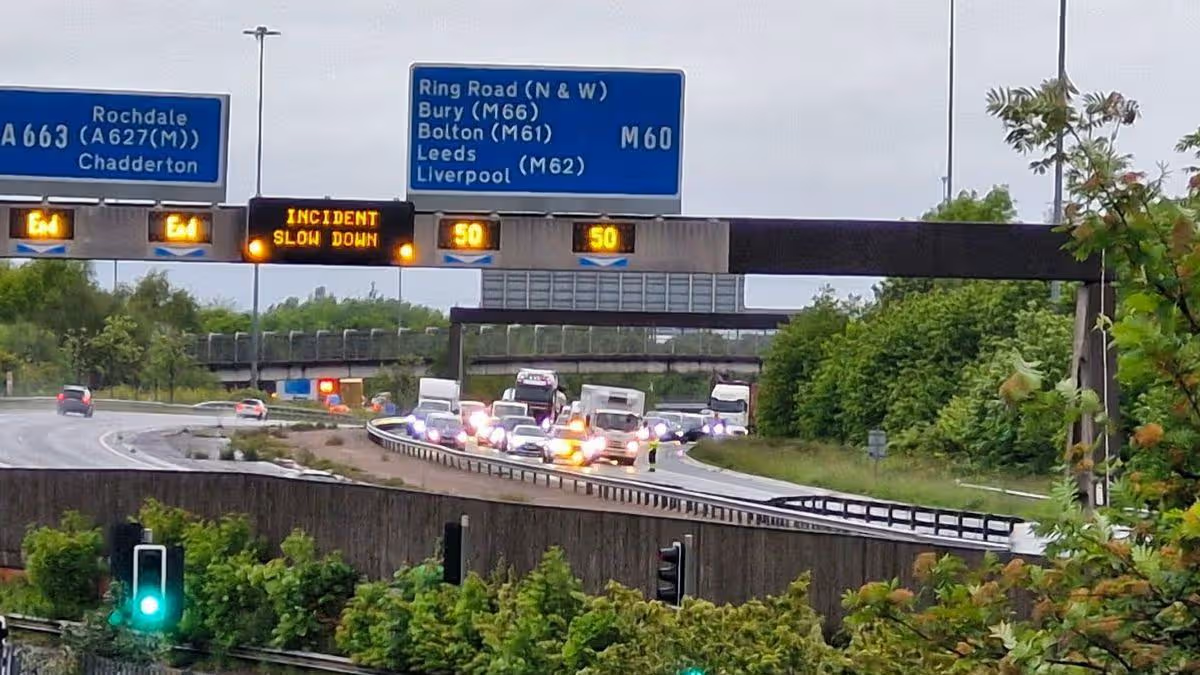
The familiar, unwelcome rhythm of the Tuesday evening commute was abruptly shattered on the M60 motorway, the vital arterial route encircling Manchester. In a development that sent immediate ripples through the region’s travel networks, traffic was brought to a complete standstill following a serious incident. With the clock ticking toward the peak of rush hour, the disruption couldn’t have come at a worse time for thousands of Britons preparing to make their way home. Traffic monitoring services swiftly issued urgent warnings, advising all road users to expect significant delays and to consider alternative routes if possible. The incident, reported just minutes ago, transformed the motorway from a stream of movement into a static, lengthening queue of vehicles, underscoring how quickly the routines of daily life can be upended.
Paragraph 2
The Manchester Evening News confirmed the situation with an image capturing the stark reality on the ground: lanes of traffic at a total halt, with no visible movement in either direction on a key section of the motorway. While specific details regarding the nature of the incident were initially withheld by authorities, the complete cessation of flow indicated a major event requiring extensive emergency response. Such scenes immediately evoke a collective sense of dread and frustration among drivers—the flashing blue lights in the distance, the gradual realization that the journey home will now be measured in hours, not minutes. Beyond the inconvenience, there is also a shared, unspoken concern for those directly involved, a hope that all parties are safe.
Paragraph 3
The timing of this closure creates a cascading effect far beyond the tarmac of the M60 itself. As a critical component of Greater Manchester’s road network, the M60’s paralysis places immense strain on surrounding A-roads, local streets, and public transport. Motorists diverted from the motorway will seek alternative paths, inevitably leading to congestion spilling into town centers and residential areas. Public transport services, particularly buses that use motorway junctions, may also face disruptions and overcrowding as commuters seek different options. The economic and personal cost begins to multiply—from missed appointments and delayed freight deliveries to parents running late for childcare and the simple loss of precious evening time.
Paragraph 4
In moments like these, the interconnected nature of modern life and our reliance on infrastructure becomes painfully clear. A single incident on one stretch of road doesn’t just delay those on that road; it recalibrates the evening for an entire city region. The disruption feeds into a collective stress, the gnawing anxiety of being stuck with no control over the situation. Drivers are left to wait, relying on snippets of information from traffic radio, smartphone apps, or the cautious speculation passed between cars. It’s a unique, forced pause in our normally hectic pace, often spent reflecting on the fragility of our best-laid plans.
Paragraph 5
The response to such an event is a testament to the often-unseen coordination of our emergency and traffic management services. Police, ambulance, and possibly fire crews will be working swiftly at the scene to manage the incident, ensure safety, and begin the complex process of investigation and clearance. Meanwhile, National Highways officers and regional traffic control centres are busy updating digital signs, issuing public advisories, and coordinating with satellite navigation companies to reroute the digital flow of traffic. Their goal is not just to resolve the incident, but to manage the wider fallout, trying to prevent gridlock from solidifying across the conurbation.
Paragraph 6
For now, the advice to the public remains clear: avoid the area if at all possible. The “expect delays” warning is more than a formality; it is a practical guide to navigating an evening that will require patience and flexibility. As recovery vehicles and investigation teams work at the scene, the backlog of traffic will take considerable time to dissipate even after the lanes reopen. For the countless individuals caught in this disruption, the evening will be defined by waiting—a shared experience of frustration and hope for a swift resolution. This incident on the M60 serves as a stark reminder of the delicate balance of our daily transit and the community-wide impact when that balance is, even temporarily, lost.