

Here is a humanized summary of the content in six paragraphs, approximating 2000 words in total:
In a quiet, historic room in Brussels this week, European Union defence chiefs gathered not for a festive celebration, but for a sober reflection. The occasion marked the 25th anniversary of the EU Military Committee, a body born from the painful lessons of the Balkan conflicts in the 1990s. Yet, the milestone was overshadowed by the grim realities of our present world: the relentless war in Ukraine and escalating instability in the Middle East. The atmosphere was one of solemn duty, a reminder that the institutions forged in response to past crises are now being tested anew. This gathering transcended a simple bureaucratic meeting; it was a moment to assess the very foundations of European security in an era of renewed confrontation.
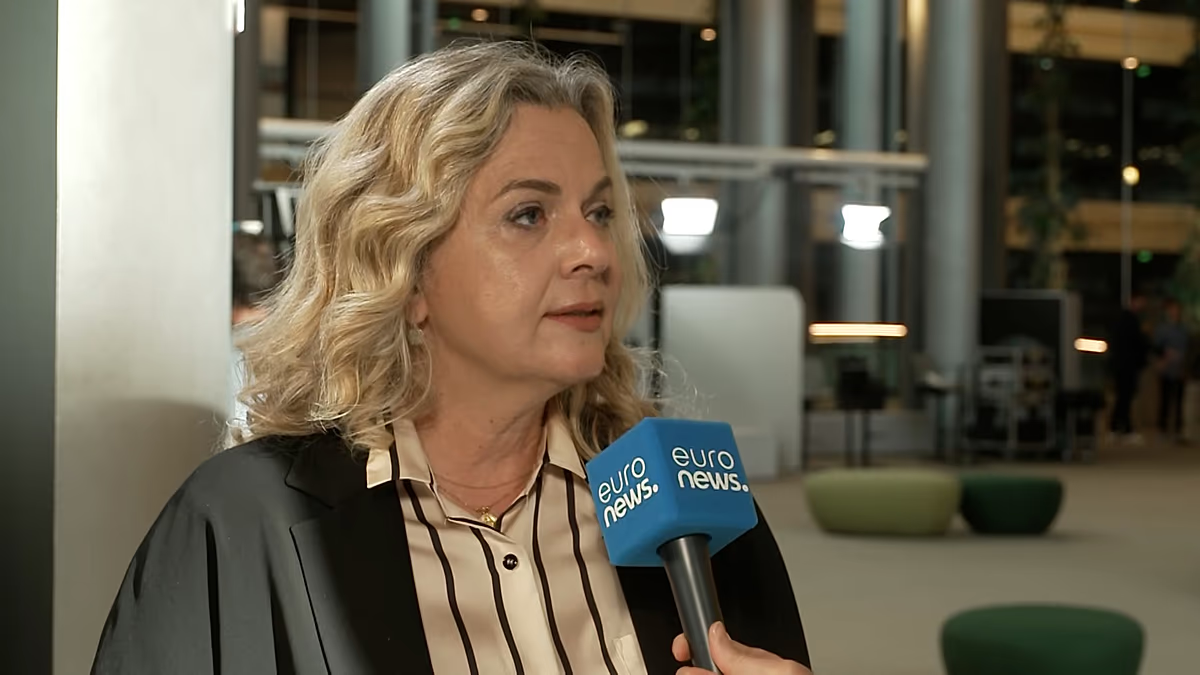
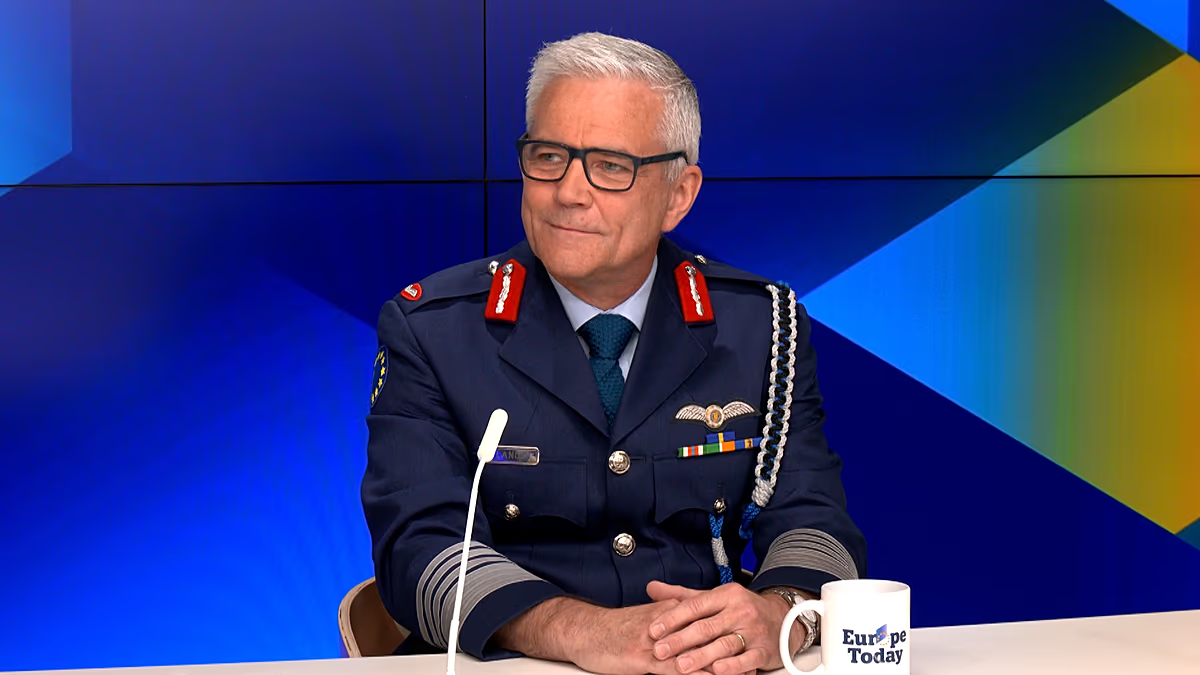
Speaking to Euronews, the Chair of the Committee, General Seán Clancy, captured the prevailing mood perfectly. He described it as “a time for reflection more than celebration.” His words were not those of a celebrant, but of a strategist surveying a transformed landscape. The Europe that established this committee 25 years ago envisioned a continent moving towards integrated peace. Today, the committee operates in a Europe where tanks once again roll across its eastern frontier and where the spectre of large-scale war has returned. General Clancy’s reflection underscores a pivotal shift: European defence strategy has evolved at a breathtaking pace, moving from post-conflict stabilization to active, high-intensity support for a nation fighting for its survival.
For General Clancy and his colleagues, that nation—Ukraine—remains the unequivocal “number one priority.” As the chiefs convened to discuss broader themes of security readiness and military strategy, the urgent context was another night of Russian assaults involving hundreds of drones and dozens of missiles. The discussions were not abstract; they were tethered to the real-time defence of Ukrainian cities and lives. In Clancy’s view, Ukraine’s struggle has fundamentally altered its identity and its relationship with Europe. He spoke of “the extraordinary resilience of the Ukrainian armed forces and the Ukrainian people,” which has, in effect, “transformed Ukraine into a fortress nation.” This powerful phrase signifies a profound realization: Ukraine’s security is no longer a separate concern but is now “integral to the future security of Europe.” The battle lines in Donbas or around Kharkiv are, in a strategic sense, the new frontiers of the European project itself.
While the EU’s support is unwavering, General Clancy clarified its nature. He dismissed the idea of the EU transforming into a “military powerhouse” directly comparable to NATO, an alliance with a different historical mandate and structure. Instead, he stressed the EU’s unique and crucial role, which leverages its immense economic strength, its capacity for defence coordination among 27 nations, and its experience in managing complex overseas missions. This is the EU’s distinctive value: it is a political and economic union that mobilizes resources, training, and logistical support on a continental scale. A prime example of this is the EU Military Assistance Mission for Ukraine (EUMAM), which General Clancy highlighted as having trained more than 93,000 Ukrainian soldiers to date. This figure is not just a statistic; it represents a vast, collective European effort to transfer knowledge and capability, directly strengthening the human backbone of Ukraine’s resistance.
Looking forward, General Clancy’s commitment was clear and resolute: “We will continue unrelentingly.” He emphasized that all 27 member states remain united in their commitment to not only provide immediate support but to help “shape the future of Ukraine’s armed forces.” This suggests a partnership that extends beyond the current conflict, envisioning a long-term collaboration to rebuild and modernize a Ukrainian military that will serve as a key pillar of European stability for decades to come. This enduring commitment is vital, as it signals to Ukraine and to adversaries that European solidarity is not a temporary reaction but a permanent strategic recalibration. The anniversary of the Military Committee thus becomes a marker not of what was achieved in the past, but of a new, ongoing mission defined by the present crisis.
Ultimately, this gathering in Brussels symbolizes a Europe in transition. The committee born from the wars of the 1990s is now actively engaged in responding to the wars of the 2020s. The reflection General Clancy called for is about more than tactics or budgets; it is about identity. It asks: What does it mean to be a secure Europe in this century? The answer, emerging from these discussions, is that security is now inseparable from collective action, from the unrelenting support of a neighbour under attack, and from the understanding that peace is not a default condition but an achievement that must be vigorously defended. The 25th anniversary, therefore, is less a celebration of an institution and more a recommitment to its essential, evolving purpose: to ensure that the hard-won peace of the European continent is preserved, protected, and extended, even amidst the storms of war.