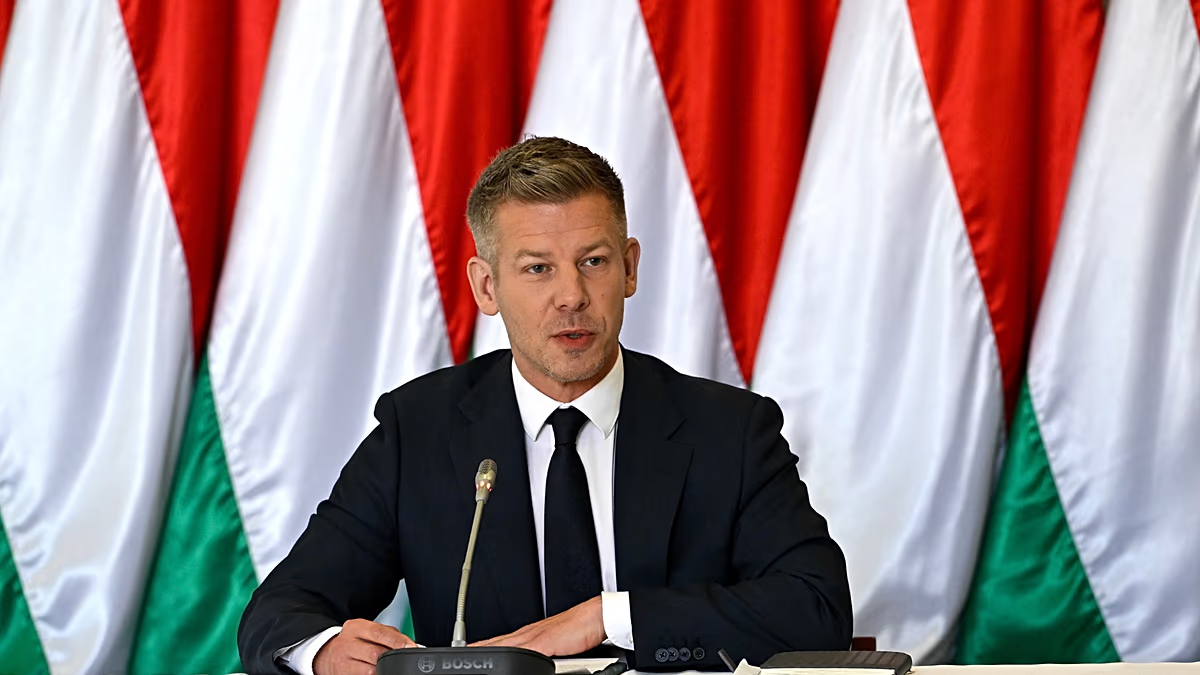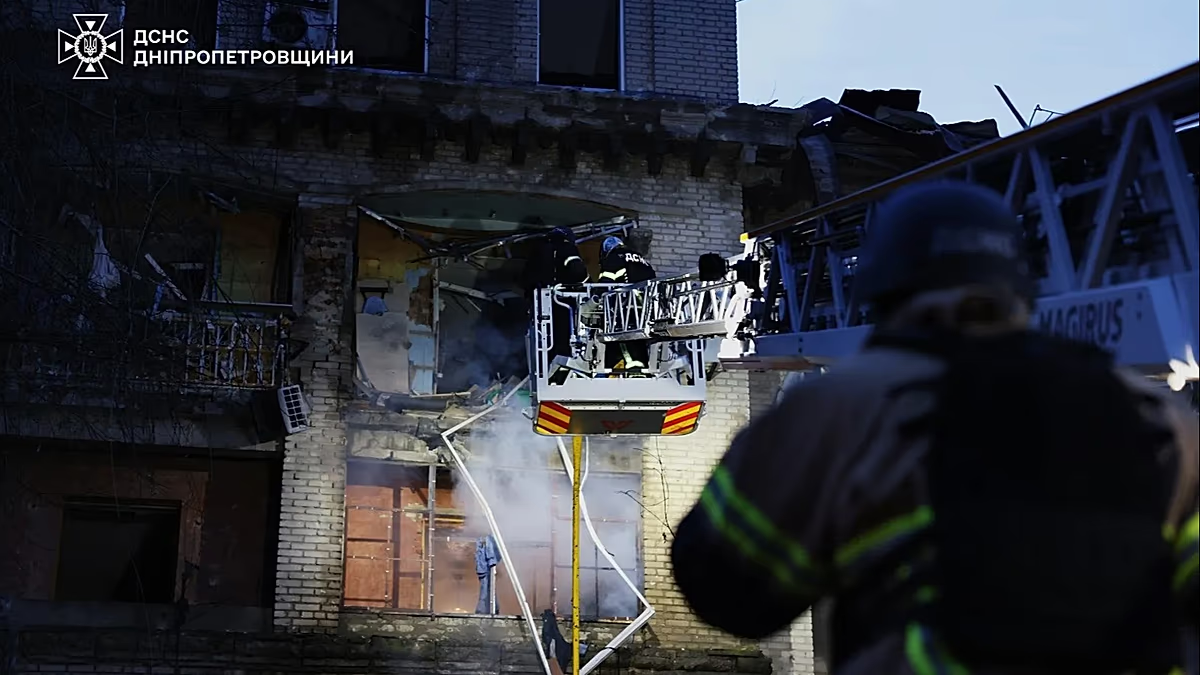

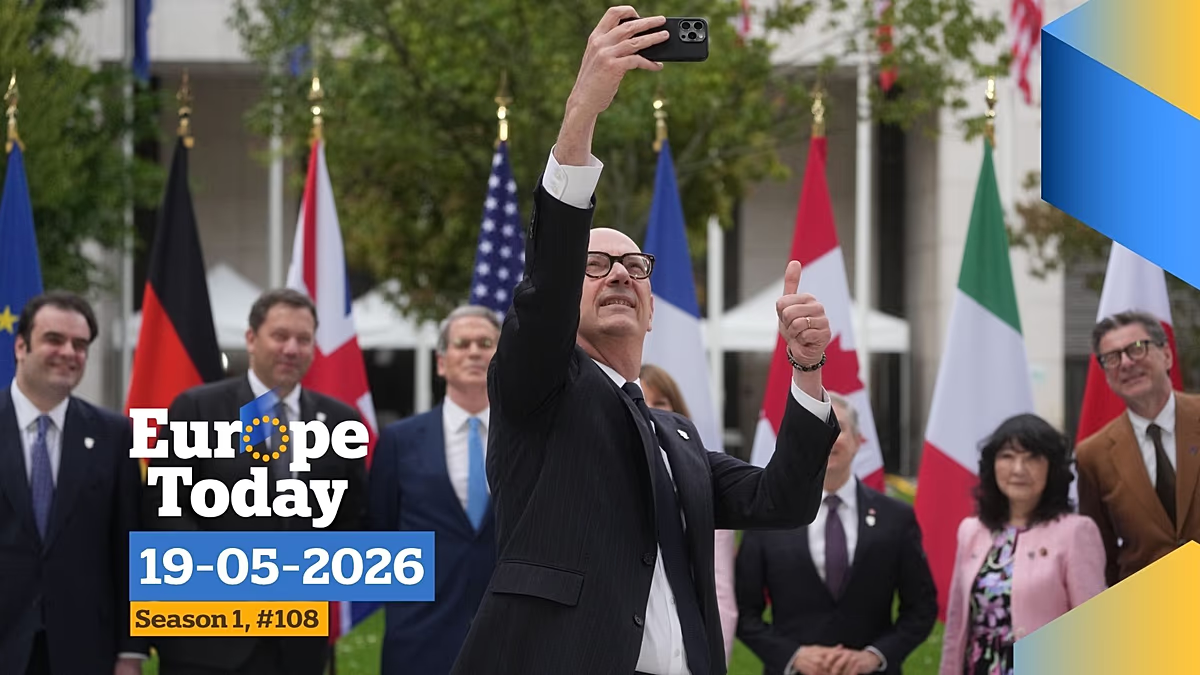


In a recent segment of Euronews’ flagship program Europe Today, host Méabh Mc Mahon and EU editor Maria Tadeo engaged in a critical conversation about Europe’s defense and security architecture. The discussion featured Željana Zovko, a Member of the European Parliament from the European People’s Party, and Sean Clancy, the Chair of the EU Military Committee. This dialogue arrived at a pivotal moment, as geopolitical pressures and shifting global alliances demand a fundamental re-evaluation of how Europe prepares to defend itself and its values. The core of their exchange moved beyond abstract policy and into the urgent, practical questions of military readiness, industrial capacity, and political will. Both guests underscored a pressing reality: while the concept of a more sovereign European defense is widely discussed, translating that ambition into tangible capabilities requires overcoming decades of fragmentation and underinvestment.
Željana Zovko brought a political and institutional perspective to the table, emphasizing that a stronger European defense pillar is not an alternative to NATO, but a necessary complement within the transatlantic alliance. She argued that for Europe to be a credible and reliable partner, it must take greater responsibility for its own security, reducing debilitating dependencies that have accumulated over years. This involves not only increasing defense budgets, a trend already accelerated by recent conflicts, but also ensuring that this funding is spent strategically and collaboratively. Zovko highlighted the inefficiency of 27 separate national procurement systems, which lead to duplication, wasted resources, and operational incompatibility. She championed deeper industrial cooperation and joint investments in next-generation capabilities, suggesting that the European Union itself must act as a catalyst to foster this integration, turning political declarations into binding commitments.
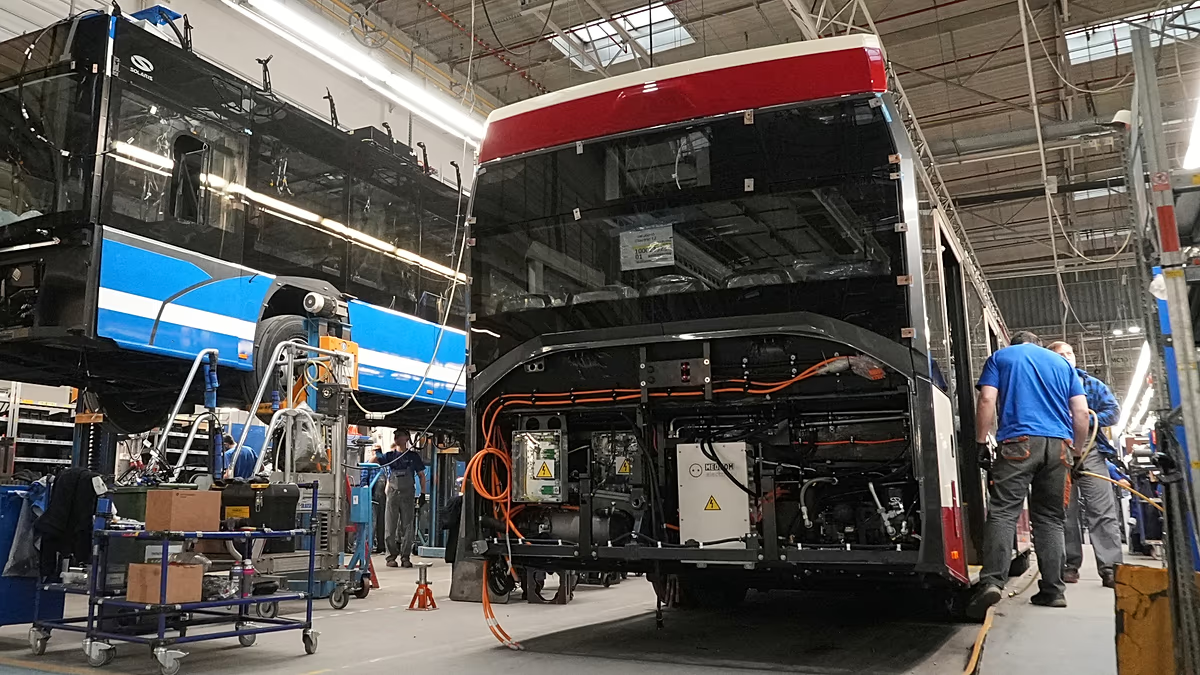
From a military-strategic vantage point, General Sean Clancy provided a grounded assessment of the current capabilities and the formidable challenges ahead. He acknowledged the significant progress made in operational terms, such as the EU’s rapid deployment of training missions and the activation of its Rapid Deployment Capacity. However, Clancy was clear-eyed about the gaps, particularly in areas like long-range firepower, air and missile defense, and strategic enablers like transport and logistics. His focus was intensely practical: to deter aggression and defend the continent, European forces must be equipped, trained, and ready to fight at a high intensity. This demands a paradigm shift in how militaries are resourced, moving from peacetime procurement cycles to a wartime-like tempo of production and innovation. Clancy’s message was that strategic autonomy is built not just in council meetings, but on the factory floors of Europe’s defense industries.
The program then shifted to economic statecraft with an explainer by analyst Jakub Janas on the stalled EU-US trade deal, formally known as the Transatlantic Trade and Investment Partnership (TTIP). This segment provided crucial context, illustrating how trade and security are increasingly intertwined in today’s geopolitical competition. Janas detailed how negotiations, once a top priority, have been effectively frozen for years, sidelined by political changes on both sides of the Atlantic and rising public skepticism about globalization. The analysis suggested that a revival of TTIP in its original form is unlikely. Instead, the EU and US are now pursuing a more piecemeal approach, focusing on targeted agreements to resolve specific trade disputes and align standards in critical sectors like clean technology and digital governance, aiming to present a united front while de-risking their own economies.
Adding a touch of cultural and institutional heritage to the broadcast, Euronews’ Vincenzo Genovese reported live from Strasbourg on a ceremony for the European Order of Merit. This segment served as a poignant reminder of the foundational ideals of the European project—peace, integration, and service—amidst the hard-headed discussions of military hardware and trade tariffs. The report, honoring individuals who have contributed significantly to European unity, provided a necessary balance, anchoring the day’s urgent political and security debates within the broader, aspirational mission of the Union. It was a moment to reflect on the “why” behind the “what,” connecting the efforts to secure Europe with the ultimate goal of preserving a space of freedom, prosperity, and cooperation for its citizens.
Finally, the program outlined its own role in this complex landscape, inviting viewers to engage with Europe Today as a daily resource. Anchored by Mc Mahon and Tadeo, the show promises to deliver not just the key events, but the crucial analysis that connects the dots between Brussels policy, global headlines, and their impact on citizens. Available on TV, online, and through its newsletter and podcast, this format is designed to demystify the workings of the EU and beyond. In an era of information overload and fragmentation, such a dedicated platform for in-depth European affairs is vital. It fosters an informed public discourse, which is itself a cornerstone of a resilient democracy, enabling citizens to understand the high-stakes debates—on defense, trade, and the future of the continent—that shape their collective security and identity.