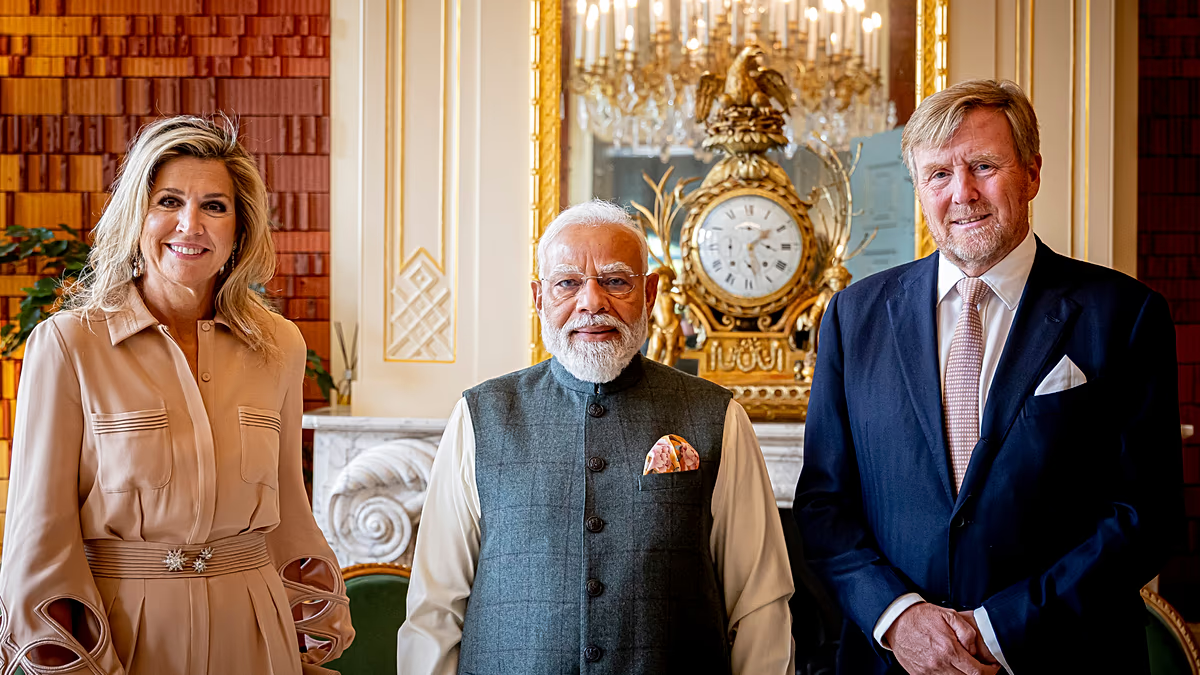


In a significant geopolitical pivot, months after a landmark Free Trade Agreement was concluded with the European Union, Indian Prime Minister Narendra Modi embarked on a pivotal tour across Europe. This visit represents the practical execution of that “mother of all deals,” moving beyond the broad framework agreed in Brussels to solidify concrete partnerships with individual national capitals. The tour, unfolding from May 18th to 20th, 2026, is a masterclass in diplomatic strategy, balancing the overarching regulatory and market-access benefits provided by the EU institutions with the specific, high-value deals offered by key member states. It underscores a new era of India-Europe relations, driven by mutual necessity and a shared desire to reshape global economic and security architectures.
The first stop in the Netherlands set a powerful tone for the entire journey. Prime Minister Modi’s meeting with Dutch leader Rob Jetten focused on a relationship already robust, with bilateral trade nearing €26 billion. The crown jewel of their discussions was an immediate and tangible prize: a monumental €10.2 billion semiconductor deal between Tata Electronics and the Dutch titan ASML to establish a cutting-edge microchip plant in western India. This agreement is far more than a simple business transaction; it is a textbook manifestation of Europe’s “China plus one” strategy. As Western nations and corporations urgently seek to diversify their supply chains away from over-reliance on Beijing, India emerges as a stable, democratic, and technologically capable alternative. The deal signals India’s ambitious entry into the high-stakes global semiconductor arena, fueled by European expertise and investment.
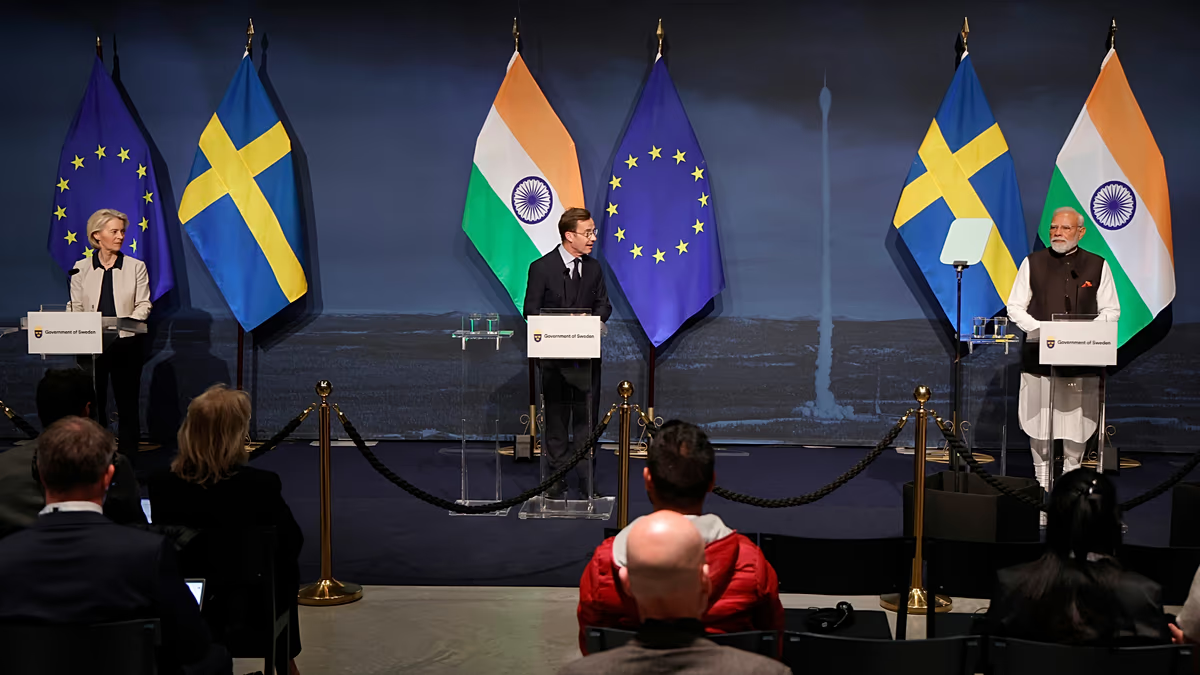
Attention then shifted north to Sweden, where the tour’s dual-track approach—engaging both national capitals and EU leadership—became vividly clear. In Stockholm, Modi met with Prime Minister Ulf Kristersson, seeking targeted collaborations in technology, defence, and the green transition. Concurrently, his participation at the European Round Table for Industry alongside European Commission President Ursula von der Leyen highlighted the indispensable role of Brussels. While Sweden can offer specific innovations and partnerships, the EU provides the critical framework of regulatory alignment and sweeping tariff cuts that make the entire European market accessible for Indian goods and services. This segment of the tour perfectly illustrated the synergy: national deals provide the engine for growth, while EU-level agreements pave the highway for that growth to flow across the continent.
The following day in Oslo further expanded the strategic horizon. At the India-Nordic summit, Prime Minister Modi engaged with leaders from Norway, Denmark, Finland, Iceland, and Sweden on frontier issues like clean energy cooperation and the evolving geopolitics of the Arctic. Climate change, ironically, has opened new strategic possibilities, rendering Arctic shipping routes increasingly viable. Discussions focused on how India and the Nordic nations can collaborate on sustainable development and secure these new maritime pathways, blending environmental stewardship with economic and security interests. This dialogue moved beyond traditional trade, positioning India as a partner in addressing some of the planet’s most pressing ecological and logistical challenges.
The grand tour concluded in Italy, a nation with deep historical ties to India. The meeting with Prime Minister Giorgia Meloni in Rome centred on two pressing contemporary issues: maritime security in the Mediterranean and beyond, and the creation of a joint action plan for legal migration channels. In a world grappling with unstable seas and complex migration dynamics, this partnership aims to foster stability and order. It reflects a pragmatic approach to global mobility, seeking structured pathways that benefit both economies, while also underscoring a shared commitment to safeguarding vital international waterways. This final stop added a crucial layer of geopolitical and social policy depth to the tour’s primarily economic foundation.
Ultimately, this European red-carpet reception for Prime Minister Modi is not merely a ceremonial honour; it is a strategic necessity for Europe. Facing slowing economies and a world where traditional partners are increasingly distracted or unpredictable, the continent sees India as an indispensable counterweight. The world’s most populous nation, now a burgeoning economic and technological powerhouse, offers a democratic, stable, and ambitious partner. This tour demonstrates that the historic EU-India Free Trade Agreement was only the beginning. Through these nuanced, country-by-country engagements, Europe and India are building a multifaceted alliance—one grounded in semiconductor plants and clean energy, secured by defence cooperation and maritime patrols, and facilitated by regulated migration and tariff cuts. It is a comprehensive partnership being assembled, piece by strategic piece, across the map of Europe.