


A Tragic Holiday: The Loss of Ariella Mann and the Ongoing Suffering of Chloe and Arthur
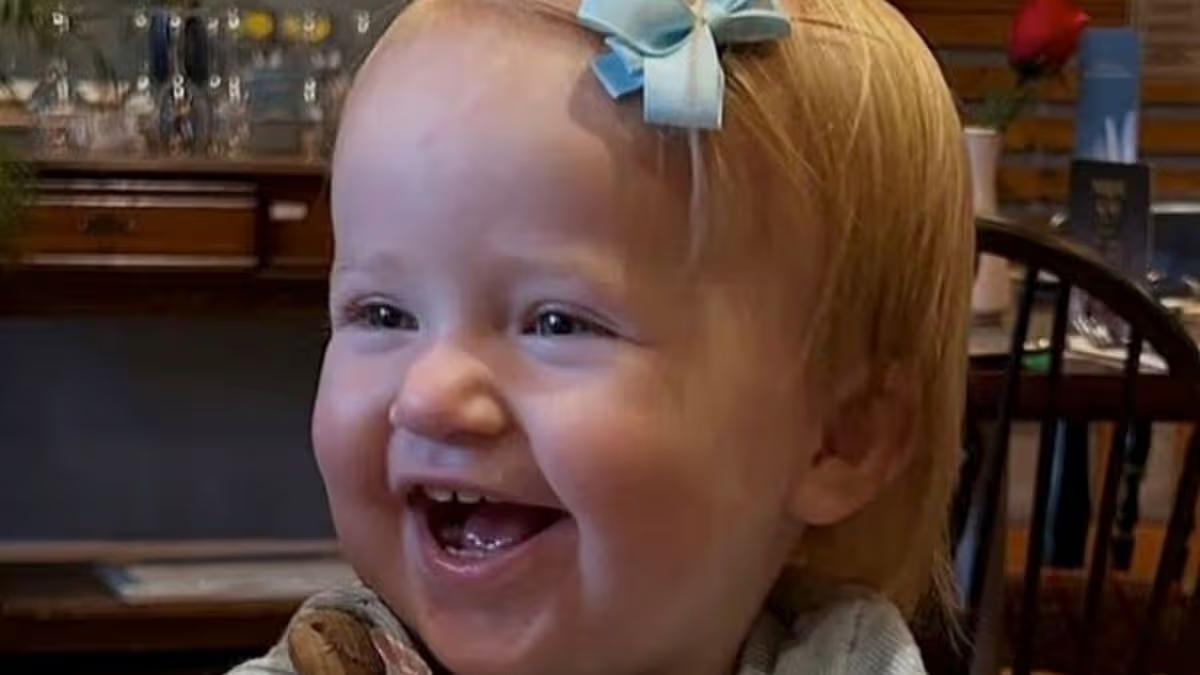
In a story that underscores the profound vulnerability of childhood and the devastating unpredictability of life, three British families have been plunged into unimaginable grief and trauma following holidays at a five-star Egyptian resort. The central, heartbreaking narrative belongs to one-year-old Ariella Mann, whose first family holiday ended not with joyful memories, but with her untimely death. In December of last year, Ariella, her parents Jade and Lee, and her six-year-old sister Summer embarked on a £6,000, all-inclusive two-week holiday to Egypt. What began as a festive getaway turned into a nightmare during the second week, when Ariella developed severe gastric symptoms—fever, diarrhoea, vomiting, and dehydration. Despite repeated visits to the hotel’s medical clinic, her condition worsened, prompting the family to fly home early on January 5. Within days, Ariella was transferred to a specialist children’s hospital, placed into an induced coma, and tragically passed away on January 10. The cause was Haemolytic Uraemic Syndrome (HUS), a rare and serious kidney condition that often follows an E. coli infection. Her mother, Jade, expressed the family’s shattered world, stating, “We felt completely helpless watching Ariella suffer… Ariella was a special, inquisitive and loving little girl… We deserve answers about what happened to our daughter.”
The Silent Threat: Understanding E. coli and HUS
The medical journey that led to Ariella’s death, and to the serious illnesses of two other children, begins with a common but potentially deadly bacterium: E. coli. While many strains are harmless, some can cause severe foodborne illness. In vulnerable individuals, particularly young children, this infection can trigger Haemolytic Uraemic Syndrome (HUS). HUS is a medical crisis where the infection destroys red blood cells, leading to kidney failure. It is a rare complication, but its onset is swift and devastating. For Ariella, the progression from gastric symptoms to full organ failure was fatal. For the two other children who fell ill at the same resort—Chloe Crook, aged two, and Arthur Broughton, aged six—the condition was survivable but left them with profound, lasting damage. Their stories reveal that HUS is not just an acute illness but a life-altering event, attacking multiple systems in the body and leaving survivors with a challenging road to recovery.
Chloe Crook’s Fight for Survival
Two-year-old Chloe Crook’s family holiday in July 2024 turned into a medical odyssey of terrifying proportions. After developing similar symptoms of diarrhoea, vomiting, fever, and fatigue, Chloe’s condition deteriorated so rapidly that she was admitted to a hospital in Egypt. There, her illness escalated horrifically; she temporarily lost her sight and her ability to speak, and suffered seizures. Tests confirmed her kidneys were failing, and she was diagnosed with HUS caused by an E. coli infection. She was airlifted to a London hospital, placed in a coma for four days, and during this time developed pneumonia and a blood clot. After a month-long battle, she was discharged on July 31, but her recovery is ongoing. She requires regular follow-up appointments with nephrology specialists, and the long-term impact on her young kidneys remains a serious concern. While the hotel and tour operator TUI provided support and offered a refund, the family’s focus remains on Chloe’s health, not compensation.
Arthur Broughton’s Long Road to Recovery
Six-year-old Arthur Broughton’s story further illustrates the brutal scope of this illness. During a £2,400 family holiday last August at the same resort, Arthur began suffering from diarrhoea, fever, and abdominal pain. Upon returning to the UK, when he started coughing up blood, his parents rushed him to hospital. Doctors confirmed E. coli infection leading to HUS. Arthur was admitted to intensive care, placed on a ventilator, and spent three weeks fighting for his life. While he survived, the aftermath has been grueling. The illness caused significant neurological impact; Arthur had to relearn how to walk properly and battled slurred speech. He continues to suffer from kidney issues and requires daily medication. His mother, Sharon, recounted the haunting moment Arthur asked her if he was going to die, saying, “It’s every mum’s worst nightmare… the most frightening part is knowing these complications could stay with him for the rest of his life.”
Seeking Answers and Accountability
The confluence of these three severe cases—one fatal, two life-changing—at the same hotel, the Jaz Makadi Aquaviva in Hurghada, has raised urgent questions about safety and oversight. All holidays were booked through TUI UK Limited. The families, united in their trauma, have now instructed lawyers to investigate. Jatinder Paul, the solicitor representing them, noted, “The fact these incidents have occurred at the same Egyptian hotel is a major cause for concern.” The legal focus is on securing answers regarding the source of the infections and ensuring that the affected families receive either support for their loss or the specialist rehabilitation the children need. TUI has stated they are deeply saddened by Ariella’s death and are sorry for the illnesses suffered by Arthur and Chloe. They emphasize that reports of illness are taken extremely seriously, that an independent health and safety investigation was initiated, and that they are cooperating with the hotel, local authorities, and the UK Health Security Agency.
A Call for Vigilance and the Unanswered Question of Cause
This tragic cluster of cases serves as a sobering reminder of the hidden risks that can exist even in luxurious travel settings. It highlights the critical importance of robust hygiene standards, transparent reporting of illnesses, and swift medical intervention. While TUI and the hotel have protocols in place and investigations are ongoing, the fundamental question of what caused these specific E. coli infections remains unanswered, leaving the families in a painful limbo. For Ariella’s parents, the pursuit of answers is part of their grieving process. For Chloe and Arthur’s families, it is intertwined with their hope for a full recovery and a safer future for all travellers. As the official processes continue, the human stories endure: a family mourning a vibrant one-year-old girl, and two families supporting their children through the long shadow of a disease that stole their ordinary childhoods and replaced them with a fight for health.