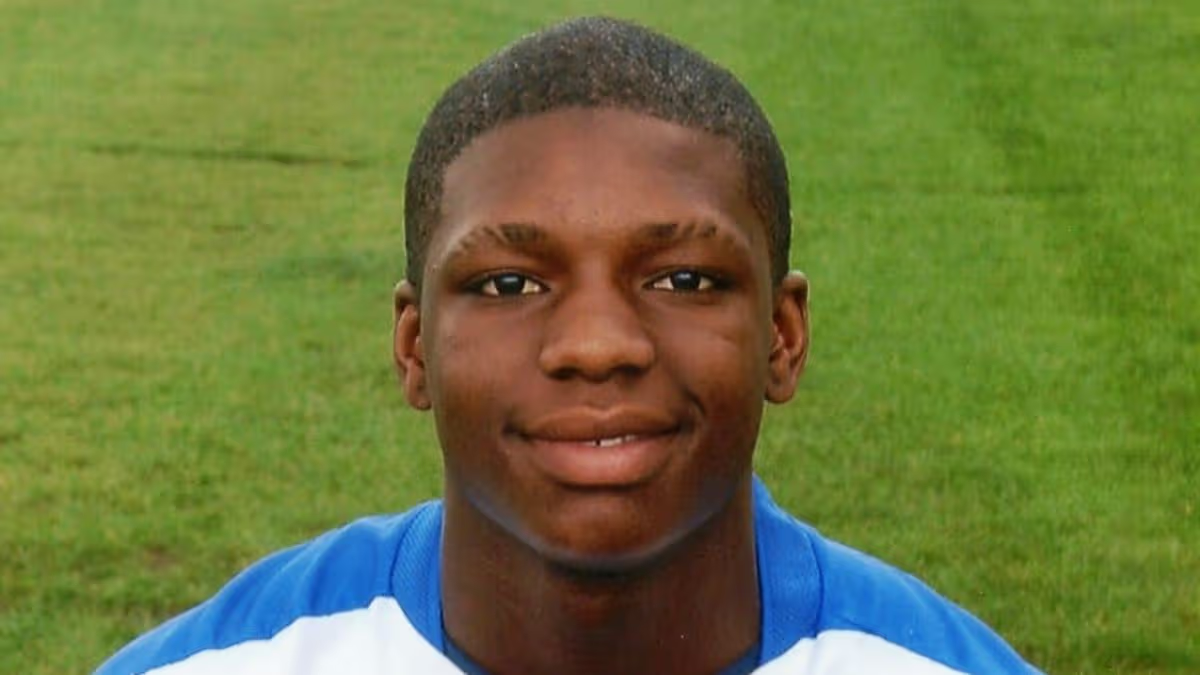


Two decades have passed since Mark Prince received the call that shattered his world. On a day in May 2006, his fifteen-year-old son, Kiyan—a bright talent in Queens Park Rangers’ youth academy—stepped outside his North London school to break up a fight. In a moment of horrific violence, Kiyan was stabbed in the heart. The news, delivered by a doctor, unleashed a primal rage in Mark, a former world champion boxer. He recalls punching through a hospital wall, his hands bloodied, consumed by thoughts of revenge against the sixteen-year-old who took his son’s life. That initial fury, however, has been forged over twenty years into something profoundly different: a mission of love, forgiveness, and relentless advocacy for the nation’s young people.
From the depths of his grief, Mark Prince chose a path few could envision. He established The Kiyan Prince Foundation (KPF), channelling his pain into purpose through boxing and mentorship. The foundation has since guided over 100,000 young people across England and Wales, with its programs motivating 80% of participants to make positive life changes. But Mark’s vision of healing extended even further. In a move that many find difficult to comprehend, he actively sought a restorative justice meeting with Hannad Hasan, his son’s killer, who was serving a life sentence. “I was eager to meet the guy who killed my son,” Prince explains. For him, it was the ultimate test of the principles of love and forgiveness he had instilled in Kiyan. Though the meeting was cancelled last minute prior to Hasan’s extradition to Somalia, Prince’s intent stands as a powerful testament to his belief that helping those who have caused the greatest harm is a legacy too powerful to ignore.
Now, on this poignant twentieth anniversary, Mark Prince is launching a new national campaign: The Champions’ Club. It is a direct response to alarming research commissioned by KPF, which found that less than half of Britain’s young people feel optimistic about their futures, and only 37% believe they have the opportunity to achieve their life goals. Three-quarters feel it is difficult to be young in the UK today. Prince argues that society too often sees these disenfranchised youths as the problem, rather than investing in their potential. “We’ve been focusing on the potential and futures of our young people,” he says, “because that’s what they’re hearing. They’re hearing that they have a voice, that there are people who care.” The campaign is a clarion call for significant, sustained investment in youth services across the country.
The foundation’s policy demands are clear and practical. It identifies youth clubs as a critical “lifeline,” providing structure, safety, community, and belief. The charity warns that without consistent funding, young people seek belonging elsewhere, often in gangs. “If we are serious about giving young people a chance to win,” the KPF states, “then we must properly fund the places that make winning possible.” This call has found some political resonance, with the current government having announced funding aimed at improving youth infrastructure in disadvantaged areas—a step Prince views as necessary but only a beginning. His work has also brought him alongside other grieving parents, like those of Harry Pitman, a 16-year-old stabbed on New Year’s Eve, offering solace and a model for transforming anguish into action.
Mark Prince’s extraordinary journey from heartbroken father to national advocate was recognised last year when he received the Helen Rollason Award at the BBC Sports Personality of the Year ceremony. The honour underscores how his personal fight has evolved into a public one: a fight against despair, apathy, and underinvestment. He draws directly on his boxing ethos to frame this challenge. “Because I’m a fighter and I don’t shy away from tough fights,” he says, “this is just another tough fight for me and I’ll have the same attitude and I’ll step up.” His goal is to create tangible spaces that carry Kiyan’s name, places where young people can feel like “winners” again.
The legacy of Kiyan Prince, the promising footballer, now lives on in a different form. It is a legacy measured not in goals scored, but in lives redirected and hope restored. Through The Kiyan Prince Foundation and the new Champions’ Club campaign, Mark Prince offers a blueprint for change rooted in compassion and proactive support. He stands as a powerful example that even from the deepest tragedy, a force for good can emerge—one dedicated to ensuring that other young people are given the chance to thrive, and that other parents are spared the unimaginable pain he has carried for twenty years. His life’s work is a lasting demonstration of the love he taught his son, made manifest for an entire generation.