



Of course. Here is a humanized and expanded summary of the provided content, structured into six paragraphs.
A healthcare worker from the remote British overseas territory of Ascension Island is now receiving specialized care in London, marking a significant and precautionary step in the UK’s response to a potential hantavirus outbreak. This individual, who began showing symptoms consistent with the rare rodent-borne virus, was flown to the High Consequence Infectious Diseases unit at Guy’s and St Thomas’ NHS Foundation Trust for expert assessment and treatment. This transfer underscores the serious nature with which authorities are treating the situation, given that Ascension Island lacks the facilities to manage such a specialist infectious disease case. The UK Health Security Agency emphasized that this was a “highly precautionary measure” taken to ensure the individual has immediate access to the best possible care should their condition develop, highlighting the proactive approach being taken to safeguard both the patient and public health.
This development is directly linked to a larger, unfolding situation that began on the cruise ship MV Hondius, which has been at the centre of a hantavirus outbreak. The ship, which docked in Tenerife in mid-May, has seen at least eleven confirmed cases among its passengers, tragically resulting in three fatalities. In a carefully coordinated repatriation effort, a group of nine British nationals from St Helena and Ascension Island, who were potentially exposed to the virus but currently show no symptoms, are expected to arrive in the UK. They will complete their mandatory monitoring period in the country, where the robust NHS High Consequence Infectious Diseases network stands ready to support them if needed, ensuring they are never far from expert medical help.
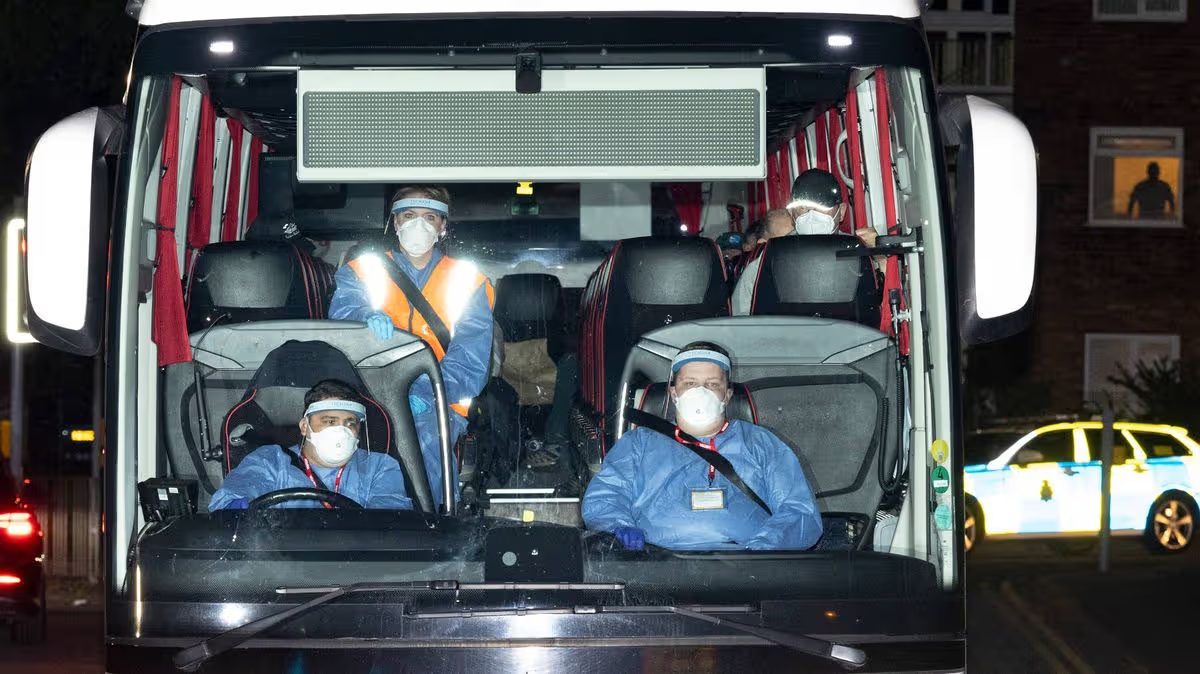
Upon arrival, this group will be taken to Arrowe Park Hospital on the Wirral, a facility that has become a key hub in this health response. This hospital has already been supporting other passengers from the afflicted cruise ship, with several individuals having recently been discharged to safely finish their 45-day isolation period at home following thorough clinical assessments. Dr. Meera Chand of the UKHSA reaffirmed the agency’s commitment to a safe and supported repatriation process, stating that close contact with all individuals will be maintained throughout their isolation. This layered strategy—combining hospital care for assessment and potential treatment with supervised home isolation for stable cases—aims to balance effective medical oversight with the well-being of those affected.
Recognizing the need to bolster defences at the potential source, the UK has also dispatched a specialist team to the South Atlantic territories. In response to a formal request for assistance, three members of the UK Public Health Rapid Support Team have been sent to the islands for an eight-week deployment. The team, comprising two microbiologists and an infection prevention specialist, has a critical mission: to assist local hospitals with advanced PCR testing for hantavirus, help rule out other illnesses, and strengthen local protocols for managing any future cases. This on-the-ground support is a vital part of the strategy, aiming to build local capacity and prevent further spread from the origin point of the exposure.
The ramifications of the outbreak have also touched Scotland, where public health officials have indicated that a small number of people within the country may have been potentially exposed. Public Health Scotland is actively working to trace and contact these individuals, demonstrating how a localized incident on a cruise ship can have a diffuse footprint across the UK. This contact-tracing effort is a standard but crucial public health measure, ensuring that anyone at risk is identified, advised, and monitored, thereby closing the loop on potential chains of transmission.
Overall, the UK’s response to this complex international health incident showcases a multi-pronged and highly coordinated approach. From evacuating a symptomatic medic for elite care in London, to repatriating and monitoring exposed citizens, and reinforcing frontline defences on distant islands, the actions taken by UKHSA and its partners reflect a comprehensive commitment to containing the outbreak. The situation, while concerning, is being managed with a clear focus on specialist medical intervention, continuous support for those affected, and rigorous public health safeguards to protect the wider population from this rare but serious virus.