


The Global Housing Divide: A Unified Crisis Demands Collective Solutions
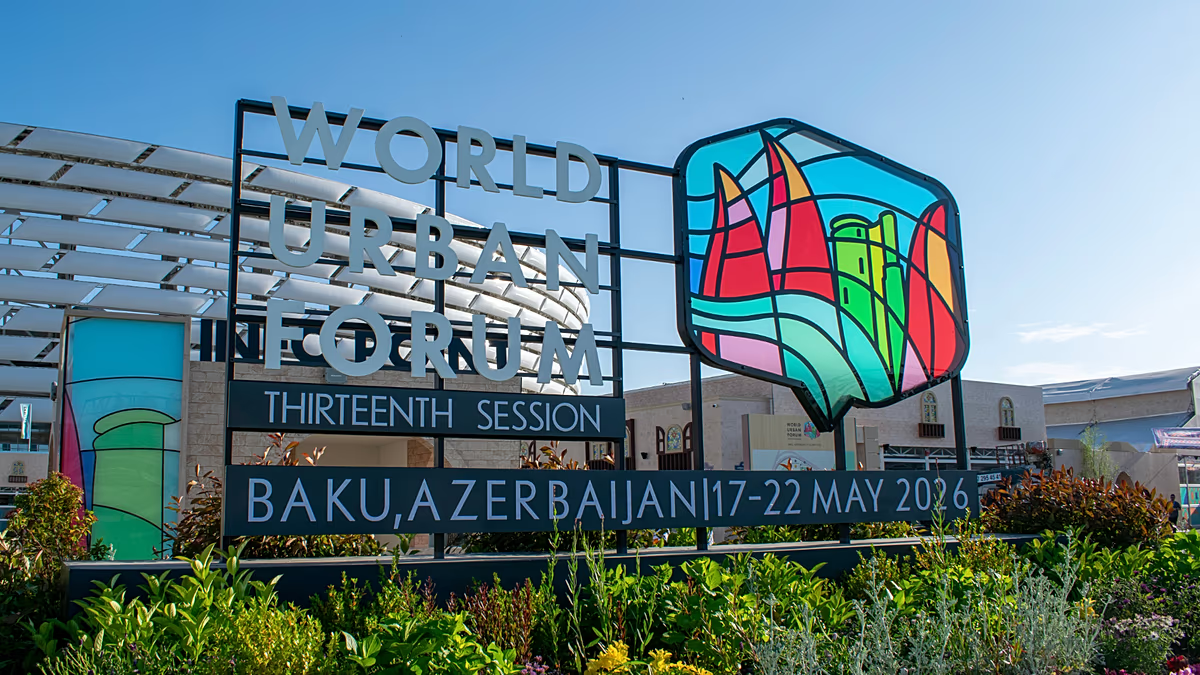
The stark reality of global inequality was laid bare on the opening day of the thirteenth World Urban Forum in Baku, Azerbaijan. Slovakia’s Deputy Prime Minister, Tomas Taraba, provided a jarring statistical contrast that framed the entire conference: where 80% of Slovaks own their homes, ownership rates in some nations plummet to a mere 20%. This chasm, as Taraba noted, creates a profound disruption to social quality of life, with skyrocketing housing prices exacerbating instability for millions. This single comparison underscored the universal nature of the housing crisis, setting the stage for a gathering of over 40,000 delegates from 182 countries, all united by the urgent need to rethink how we build, finance, and sustain our cities.
Across the diverse panels and discussions, a powerful consensus emerged that transcends regional and political boundaries: the housing and urban development crisis has evolved into a global challenge that can no longer be contained or solved within national borders alone. Delegates from Asia, Europe, and Africa alike reported that the combined forces of breakneck urbanisation, intensifying climate pressures, and chronic infrastructure deficits are simply outpacing the capacity of any single government. The problem is both universal and locally specific, creating a paradox that demands international cooperation while respecting diverse contexts. This recognition marked a significant shift, moving the conversation from isolated national struggles to a shared global predicament requiring a collective response.
In confronting this scaled-up challenge, the call for innovative and trustworthy investment took center stage. Malaysia’s Minister of Housing, Nga Kor Ming, who also presides over the UN-Habitat Assembly, presented a clear-eyed formula for mobilising the necessary capital. He argued that the onus is on governments to develop credible, well-planned projects backed by a proven track record of integrity and execution. “Once that can be done,” he asserted, “we believe there are people who are more than willing to step forward.” This highlights a critical pathway forward: the global financial community is poised to invest, but it requires demonstrable stability and transparency from public sectors to unlock the trillions needed for sustainable urban development.
The forum’s value, however, was found not in prescribing a one-size-fits-all solution, but in serving as a vast marketplace for ideas and inspiration. As Czech Deputy Minister for Regional Development Filip Endal emphasised, there is no single blueprint to improve housing conditions worldwide. Instead, the gathering’s power lies in the exchange of diverse approaches—from innovative zoning laws and green building techniques to novel public-private partnership models. Delegates like Endal arrived seeking not a rigid manual, but adaptable concepts they could tailor to their own national circumstances, taking home fresh perspectives to reinvigorate their domestic policies.
For delegates from developing nations, particularly across Africa, the discussions carried an acute urgency. These regions often face the most rapid urban population growth alongside the most constrained access to financing and green technology. Gambia’s Minister of Land and Housing, Hamat Bah, pointed to the host nation’s own journey as a source of inspiration. He cited Azerbaijan’s post-conflict reconstruction and development as a lesson in “courage and dedication,” a model of national commitment that can return a country to the global map. This sentiment reflects a crucial aspect of the forum: it is as much about learning from the resilient recovery of peers as it is about accessing funds from wealthier nations.
As the World Urban Forum continues its deliberations in Baku, the message is clear. The housing crisis is a common thread weaving through every continent, destabilising societies and hindering sustainable growth. The solution lies in a dual approach: fostering international solidarity and knowledge-sharing while empowering national governments to act as credible, visionary partners for global investment. The path forward is complex, requiring a blend of local courage, like that seen in Azerbaijan, and international cooperation. The dialogue in Baku has reinforced that the future of our cities—and the dignity of their inhabitants—depends on our collective willingness to treat affordable, sustainable housing not as a local commodity, but as a foundational global right.