
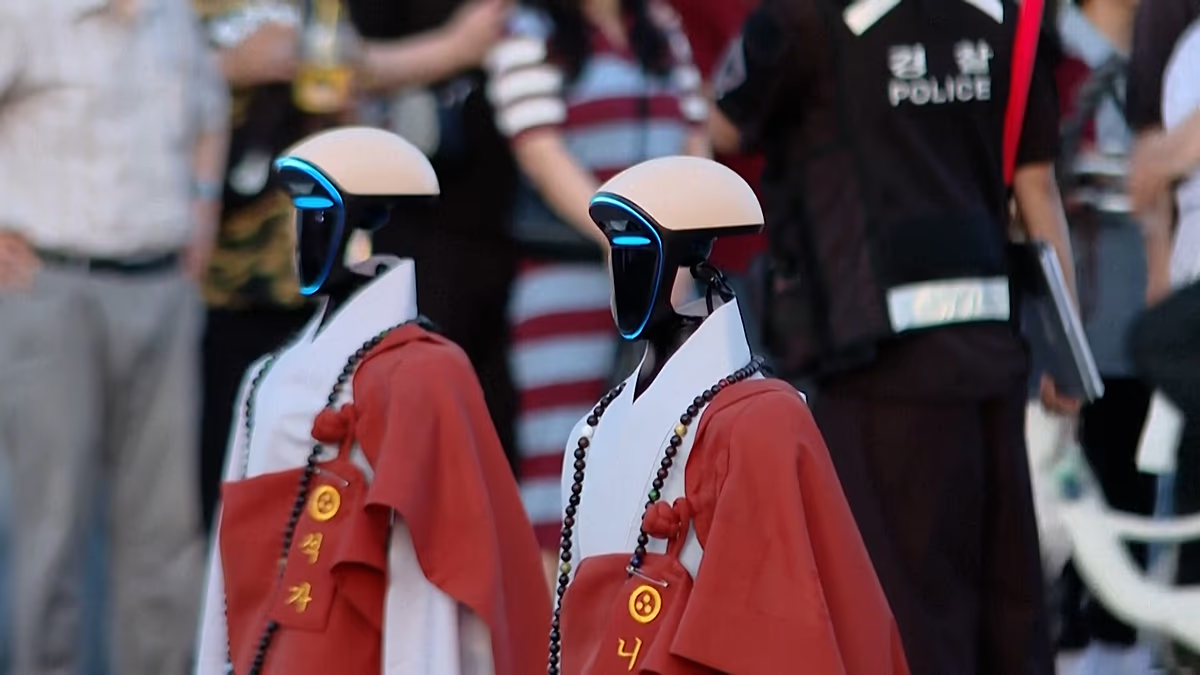



In the heart of Seoul’s historic Jongno district, the ancient and the future walked side by side beneath a canopy of soft, glowing light. The annual Lotus Lantern Festival, a vibrant celebration marking Buddha’s birthday organized by South Korea’s largest Buddhist sect, the Jogye Order, transformed the city streets into a river of illumination. Nearly 100,000 handmade lanterns, carried by about 50,000 participants, created a breathtaking spectacle of tradition and community. Yet, amidst the familiar scene of dancers, performers, and long lines of illuminated lotus flowers, a new, quietly revolutionary presence moved through the crowd: four robots named Gabi, Seokga, Mohee, and Nisa. Dressed in traditional monastic robes, these machines processed alongside the human devotees, not as curiosities, but as honored participants, designated as honorary monks for the celebrations.
This striking integration of robotics into a deeply spiritual ceremony was not a mere publicity stunt, but a profound and symbolic gesture by South Korean Buddhism. It represents a conscious, wider effort to modernize its image and reconnect with a rapidly changing society, particularly its younger generations. In a world where technology dominates daily life and ancient institutions can seem distant, the Jogye Order is seeking a bridge. Earlier in the month, this intent was made solemnly clear when one of the robots, Gabi, underwent a formal symbolic ordination ceremony at the central Jogyesa Temple in downtown Seoul. There, the robot pledged to follow adapted Buddhist principles—a commitment to respect life and a vow for the responsible use of technology. This moment blurred the lines between the organic and the artificial, asking participants to consider the essence of spiritual values in a new context.
The motivation behind this pioneering project is deeply pragmatic, born from two pressing contemporary concerns. First, the order faces a practical challenge: a declining number of human monks entering the monastic life, a trend seen in many traditional religions across modern societies. Second, it responds to the philosophical and ethical questions posed by the growing, ubiquitous role of artificial intelligence in our daily lives. By inviting robots into the sacred space of a festival, the Buddhist community is proactively engaging with the technology that shapes the modern world, seeking to imbue it with ethical direction from the outset. The initiative asks a fundamental question: Can the core principles of compassion, mindfulness, and respect for all beings be translated into, and perhaps even guide, the age of algorithms and automation?
The public response during the parade itself was a testament to the compelling nature of this fusion. For nearly forty minutes, the procession captivated visitors who crowded the streets, their eyes drawn to the harmonious, if surreal, sight. The robots moved beneath the colourful lanterns and historic city gates, their mechanical forms softened by the traditional garb and the warm, festive light. The scene did not feel like a conflict between eras, but rather a dialogue—a visual conversation about continuity and adaptation. It offered a moment of collective reflection, where the community could physically see their ancient traditions embracing the tools of the future, suggesting that spirituality is not static but a living, evolving force.
Ultimately, the walking of Gabi, Seokga, Mohee, and Nisa through the lantern-lit streets is a narrative about preservation through innovation. South Korean Buddhism is demonstrating that to protect its values and community in the 21st century, it must not shield itself from change, but must thoughtfully engage with it. The robots, as honorary monks, become more than machines; they become symbols of this adaptive spirit. They represent a commitment to ensure that teachings of mindfulness and ethical living remain relevant and accessible, even as the vessels for those teachings evolve. It is an acknowledgment that the temple gates must remain open to the realities of the world outside, including the digital one.
In humanizing this event, we see not the cold intrusion of technology into a sacred space, but a warm, intentional outreach. It is a story of a religious community looking inward at its challenges and outward at society’s trajectory, and choosing to meet both with creativity and grace. The Lotus Lantern Festival, with its timeless symbol of light overcoming darkness, found a new expression this year. The light now shines not only from paper and silk lanterns, but from the thoughtful effort to illuminate a path forward—one where ancient wisdom walks hand-in-hand with the future, guiding it with principles of respect and responsibility for all life, in all its forms.