


On a crisp Saturday afternoon in May, Celtic Park was the stage for a Scottish Premiership finale of almost unbearable tension and drama. For weeks, the title race had gripped the nation, with Celtic and Hearts locked in a duel that came down to this single, decisive match. The atmosphere was electric, a potent mix of hope and dread, as both sets of fans knew that the destination of the league trophy would be decided over these ninety minutes. Hearts, having mounted an extraordinary challenge, needed only a draw to clinch the championship on Celtic’s own hallowed ground. When Lawrence Shankland fired the visitors into a first-half lead, it seemed the dream was crystallizing into reality for the men from Edinburgh. The away section erupted, daring to believe that this was their year, while a stunned silence fell over the vast majority of the stadium.
However, the pendulum of fate swung violently just before the interval, as Arne Engels coolly converted a penalty to restore parity. The second half unfolded as a tense, gripping battle, with Hearts heroically holding their shape and repelling Celtic’s onslaught. As the clock ticked into its final moments, with the draw still intact and the title inches from Hearts’ grasp, the unthinkable happened. In a devastating double blow, late goals from Daezen Maeda and Callum Osmand snatched victory from Hearts’ grasp and delivered the championship to Celtic in the most cruel and dramatic fashion imaginable. The eruption of joy from the Celtic supporters was matched only by the profound, gut-wrenching despair that visibly consumed the Hearts players, who sank to their knees on the pitch, their monumental effort over a long season undone in a matter of seconds.
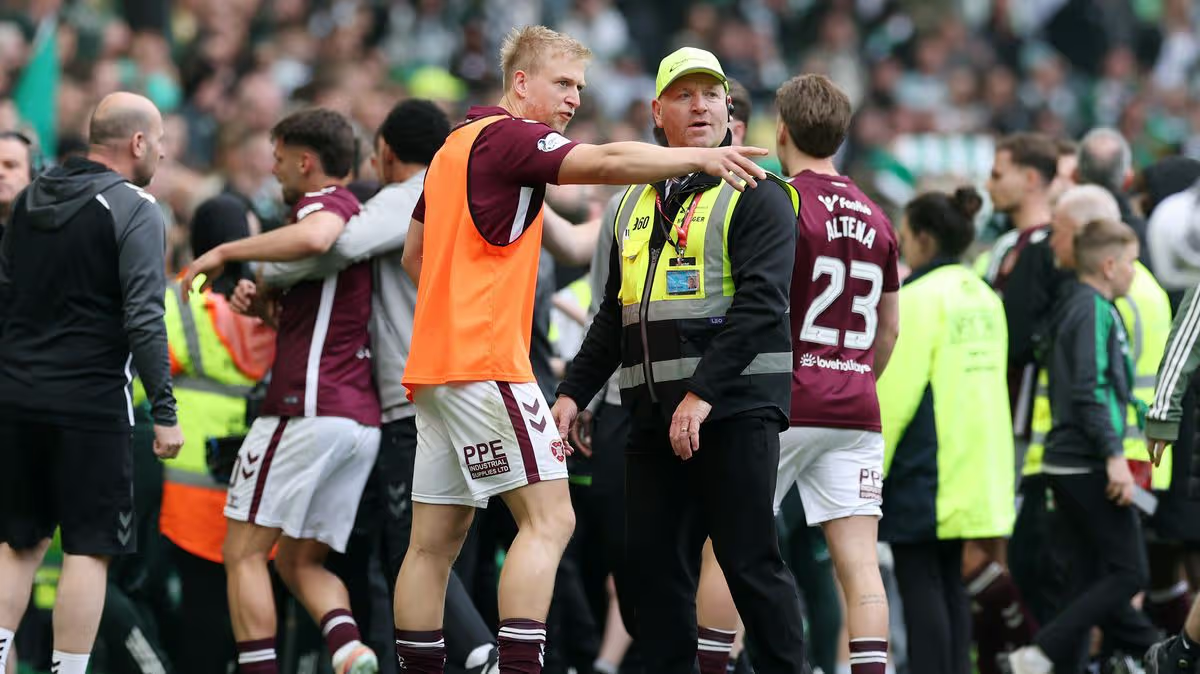
What followed the final whistle, however, tragically marred the spectacle of a magnificent sporting contest. As Celtic’s celebrations began, a flood of home supporters spilled onto the playing surface. While many were simply overcome with elation, the situation quickly deteriorated. Reports emerged of isolated but serious incidents, including alleged assaults on Hearts players who were still on the field trying to process their heartbreak. Police and stewards were forced to intervene, ushering both sets of players to safety as the scene grew chaotic. The referee, in an unprecedented move, officially ended the match thirty seconds early once the pitch was cleared. The beautiful game had, in those ugly moments, shown its very worst face.
The aftermath was telling. Understandably, the Hearts contingent had no desire to linger in the cauldron of their devastation. In a scene that spoke volumes of their desolation and the unsettling circumstances, players and staff were seen boarding their team bus shortly after the final whistle, some still wearing their full kit, having not even changed. They departed Glasgow without fulfilling their post-match media duties, a silent protest against the bitter end to their campaign and the unacceptable breaches of safety they had just endured. Manager Derek McInnes, normally a figure of articulate analysis, also left without comment, his team’s dignified silence a powerful statement in itself.
The reaction from observers was one of shared dismay at the pitch invasion’s consequences. Sky Sports presenter Eilidh Barbour noted the Hearts players’ swift departure, adding, “you can understand” their actions given the reports of assaults, which she rightly condemned as something “we do not want to see… at any time in football.” Pundit and former professional James McFadden echoed this, praising the epic contest while unequivocally stating that fans “can’t cross the line.” He acknowledged the rightful euphoria of Celtic’s supporters but stressed that the potential assault of a player was “absolutely unacceptable.” McFadden also took care to honor Hearts’ incredible season, insisting that their performance was “not a one-off” and that they had “shown everyone they’re here to stay.”
In the end, the league table recorded a mere two-point gap between champion and runner-up, a statistic that only deepens the agony for Hearts and underscores the fine margins of elite sport. The day will be remembered for Celtic’s stunning, last-gasp triumph, a testament to their relentless spirit. Yet, it will also be remembered for the profound sporting cruelty inflicted on a valiant Hearts side, and for the dangerous actions of a minority that cast a shadow over the occasion. It was a finale that contained the full spectrum of football’s power: its capacity for breathtaking drama, for heartbreak, for glory, and, regrettably, for its own self-defeating chaos. The hope must be that the lessons from the darker aspects of the day are learned, so that the focus remains where it belongs—on the extraordinary athletic contest that, for ninety minutes, captivated a nation.