



Introduction to a Transnational Crime Wave
In a significant blow to organized crime, Spanish and Italian authorities, with coordination from Europol, have successfully dismantled key parts of a sophisticated network specializing in violent luxury watch thefts. This culminated in the recent arrest of 12 individuals in Naples, Italy. These detentions are not an isolated event but the latest chapter in a sweeping international investigation that has already seen 31 people apprehended across Europe. The operation highlights a disturbing and growing criminal trend targeting affluent tourists, transforming popular holiday destinations into hunting grounds for highly coordinated thieves. The sheer scale and cross-border nature of the collaboration underscore how seriously European law enforcement is taking this violent phenomenon.
The Anatomy of a Modern Criminal Gang
The arrested individuals are linked to Neapolitan gangs known locally as ‘paranzas’. These are not opportunistic street criminals but highly organised units operating with military-like precision. Each cell typically consisted of three to five members who meticulously planned their incursions into Spain. Using false documentation, they would travel from Italy, often bringing their own vehicles or renting others upon arrival to avoid detection. Their targets were the iconic Spanish tourist hubs of Marbella, Málaga, Barcelona, Ibiza, and Palma de Mallorca—locations synonymous with leisure and wealth, which provided the perfect camouflage for their predatory activities.
The Brutal Reality of the Robberies
The gangs’ methodology was both calculated and ruthless. They would spend hours, or even days, surveilling potential victims—usually tourists or individuals displaying signs of significant wealth—in upscale areas such as luxury hotel entrances, fine-dining restaurants, exclusive beaches, and high-end shopping districts. The actual robbery was a moment of shocking violence designed for speed and psychological overwhelm. Attackers would strike without warning, often on foot or using scooters for a quick escape, violently yanking watches directly from their victims’ wrists. This brazen tactic, executed in broad daylight in crowded places, left victims not only materially robbed but also traumatized by the sudden physical assault before the perpetrators vanished into traffic.
The Fuel Behind the Crime: A Booming Luxury Market
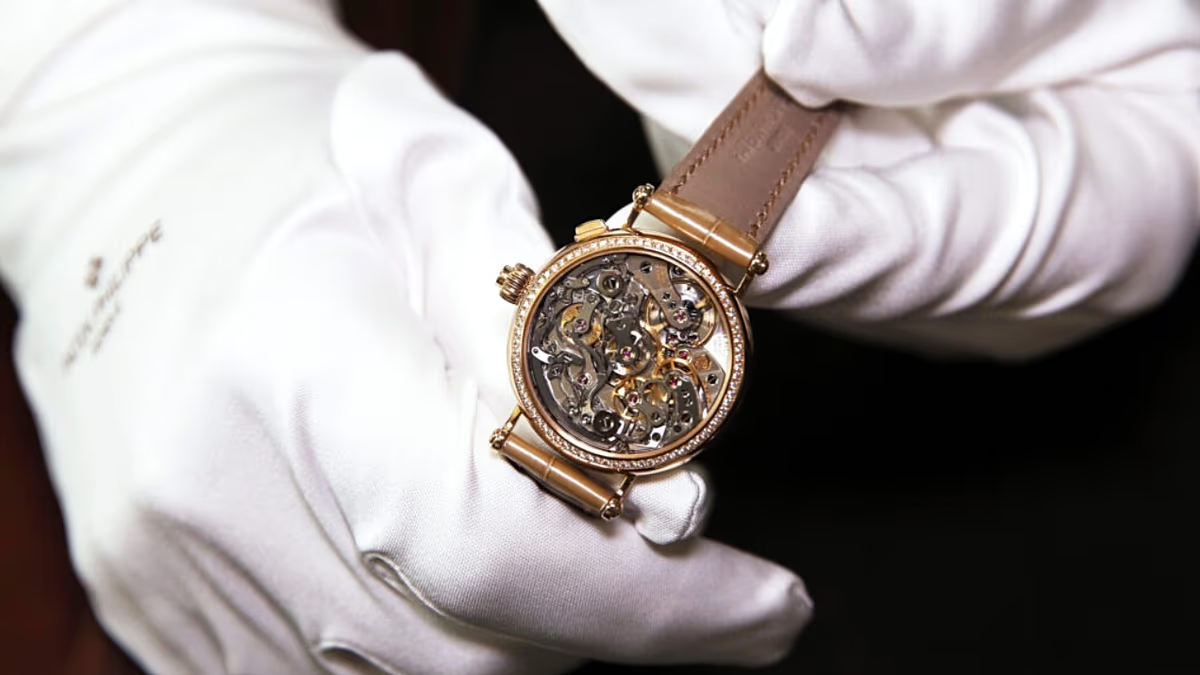
A key driver of this criminal explosion is the skyrocketing value of luxury timepieces on the international secondary market. High-end watches from brands like Rolex, Patek Philippe, and Audemars Piguet have transcended their function as accessories to become highly liquid stores of value, akin to currency or precious gems. This has made them irresistible targets for organized crime. A single successful theft can net tens or even hundreds of thousands of euros, with the stolen goods easily fenced through illicit networks across Europe and beyond. The low risk of tracking compared to bulkier items and the high reward have created a perfect storm, incentivizing the formation of these specialized transnational theft rings.
A Pioneering Joint Strike at the Source
In a strategic shift from simply reacting to crimes on Spanish soil, authorities decided to strike at the heart of the network. Recognizing that many of the operatives were based in and operated out of Naples, Spanish investigators, in close cooperation with the Italian police and Europol, launched a direct intervention in the Italian city. This involved executing simultaneous judicial warrants issued by Spanish courts, a complex legal and logistical maneuver demonstrating unprecedented cross-border judicial cooperation. By apprehending suspects in their home base, authorities aimed not only to incarcerate individuals but also to disrupt the logistical planning, recruitment, and resale operations that sustained the entire criminal enterprise.
Conclusion: A Battle Far From Over
While the recent arrests represent a major victory for international law enforcement, they also serve as a stark reminder of the adaptable and resilient nature of organized crime. The lucrative allure of luxury watches ensures that new recruits may fill the voids left by arrested gang members. The operation signifies a crucial move from national to truly European policing, sharing intelligence and resources to combat gangs that disrespect national borders. For tourists and residents in luxury hotspots, it is a cautionary tale about situational awareness. For authorities, it is proof that only through sustained, unified action can they hope to protect public safety and dismantle the sophisticated networks that profit from violence and theft.