


Here is a humanized and expanded summary, structured into six paragraphs as requested.
Paragraph 1: The Unending Toll of War
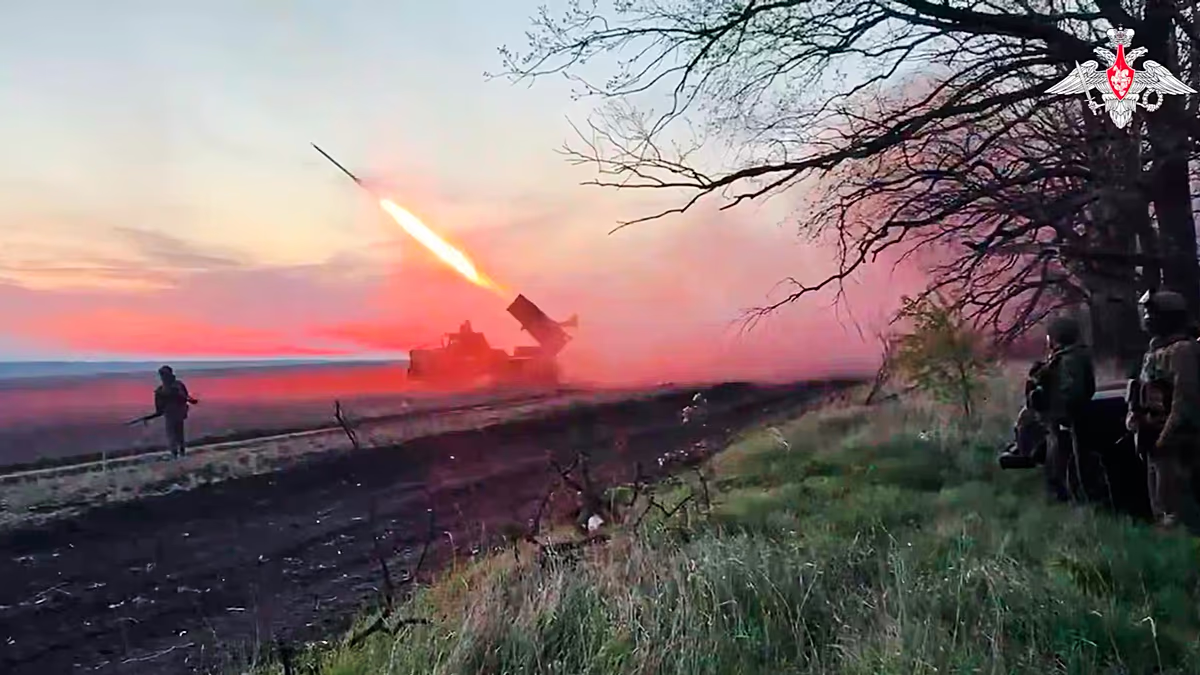
Even amidst fleeting diplomatic gestures, the brutal, daily reality of the war in Ukraine continues unabated. In a single overnight assault, Russia launched a massive barrage of 294 drones across Ukrainian territory. While Ukrainian air defenses performed remarkably, intercepting 269 of these aerial threats, the 25 that slipped through wrought devastating consequences on civilian life. This attack starkly illustrates a grim常态: the war’s front line is not merely a battlefield but encompasses every city, town, and neighborhood, where homes, power grids, and transport hubs are now strategic targets. The human cost was immediate and severe, with reports of at least one person killed and dozens more injured, a somber statistic that underscores the conflict’s relentless erosion of normalcy and safety.
Paragraph 2: The Scars on Cities and Communities
The aftermath of the drone strikes left a trail of destruction across several regions, painting a picture of a nation under sustained assault. In Kherson, the damage was particularly visceral, with five high-rise apartment blocks and 19 private houses struck, turning residential areas into scenes of chaos and loss. Beyond the immediate casualties, such attacks deeply fracture communities, displacing families and destroying the very fabric of daily existence. Meanwhile, in Odesa, the targeting of energy infrastructure had a cascading effect, leaving 39 settlements without power and affecting over 22,000 households—a reminder that modern warfare seeks to paralyze not just armies, but entire societies through deprivation of heat, light, and communication.
Paragraph 3: Targeting the Lifelines of Civil Society
The assault extended to the essential systems that enable urban life to function. In Kharkiv, critical transport infrastructure was damaged, including a road, two metro stations, and electric networks for public trolleybuses. Striking a public transport stop is a symbolic and practical attack on civilian mobility and collective life. Similarly, in Sumy, an office building, an ambulance, minibuses, and cars were hit, injuring seven people. These targets are not military; they are the arteries of a functioning society—the means by which people work, receive medical care, and commute. Their destruction represents a deliberate strategy to grind down civilian resilience and morale, amplifying the war’s suffering far beyond the trenches.
Paragraph 4: A Reciprocal Cycle of Violence
The violence, tragically, is not confined to one side of the border. In a stark illustration of the war’s reciprocal brutality, a Ukrainian drone attack reportedly struck the Russian border region of Belgorod, hitting a vehicle in the town of Krasnaya Yaruga and, according to local authorities, killing one civilian. This incident, while on a different scale, mirrors the cross-border nature of the conflict and the tragic blurring of lines between combatants and non-combatants. It serves as a painful reminder that in a war of such proximity and duration, grief and loss are inflicted and felt reciprocally, creating a cycle of retaliation that deepens the humanitarian crisis on both sides.
Paragraph 5: The Solemn Task of Repatriation
Against this backdrop of ongoing violence, a somber and dignified exchange occurred. Russia returned the bodies of 528 Ukrainian soldiers killed in action. This repatriation of the fallen is a profound, humanitarian undertaking, separate from the politics of the conflict. For Ukraine, it represents a sacred duty to recover its heroes, allowing for proper identification, mourning, and burial. The process, handled by Ukraine’s prisoners of war centre, involves meticulous work by investigators and experts to honor each individual. Such exchanges of remains, occurring alongside prisoner swaps, have become one of the few fragile threads of cooperation between Kyiv and Moscow, offering a glimpse of humanity amidst the hostility.
Paragraph 6: Fragile Diplomatic Gestures Amidst Sustained Conflict
These recent events—the prisoner exchange and the repatriation of remains—were connected to a broader, tentative diplomatic initiative. Following an announcement from U.S. President Donald Trump of a three-day ceasefire and a plan for a large-scale prisoner exchange, the two countries executed the first phase: a swap of 205 prisoners of war each. Ukrainian President Volodymyr Zelenskyy confirmed this as part of the proposed process. However, the immediate resumption of heavy attacks after the ceasefire period expired highlights the extreme fragility of such gestures. They provide temporary respite and hope, but they exist within a context of a war that has raged for over four years. The fundamental dynamics of aggression and defense remain unaltered, leaving civilians and soldiers caught between moments of negotiated humanity and the enduring reality of violent struggle.