


Here is a humanized and expanded summary of the requested news roundup for May 15th, 2026.
The world on this mid-May day in 2026 feels like it’s spinning on several different axes at once, a blend of cautious hope, sobering reality, and the timeless human pursuit of connection and expression. From the halls of European power to the frontiers of artificial intelligence, from ancient cultural reclamations to urgent economic dialogues, the headlines weave a complex tapestry of our shared moment. Let’s step back from the relentless news ticker and consider the deeper narratives shaping our lives, not just as a series of bullet points, but as chapters in an ongoing human story.
In Europe, a significant and quiet shift is taking place. The European Union, in a move signaling both maturity and introspection, is embarking on a comprehensive review of its foundational treaties. This isn’t about a dramatic breakup or a sudden leap to federation; it’s a meticulous, lawyerly, and profoundly political process aimed at making the bloc more agile and decisive. The catalyst is a world that has moved faster than its sometimes-cumbersome consensus model. Leaders are grappling with questions that touch every citizen: How can we better coordinate defense and energy policy in an unstable world? How can decision-making be streamlined without sacrificing the voice of smaller nations? The mood in Brussels and Strasbourg is one of determined pragmatism, recognizing that the project of European unity requires constant, careful renovation to withstand the storms of the 21st century.
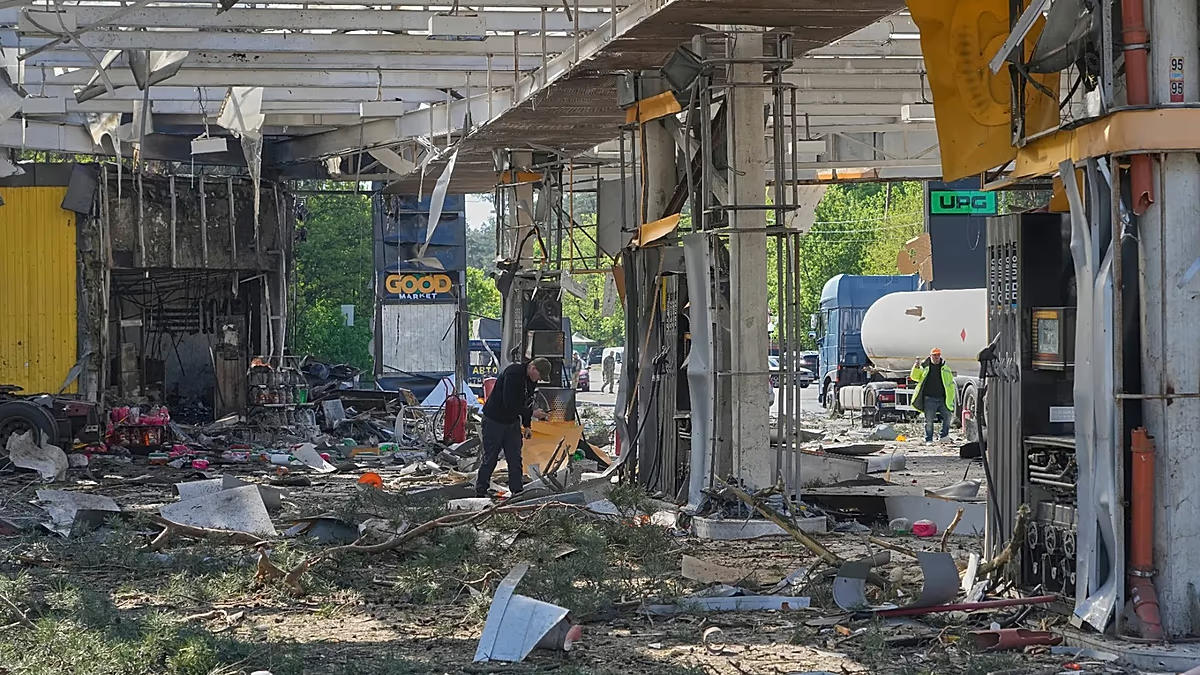
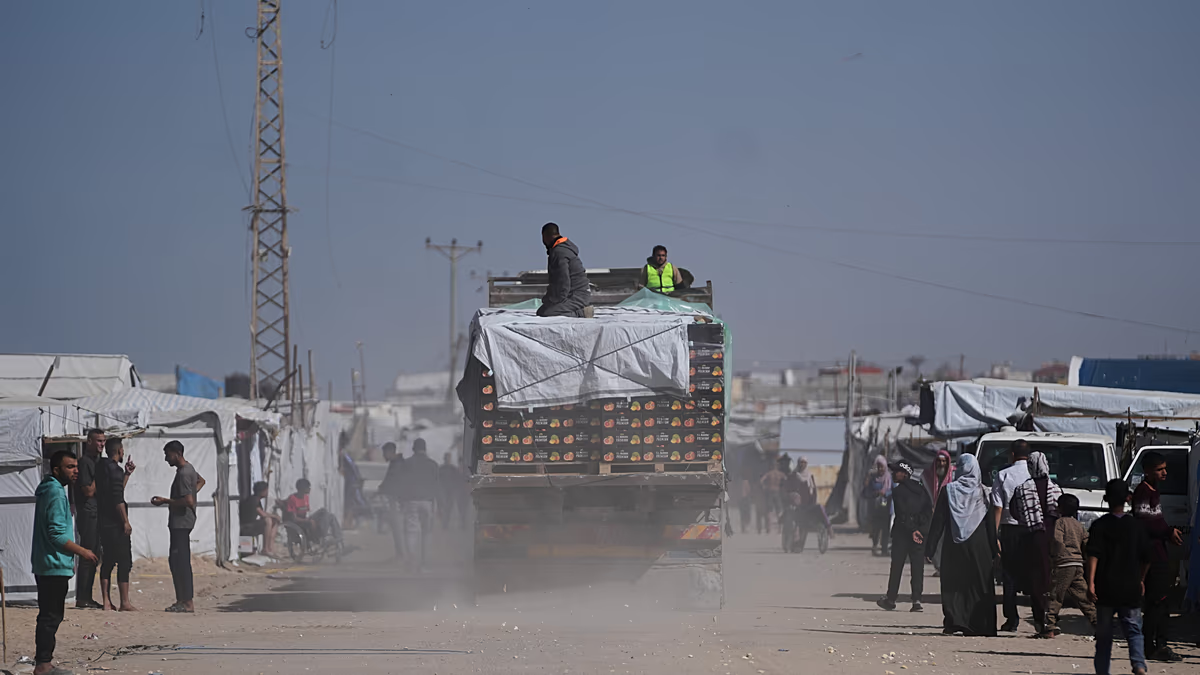
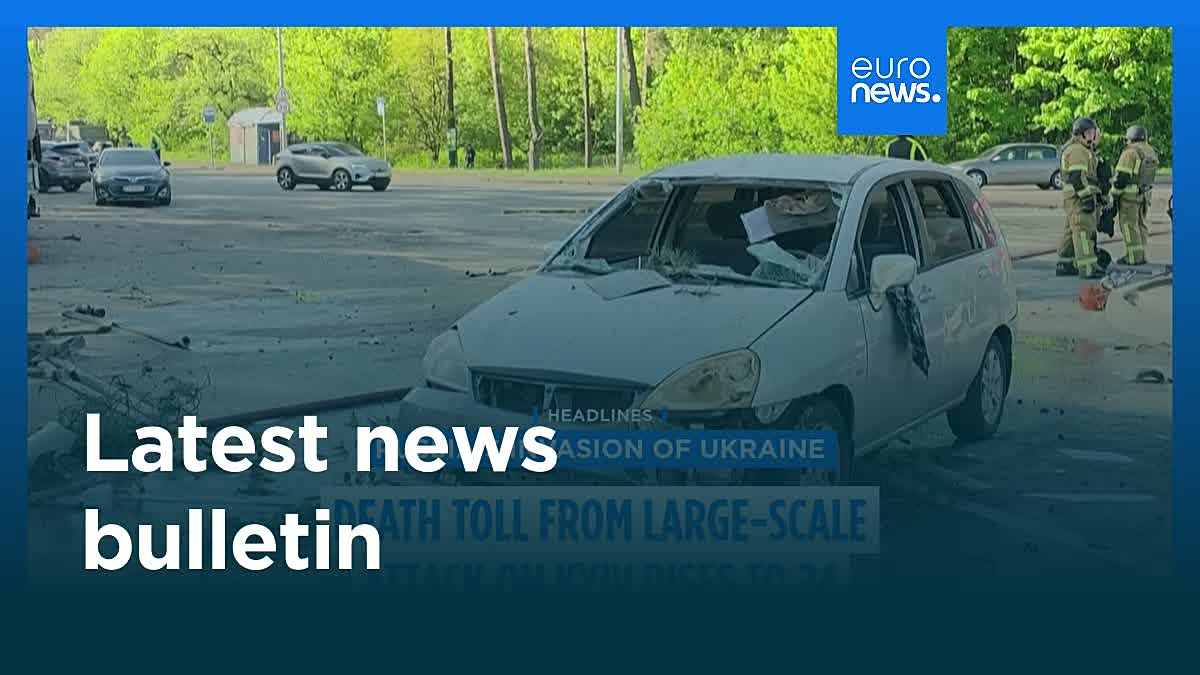
Beyond Europe’s borders, a story of profound human consequence continues to unfold. In a conflict zone that has tragically become a perennial feature of the news, a major, weeks-long siege has reached a critical juncture. International mediators, operating with a new sense of urgency fueled by global public pressure, have brokered a fragile humanitarian pause. The images are simultaneously heart-wrenching and hopeful: convoys of aid finally rolling into devastated areas, and the first groups of exhausted civilians, carrying the few possessions they have left, evacuating to temporary safety. This pause is not a peace treaty, but it represents a vital recognition of shared humanity amidst the chaos. The global community watches, holding its breath, hoping this thread of compassion can be woven into something more durable, even as the underlying political quagmire remains deeply entrenched.
The world of commerce and technology, meanwhile, is experiencing its own quiet revolution. The much-hyped AI boom is entering a new phase often called “The Great Implementation.” The breathless talk of world-changing potential is giving way to the complex, gritty work of integration. Headlines today focus on a major global retailer announcing the rollout of AI inventory systems that promise to drastically reduce waste, and a breakthrough in medical AI that can predict certain patient complications days before human doctors spot the signs. Yet, in boardrooms and on factory floors, the conversation is equally about the human impact: massive retraining initiatives, the ethics of algorithmic management, and how to harness this tool for productivity without eroding the workforce’s dignity. The promise is real, but so are the growing pains, making this a story not of machines, but of how we choose to live alongside them.
In the realm of culture and history, a powerful act of reclamation is making waves. A prestigious museum in the global North has officially begun the process of repatriating a significant collection of sacred artifacts and priceless artworks to their country of origin in Africa. This isn’t a simple handover; it involves teams of conservators, historians, and legal experts from both continents working together. The story transcends the objects themselves. It speaks to a long-overdue recalibration of power, narrative, and custodianship in the cultural world. For the communities receiving these pieces, it is a healing of historical amputation, a return of spiritual touchstones. For the museum world, it sets a precedent that is forcing a reevaluation of what it means to be a guardian of global heritage.
Finally, as the northern hemisphere tilts toward summer, the age-old human desire to explore is colliding with new realities. The travel industry is reporting a surge in bookings, but with a distinctly 2026 flavor. “Climate-conscious itineraries” featuring rail travel and low-impact lodges are booming, and “last-chance tourism” to threatened natural wonders remains a poignant trend. Simultaneously, a wave of festival and concert announcements for the summer promises a collective release, a global sigh of relief and celebration after the strains of the earlier decade. Yet, lingering in the background of every travel plan and ticket purchase is an awareness of a changing planet and a fragile geopolitical landscape, reminding us that our movements across the globe are both a privilege and a responsibility.
So, as the clock ticks on May 15th, 2026, the picture that emerges is one of a world in mid-transformation. We see institutions trying to adapt, ancient wounds seeking balm, miraculous technology demanding wisdom, and the enduring human spirit striving for beauty and connection amidst it all. The news is not just a record of events; it is a mirror held up to our collective choices, our challenges, and our unyielding hope for a better tomorrow. The stories of today are the foundation upon which the history of tomorrow will be built.