

A Wave of National Fervor in Tehran as Iran’s Football Team Embarks on the World Cup Journey
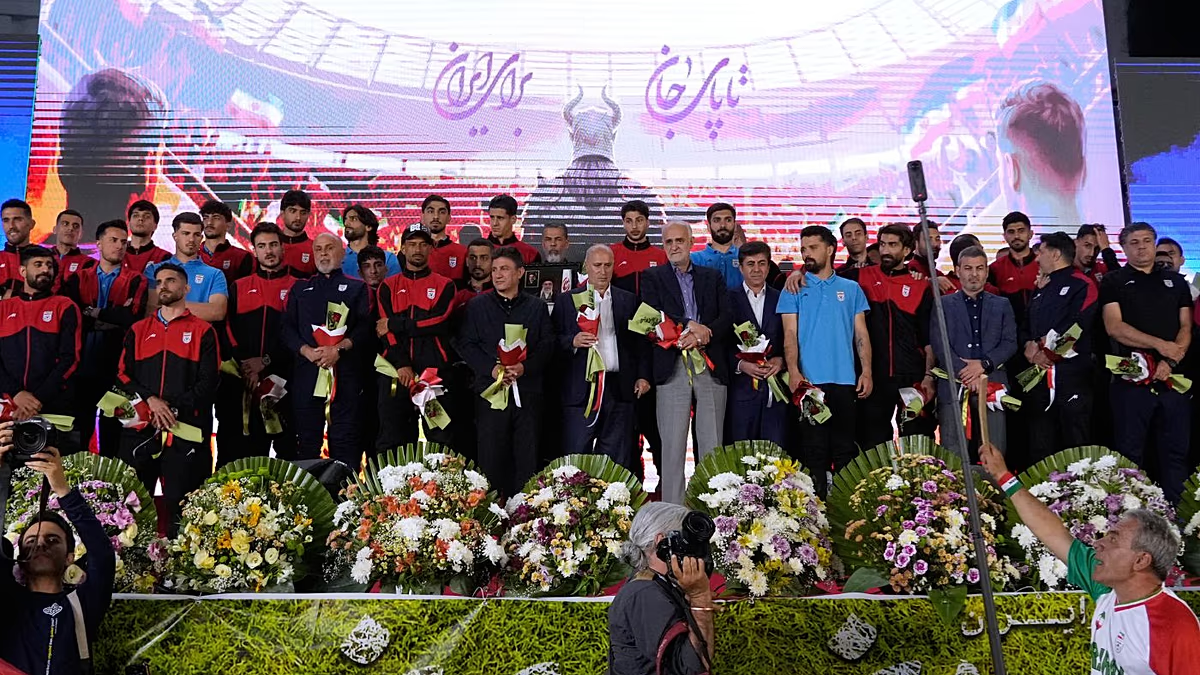
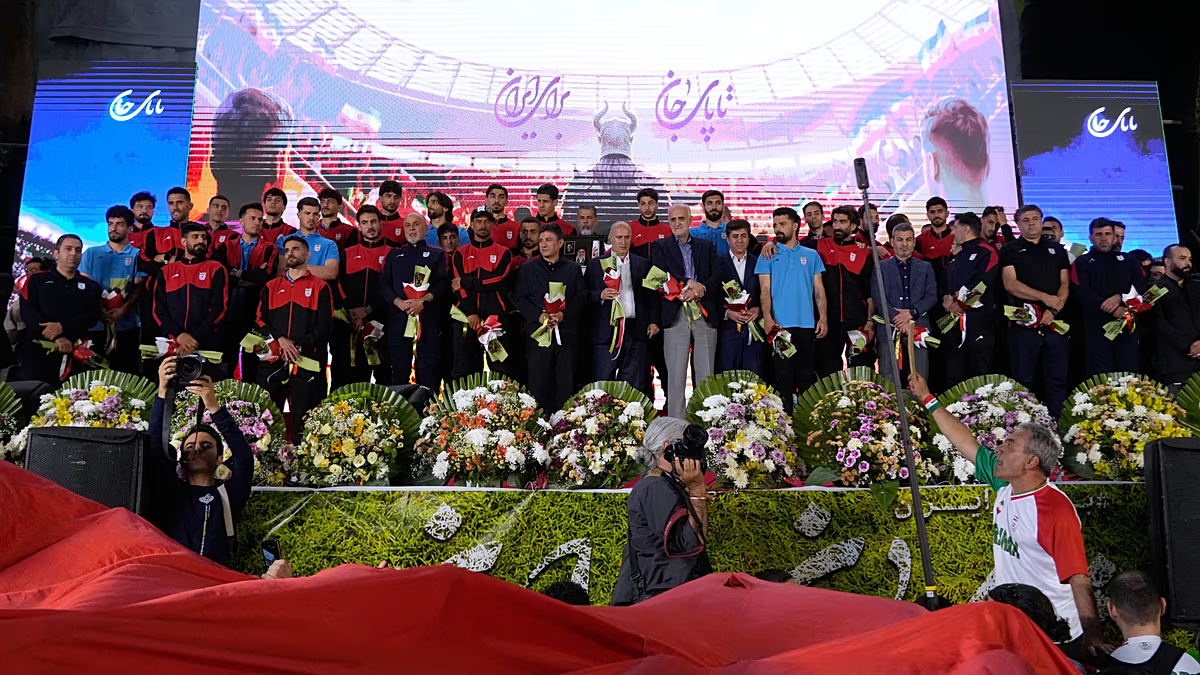
On a vibrant Wednesday in Tehran, the air crackled with a unique blend of sporting anticipation and political display as supporters gathered in a significant send-off for Iran’s national football team. The event, staged ahead of the squad’s preparatory camp for the 2026 FIFA World Cup, transcended a mere farewell for athletes. It became a powerful public spectacle where the passions of sport and the convictions of the state intertwined seamlessly. As the players and coaches appeared on stage, they were met not just with cheers, but with a sea of waving Iranian flags and the resonant voices of the crowd singing the national anthem. This moment of unity, however, was swiftly followed by chants that echoed the nation’s deep-seated geopolitical stances, prominently featuring slogans such as “Death to America” and “Death to Israel.” The visual scene was further defined by portraits of Iran’s Supreme Leader, Ayatollah Ali Khamenei, held aloft by attendees, underscoring the inseparable link between national institutions and the beloved national pastime in the Islamic Republic.
This public display is far from an accidental or isolated occurrence. In Iran, football exists in a complex space, simultaneously a source of immense popular pride and a tool for official propaganda. The government has long understood the immense unifying power of the beautiful game and has sought to harness its emotional pull to bolster national solidarity and project state ideology. Events like this send-off are meticulously orchestrated to serve this dual purpose. They celebrate the athletes as heroes representing the nation on the world’s most prestigious sporting stage, while also providing a sanctioned platform for the expression of state-endorsed political sentiments. The chants, while jarring to an international audience, are a routine feature of such mass gatherings in Iran, intended to demonstrate revolutionary zeal and opposition to perceived external enemies. For the authorities, it is a perfect synergy: the team’s sporting quest becomes a vehicle for reinforcing the official narrative.
For the players themselves, standing on that stage represents an intensely fraught position. These athletes are, first and foremost, competitors who have dedicated their lives to reaching the World Cup, a dream shared by footballers globally. They carry the genuine hopes of millions of Iranians who adore them purely for their skill on the pitch. Yet, in moments like these, they are unavoidably cast as symbols within a larger political theater. Their silence or presence during such chants is often misinterpreted; it is less an expression of personal belief and more a reflection of the immense pressure and complicated reality they navigate. Their primary focus is the daunting task ahead: to perform at their peak in a tournament hosted, in part, by the United States—a nation their government vilifies. The psychological and emotional weight of this contradiction is a burden they must manage alongside their physical preparation.
The team’s immediate journey highlights this underlying tension. From this send-off in Tehran, they are expected to travel to a training camp in Turkey, a neutral and familiar ground for their athletic preparations. From there, however, their path leads directly to the United States, one of the co-hosts of the 2026 tournament alongside Canada and Mexico. The irony is palpable: a team sent off with chants against America will compete on American soil, seeking glory in stadiums filled with global fans. This sets the stage for a World Cup participation laden with subtext beyond the games themselves. Every match Iran plays, particularly on U.S. territory, will be scrutinized through a political lens. The team will inevitably become a focal point for dialogues—and perhaps conflicts—about identity, representation, and the complex relationship between sport and state.
Back home, the feelings of the ordinary Iranian football fan are multifaceted. There is undeniable, overwhelming pride in seeing their Team Melli qualify for the World Cup. Football offers a rare space for national joy and collective celebration that can, at times, momentarily eclipse daily hardships. For many, the players are seen as ambassadors of Iranian talent and resilience, a way to show the world a different face of their nation. Yet, this affection for the team does not necessarily translate into blanket endorsement of the political slogans that accompany its send-off. A significant portion of the public, especially the youth, maintains a deep and sometimes contentious love for football as a separate realm from politics. Their support for the team is genuine, but their relationship with the state’s appropriation of that team is often one of silent discomfort or resignation.
As the 2026 World Cup approaches, Iran’s participation is poised to be one of the tournament’s most compelling human stories. It is a narrative that stretches from the fervent streets of Tehran to the modern stadiums of North America, encompassing national pride, athletic ambition, and inescapable political shadows. The team carries not just the dreams of a football-crazed nation, but also the weight of a geopolitical identity imposed upon them. Their performance will be measured in goals and points, but their presence will ask persistent questions about where the game ends and the world begins. Their story is a poignant reminder that for some, the World Cup is not just a sport, but a journey conducted on a field where the boundaries between the pitch and politics are forever blurred.