


Here is a summary and humanization of the provided content, structured into six paragraphs as requested.
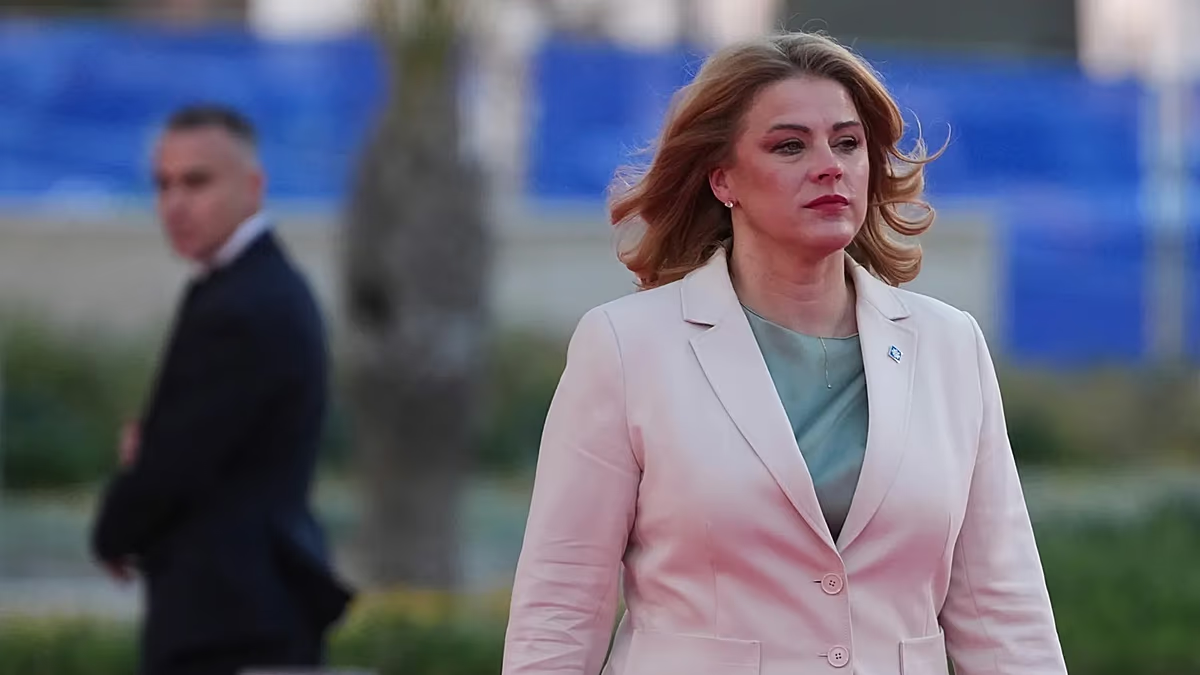
Latvia’s political landscape has undergone a dramatic and sudden collapse. Prime Minister Evika Siliņa, the centre-right leader, announced her resignation on Thursday, a move that effectively dismantles the country’s governing coalition. In a statement on social media and in a televised address, she described her decision as “difficult but honest,” citing that “political envy and narrow party interests” had overshadowed her priorities of national security and the welfare of Latvian citizens. This resignation was not merely a personal departure but the trigger for the dissolution of the fragile tripartite alliance that had been ruling the nation.
The immediate catalyst for this political crisis appears to be a combination of external security threats and internal coalition strife. A significant controversy involved the resignation of Latvia’s left-leaning Defence Minister, Andris Sprūds. He stepped down following pressure from Siliņa after Latvia’s air defenses were breached. The incident involved Ukrainian drones, which Ukrainian Foreign Minister Andrii Sybiha later stated were “the result of Russian electronic warfare deliberately diverting them from their targets in Russia.” This security lapse led Sprūds’ Progressives Party to withdraw its support from the government, leaving Prime Minister Siliņa without a parliamentary majority and precipitating the coalition’s fall.
This security scare coincided with a sprawling domestic corruption scandal, creating what one might call a week of political hell for Latvia. In a separate but equally destabilizing event, the Minister for Agriculture, Armands Krauze, and the Director of the State Chancellery, Raivis Kronbergs, were detained by the country’s Corruption Prevention Bureau. Their phones were seized, and raids were conducted on their residences and workplaces. This probe, described by some Latvian press as one of the most high-profile anti-corruption investigations in the nation’s history, centers on allegations of misuse of authority and carelessness in allocating government aid within the vital timber sector.
The focus on the timber industry is particularly sensitive given its enormous economic importance to Latvia. Forests cover over half of the country’s territory, and timber processing stands as Latvia’s largest industrial sector, with an estimated worth of €3.3 billion. The allegations of improper aid allocation therefore strike at the heart of a key national industry, intertwining the political crisis with serious economic governance concerns.
With the government now in ruins, the constitutional process for forming a new administration begins. Latvia’s President, Edgars Rinkēvičs, is tasked with appointing a new prime minister and is scheduled to meet with representatives from all parliamentary parties to navigate the path forward. This comes at a politically sensitive time, as the country was already scheduled to face general parliamentary elections in October. The sudden collapse accelerates and complicates the pre-election political timeline.
In summary, Latvia finds itself in a profound state of political instability. The convergence of a major national security incident involving diverted drones, the fracture of a governing coalition over that incident, and a deep corruption scandal within a critical economic sector has led to the prime minister’s resignation and the government’s fall. The nation now looks to its president to steer it through this turmoil, while its allies and neighbors, like Ukraine which has offered help in countering drone threats, watch closely. The events underscore the challenging intersection of geopolitics, internal governance, and economic stewardship in the modern Baltic state.