


Of course. Here is a humanized and expanded summary of the content, structured into six paragraphs.
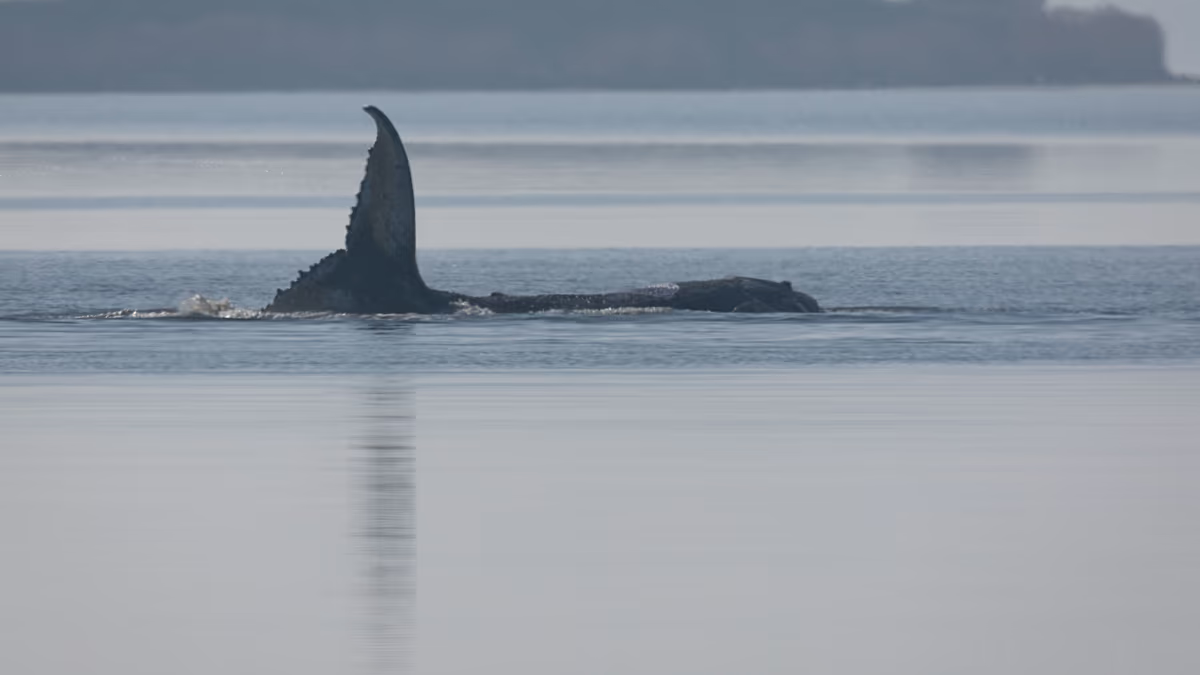
The story of Timmy the humpback whale, a gentle giant who captivated hearts across Northern Europe, has reached a sorrowful and definitive conclusion. After days of anxious speculation following the stranding of a dead whale off the Danish island of Anholt, authorities have now confirmed our worst fears. The Danish Environmental Protection Agency, citing a critical piece of evidence, has stated that the carcass is indeed that of Timmy. This confirmation brings a tragic end to the whale’s extraordinary and perplexing journey into the shallow, brackish waters of the Baltic Sea, a voyage that transformed him from a biological curiosity into a beloved public figure.
Timmy’s saga began when he was first sighted, a magnificent and wildly out-of-place visitor in the Baltic. His presence sparked a mixture of wonder and deep concern among scientists and the public alike. Humpback whales, known for their acrobatic breaches and complex songs, are typically found in open oceans, not the semi-enclosed Baltic. His subsequent appearance off the German coast, particularly in Mecklenburg-Western Pomerania, heightened the drama. There, he was observed, monitored, and named, becoming a symbol of nature’s unpredictable beauty. Germany’s Environment Minister, Till Backhaus, who had followed the case closely, has now formally acknowledged the whale’s death, marking an official close to the hopeful monitoring efforts.
The crucial proof that linked the Anholt carcass to the whale we knew came from a silent witness: a GPS transmitter. According to the Danish nature conservation authority, Miljøstyrelsen, this tracker was discovered on the massive body. Jane Hansen, head of the agency, provided the conclusive statement, noting, “We can now confirm that the humpback whale stranded off Anholt is the same animal that previously became stranded in Germany.” This tiny piece of technology, attached in a prior attempt to understand his movements, ultimately served as his final identifier, connecting the dots of his ill-fated travels and removing all doubt about his identity.
However, the very elements that define the harsh and beautiful Nordic coastline have delayed the final chapter of the scientific inquiry. As reported, poor weather conditions and the challenging maritime environment around Anholt have so far prevented experts from safely recovering the GPS transmitter from the carcass. This delay is a poignant reminder of the practical difficulties faced by those who work to unravel these mysteries. The data stored within that device holds invaluable clues—a potential map of Timmy’s last movements, which could help scientists piece together why he strayed so far and what ultimately led to his stranding.
Timmy’s story transcends a simple wildlife report. It is a narrative that underscores the profound connection humans feel with intelligent, majestic creatures and the collective grief we experience at their loss. His journey was followed by news agencies, broadcasters like TV 2, and everyday citizens across borders, turning his plight into a shared regional event. The confirmation of his death brings a wave of sadness, but also a moment for reflection on the fragility of marine life and the unseen challenges animals face in a world impacted by human activity, changing ecosystems, and sheer navigational misfortune.
Ultimately, while Timmy’s life ended in a lonely stranding on a distant shore, his legacy is one of unity and awareness. He reminded us of the wonders that lie beyond our shores and the responsibility we share as stewards of their journeys. The recovery of the transmitter, once weather permits, may yet provide answers and contribute to the protection of other whales. In remembering Timmy, we acknowledge not just a loss, but a powerful, fleeting encounter that drew nations together in hope, concern, and now, in respectful mourning for a lost voyager of the deep.