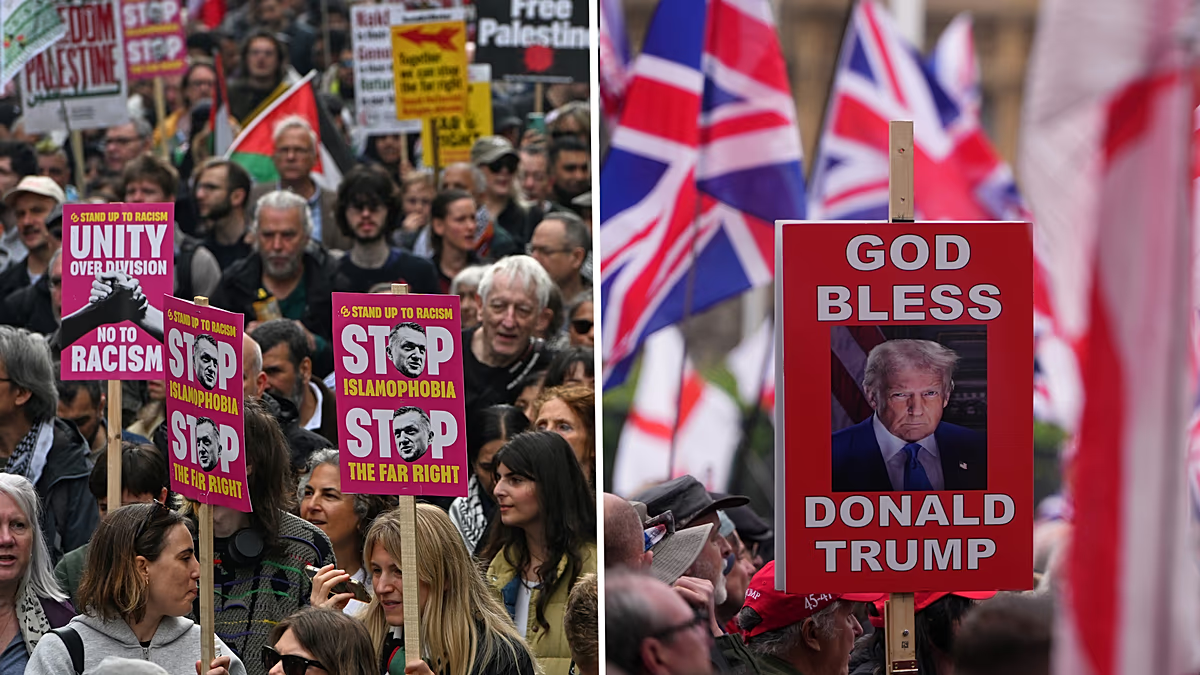


On a bright Saturday in London—one of the year’s busiest weekends, with football fans streaming toward Wembley Stadium—the city’s streets became a stage for sharply contrasting visions of Britain’s identity and its place in the world. Authorities deployed approximately 4,000 police officers in a massive operation designed not just to oversee, but to physically separate two large simultaneous demonstrations. On one side, supporters of far-right activist Tommy Robinson gathered under the banner of “Unite the Kingdom,” a rally steeped in nationalist sentiment. Concurrently, a separate procession marked Nakba Day, the annual commemoration of the displacement of Palestinians during the establishment of Israel in 1948. This pairing created a tense urban tableau, where debates over immigration, culture, and international justice unfolded just miles apart, under the watchful eyes of a significant security apparatus determined to prevent confrontation.
The scale of the day was considerable, with police estimating around 50,000 attendees for the nationalist rally and roughly 30,000 for the pro-Palestinian march. To manage these substantial crowds, the Metropolitan Police employed a multi-layered strategy that felt both highly visible and subtly pervasive. Drones buzzed overhead, mounted police units patrolled key intersections, and police helicopters circled the skies, while officers on the ground coordinated strict route restrictions. The goal was clear: to create an invisible buffer between the two processions as they moved through the politically symbolic districts of Westminster and central London. This logistical ballet was about more than traffic control; it was a preemptive measure to avoid the spark of direct conflict between groups with deeply opposing ideologies, all while ensuring the safety of the general public and the thousands of football supporters mingling in the city.
The “Unite the Kingdom” rally presented a scene awash with Union Jack flags and echoed with chants focused on national sovereignty. For many participants, the gathering was a vocal stand against high levels of immigration and the policies of multiculturalism, which they perceive as diluting or threatening traditional British culture. The rhetoric, often amplified through social media and sympathetic outlets, framed the event as a defense of a national identity felt to be under siege. While the majority marched peacefully, the demonstration’s association with far-right figures meant its very presence carried an undercurrent of tension, drawing both dedicated supporters and those concerned about the rise of xenophobic politics in the UK.
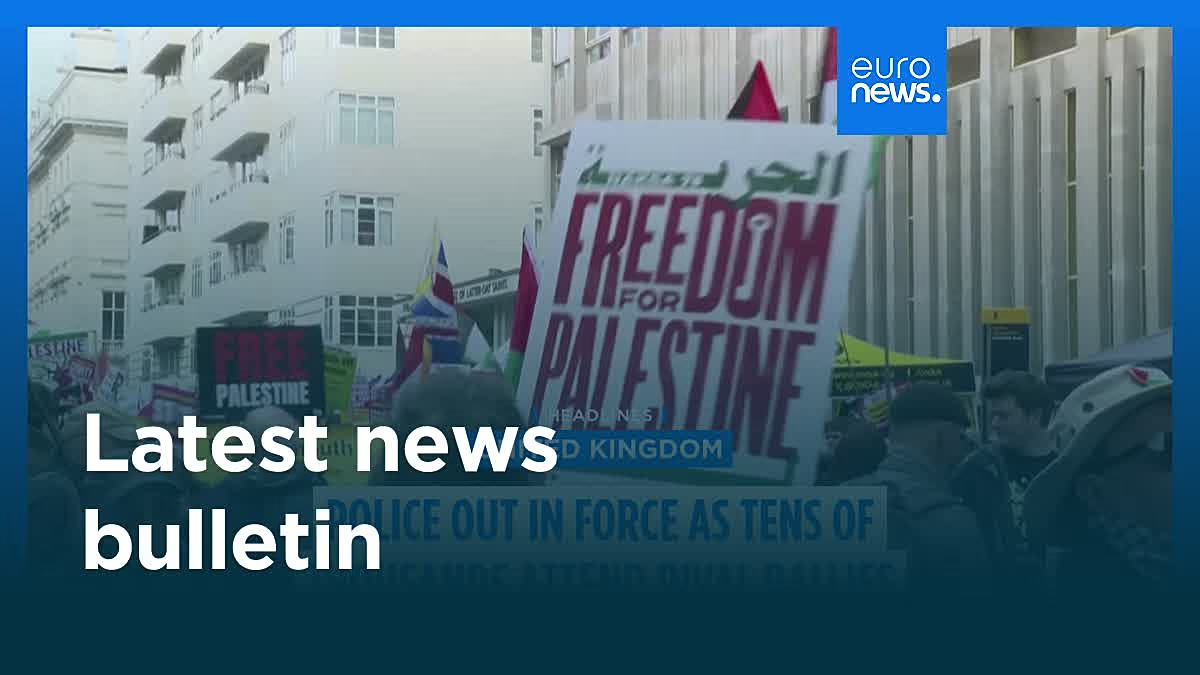
In stark contrast, the mood and purpose of the Nakba Day march were oriented outward, toward international solidarity and historical remembrance. Pro-Palestinian demonstrators carried banners calling for an immediate ceasefire in Gaza and demanding justice and the right of return for Palestinian refugees. The march served as a poignant act of collective memory, linking the historical trauma of 1948 to the ongoing humanitarian crisis in Gaza. For these participants, the streets of London became a platform to appeal to the conscience of the world, urging the British government and international community to take decisive action against what they describe as occupation and injustice. The procession was a somber yet determined call for Palestinian liberation, standing in profound ideological opposition to the inward-looking nationalism displayed elsewhere in the city.
Amid these parallel demonstrations, the Metropolitan Police’s role was unequivocally that of an intervener and buffer. Their stated priority was a triple mandate: to prevent direct clashes between the two groups, to respond swiftly to any incidents of hate crime or violence, and to maintain overall public safety for all Londoners. This operation required officers to navigate a complex landscape of potential triggers, from inflammatory slogans and symbols to the simple, volatile friction of large crowds in close proximity. The significant investment in personnel and technology underscored the seriousness with which police treated the potential for disorder, aiming to facilitate the right to protest while rigorously containing its risks.
By evening, as the crowds dispersed and the police presence gradually scaled back, London absorbed the echoes of a deeply divided day. Two narratives had physically traversed the city, one looking inward with a protective, exclusionary grip on national identity, and the other looking outward with a call for global justice and restitution. The successful avoidance of major violent conflict was a credit to policing strategy, yet the day laid bare the profound fractures within contemporary British society. These simultaneous rallies were not isolated events but reflections of ongoing, heated debates about belonging, memory, and morality that extend far beyond London’s streets, continuing to challenge the nation’s concept of itself in an interconnected world.