



Paragraph 1
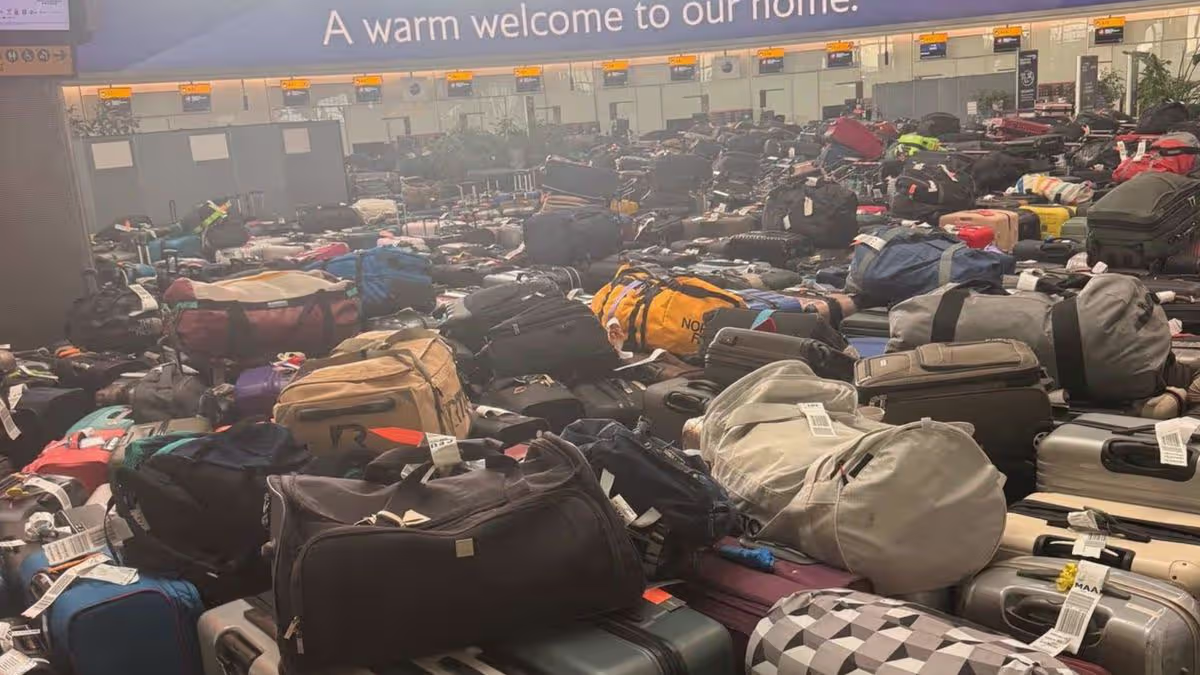
A vivid and deeply frustrating scene unfolded at London’s Heathrow Airport over a May weekend, transforming Terminal 5 from a hub of global transit into a graveyard of stranded possessions. A critical failure in the automated baggage system brought the intricate machinery of luggage handling to a standstill, primarily affecting British Airways flights. The immediate consequence was a surreal and growing sea of suitcases, abandoned in departure halls and pick-up zones, while the planes they were meant to travel on took off without them. This wasn’t merely a minor technical hiccup; it represented a fundamental rupture in the contract of air travel, where passengers trust that their essential belongings will accompany them on their journey. Images from the terminal depicted orderly rows of forlorn luggage, a stark visual testament to the human disruption simmering beneath the surface of the systemic breakdown.
Paragraph 2
The true impact of the failure was measured not in technical metrics but in the mounting distress of thousands of travelers scattered across the globe. Arriving at destinations from European cities to transatlantic ports like Boston, passengers were met with empty carousels, forced to begin holidays, business trips, or family visits with nothing but the clothes on their backs. The emotional and practical toll was immense. Beyond the inconvenience of lost holiday attire or business documents, many faced the absence of vital medications, child essentials, or fragile personal items. Meanwhile, back at Heathrow, those waiting for delayed flights or information were subjected to hours of uncertainty in crowded areas, with reports emerging of elderly travelers standing without seats and with limited access to food or water, highlighting a secondary failure in passenger care during the crisis.
Paragraph 3
As the hours stretched on, public frustration erupted across social media, painting a raw picture of the human experience behind the headlines. One user lamented the plight of their elderly relatives, stranded for a projected five hours in uncomfortable conditions, calling the situation “completely unacceptable.” Another, having given up and returned home, criticized the “lack of communication” as profoundly frustrating, emphasizing that passengers deserved clear, honest timelines. Perhaps most illustrative of the modern travel dilemma was a passenger in Boston, tracking their stationary suitcase via an AirTag at Terminal 5, their digital certainty compounding the agony of the physical separation. Their plaintive question—”Why is nothing being done?”—echoed the feeling of helplessness that permeated the event, where technology provided the proof of the problem but no solution.
Paragraph 4
In response to the escalating situation, both British Airways and Heathrow Airport issued public apologies and began damage control. Acknowledging that the issue was “entirely out of our control,” a spokesperson for the airline nevertheless expressed sincere regret for the significant inconvenience caused to their customers. Heathrow echoed this sentiment, apologizing for the disruption. Operationally, efforts ramped up behind the scenes; the core system was reportedly restored by Saturday afternoon, and additional staff were brought in to manually sort and process the mountain of stranded luggage. The focus shifted to the monumental logistical task of reuniting thousands of bags with their owners, a process that would inevitably extend the disruption for days, with airlines arranging for delayed baggage to be forwarded on to final destinations.
Paragraph 5
While the immediate technical fault was resolved within a day, the incident raises enduring questions about the vulnerabilities of our hyper-connected travel infrastructure. Major airports like Heathrow operate as finely tuned ecosystems, and the failure of a single, albeit critical, system can send shockwaves through the entire network, impacting thousands of lives. The event underscores the fragility behind the facade of seamless global mobility. Furthermore, the passenger testimonials pointed to a potential breakdown in crisis management and compassionate communication. The perceived absence of clear information, adequate provisions for vulnerable passengers, and proactive support during the worst of the chaos suggests that operational recovery plans must be paired with equally robust protocols for human care and transparent communication to maintain public trust.
Paragraph 6
Ultimately, the tale of the stranded sea of bags at Heathrow is a human story of disrupted plans, personal anxiety, and the dissonance between expectation and reality in modern air travel. For the affected passengers, the episode was more than a news item; it was a personal trial, an unwelcome and stressful chapter in their journeys. The apologies from the airport and airline, while necessary, could not instantly replace lost items or restore missed moments. The incident serves as a potent reminder that in an age of advanced automation, the most memorable aspects of travel remain deeply human—relying on trust, communication, and the fundamental expectation that we and our belongings will arrive together, ready to embark on the experiences we have carefully planned.