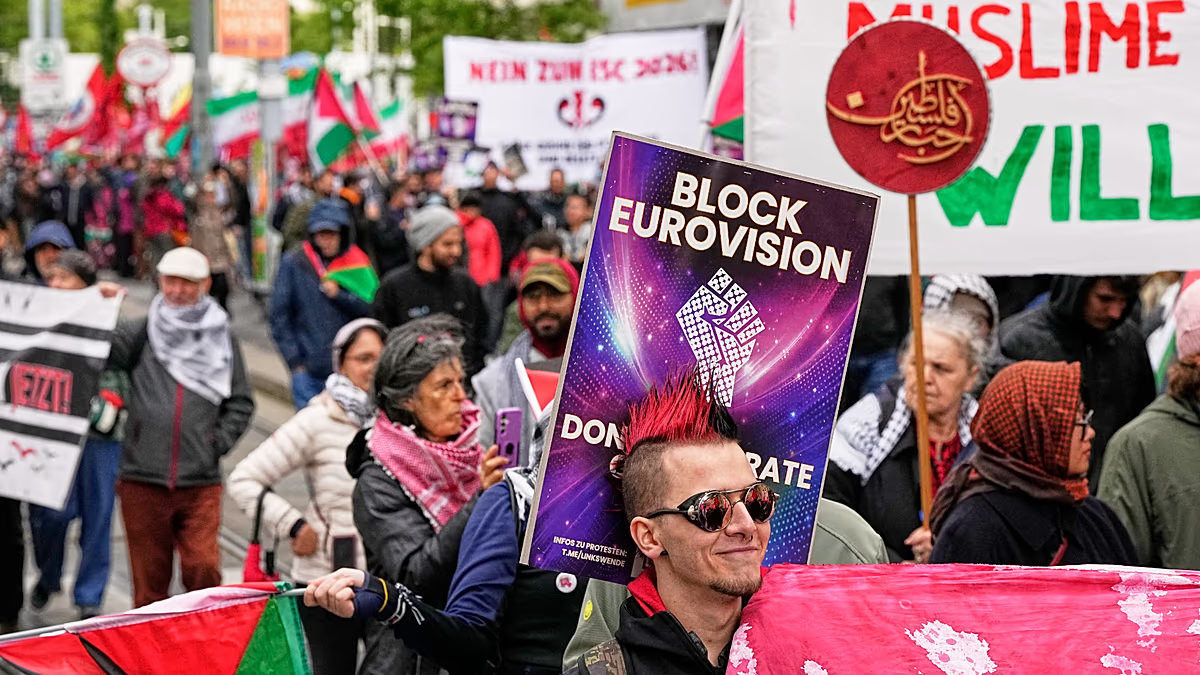


The Eurovision Song Contest, known for its glittering spectacle and celebration of musical unity, found itself once again grappling with the weight of geopolitical conflict during its 70th anniversary edition. As the grand final approached in Vienna’s Wiener Stadthalle on a Saturday evening, the familiar melodies and joyous fanfare were accompanied by a more somber soundtrack: the voices of several hundred protesters gathering in a nearby square. Their demonstration, organized to oppose Israel’s participation in the contest, underscored how the event has become a recurring flashpoint for public sentiment regarding the war in Gaza and broader regional instability. This marked the third consecutive year where Eurovision’s stage extended beyond entertainment, becoming an arena where deep political divisions were performed alongside the competing songs.
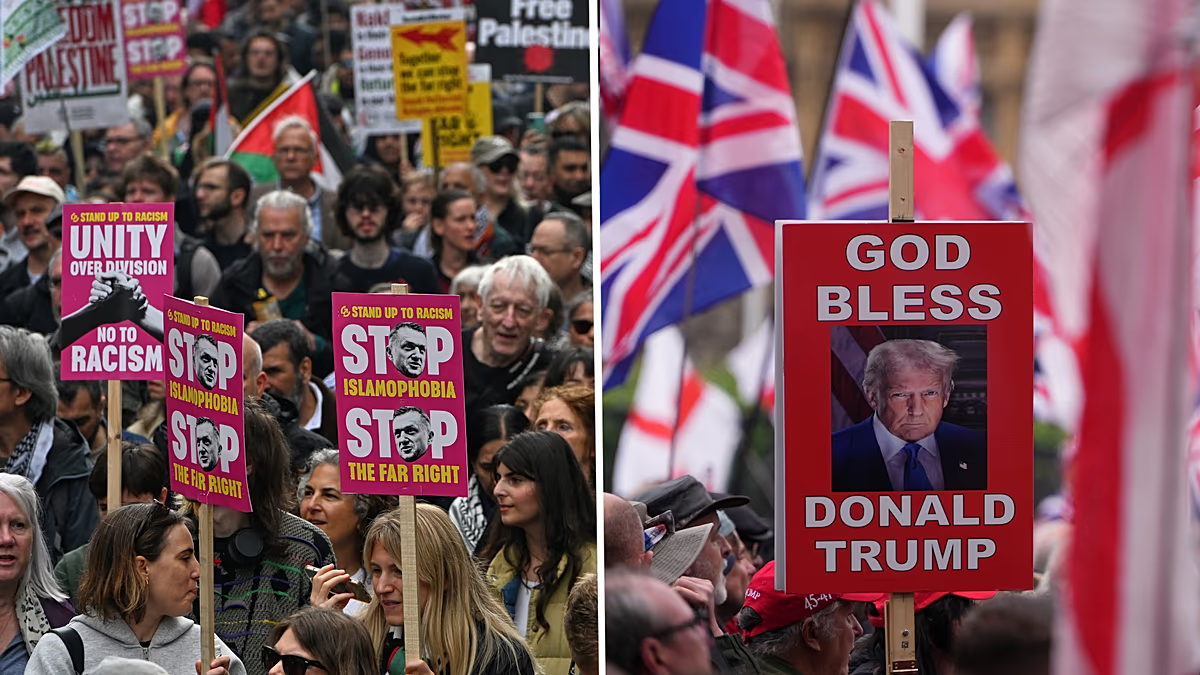
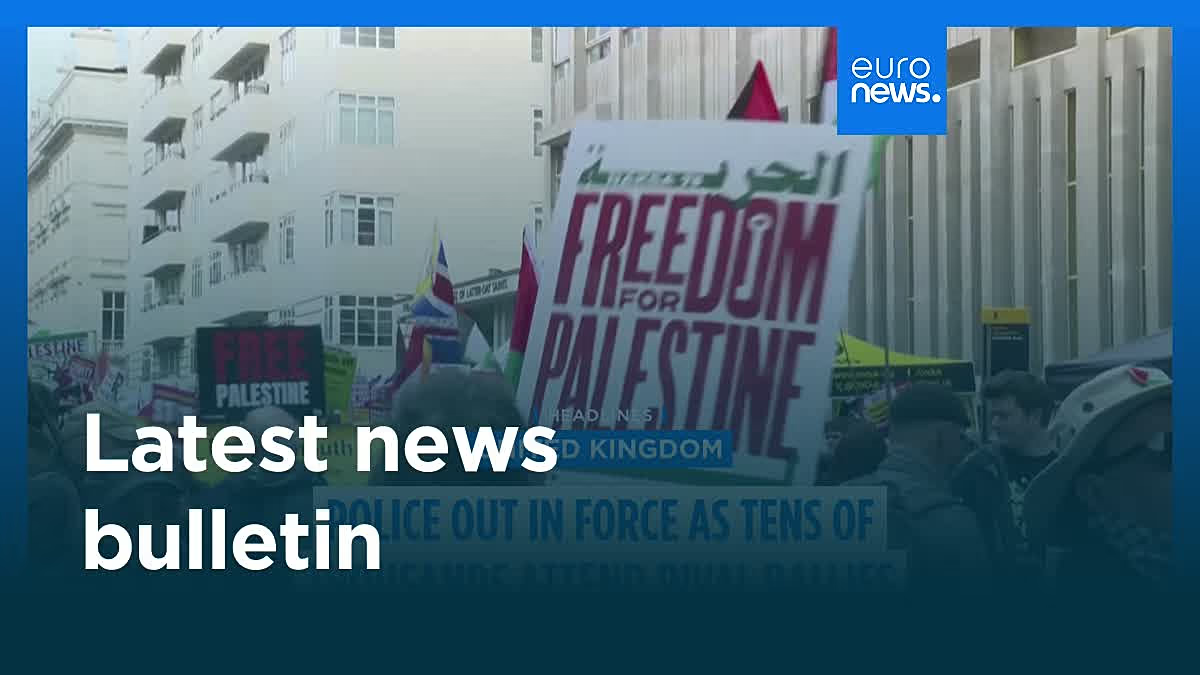
The scene in Vienna was one of controlled tension. Protesters, carrying Palestinian flags and banners, marched from the square towards the arena, their path delineated by police barriers and closely monitored by officers. Austrian authorities had reinforced security throughout the week, deploying personnel from across the country and even receiving support from neighboring Germany, ensuring that streets remained open while vigilantly overseeing the procession. The demonstration, though palpable and charged with emotion, remained notably smaller in scale than the more substantial protests witnessed during the contests in Malmö in 2024 and Basel in 2025. This suggested a complex, evolving dynamic: while the issue continues to ignite passion, the intensity of its public expression may be shifting as the conflict persists.
The roots of this tension were not merely spontaneous but were deeply embedded in the contest’s own framework. The controversy stemmed from a decisive action by the European Broadcasting Union (EBU), the organizer of Eurovision, which declined to suspend the Israeli broadcaster KAN. This decision ignited a formal boycott by several participating nations, including Spain, Ireland, Iceland, Slovenia, and the Netherlands. Their absence from the competition was a silent but powerful protest, creating a palpable void on the stage and in the audience. It highlighted a sharp political schism among the member broadcasters, turning the typically collaborative event into a tableau of disagreement, where the very act of participation—or non-participation—became a political statement.
Beyond the official boycotts, the protests in Vienna represented a broader, grassroots expression of the same anguish and moral stance. The demonstrators were not just criticizing a musical competition; they were using its global platform to amplify a call for accountability and to draw attention to the ongoing humanitarian crisis. Their presence outside the Stadthalle served as a stark reminder that for many across Europe and the world, the joy of Eurovision cannot be untangled from the tragedies unfolding elsewhere. The contest’s slogan of “United by Music” faced a real-world test, challenged by those who felt that inclusivity under current circumstances was a betrayal of other principles.
Ultimately, the evening proceeded as scheduled. The finalists performed, the votes were cast, and a winner was crowned amidst the spectacular production Eurovision is famous for. Yet, the event’s narrative was irrevocably split. Inside the arena, a world of glitter and choreographed celebration played out on screen; outside, a quieter, determined procession carried a message of protest and plea. This duality is perhaps the new, uncomfortable reality for Eurovision. It has become an event that exists in two parallel dimensions: one of artistic celebration and another of profound political expression, reflecting the fractured state of the world it seeks to entertain.
As the lights dimmed in Vienna, the lingering question was not about the winning song, but about the future of the contest itself. Can a celebration built on the ideal of musical unity continue to navigate such deep and painful divisions? The protests, though smaller this year, confirm that the issue remains alive and potent. Eurovision, therefore, stands at a crossroads. It must continually weigh its role as a lighthearted musical festival against its unavoidable position as a mirror to society’s conflicts. Each year, as artists prepare their performances, organizers now must also prepare for the complex dialogue—both official and public—that will inevitably accompany the music, making the contest a far more intricate and human spectacle than its pop melody might suggest.