



Here is a humanized and expanded summary of the content, structured into six paragraphs as requested.
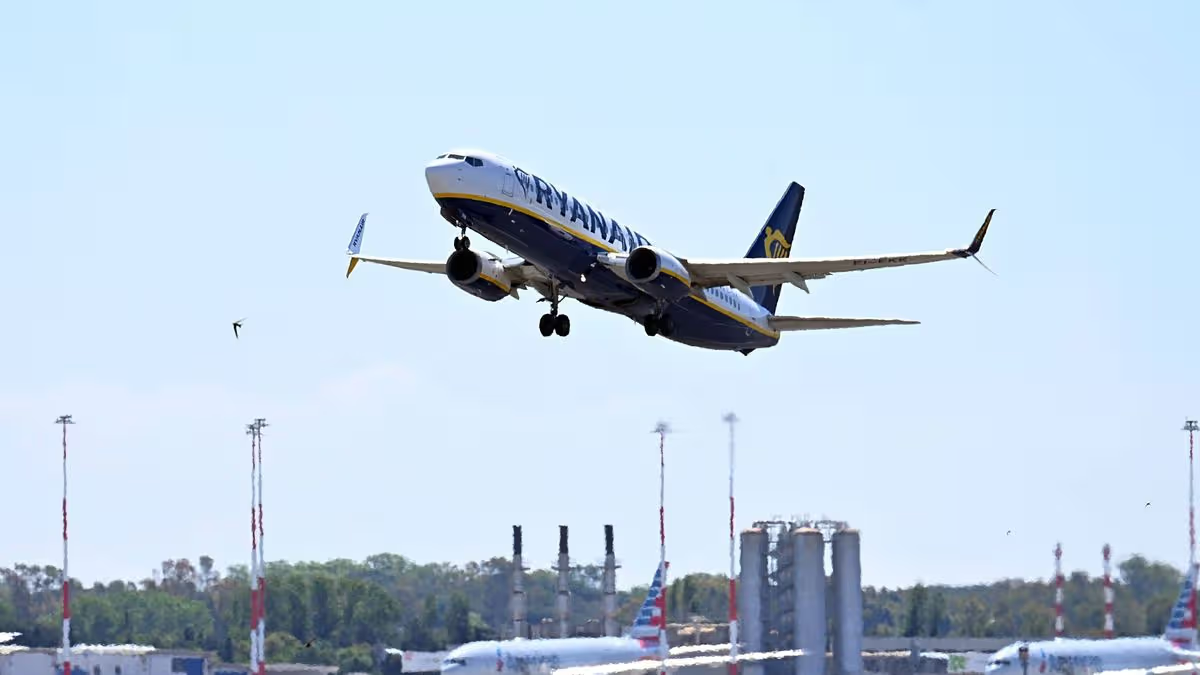
The Australian aviation landscape, often described as a graveyard for ambitious startups, is poised for a potential new challenger. Zinc Aviation, founded by former Qantas executive Peter Kelly, is boldly positioning itself to become the nation’s first independent ultra-low-cost carrier (ULCC). Its strategy is not born from a vacuum but is a deliberate attempt to transplant a proven model from Europe: the ruthless efficiency and market-disrupting success of Irish giant Ryanair. This blueprint represents a significant shift, aiming to introduce a level of price competition and operational intensity historically unseen in the domestic market. With plans anchored at the soon-to-open Western Sydney International (WSI) Airport, Zinc is betting that a once-in-a-generation infrastructure shift can provide the fertile ground previous ventures lacked.
At the core of Zinc’s philosophy is a stark analysis of past failures. The company’s narrative directly addresses the ghosts of airlines past—Compass, Impulse, and more recently, Bonza—positioning their founder as a seasoned observer who identified fatal flaws long before collapse. According to Zinc, these predecessors fell victim to a familiar litany of errors: being locked out of Sydney’s slot-constrained main airport, operating with a structural cost disadvantage, chronic undercapitalization, or deploying the wrong aircraft on unsuitable routes. Zinc asserts it has been engineered to avoid every single one of these pitfalls. The opening of WSI is presented as the key that unlocks Sydney without the traditional barriers, while a fanatical focus on a single, modern aircraft type—the fuel-efficient Airbus A321neo—aims to streamline operations and training.
The operational model is where the Ryanair influence becomes most apparent. Zinc’s strategy revolves around what it terms “sweating the assets,” aiming to keep its aircraft flying for a minimum of twelve hours per day. This is facilitated by a “novel base-assigned operating model,” where aircraft and crew are dedicated to specific strategic hubs like WSI, Melbourne, Adelaide, and Brisbane. This approach is designed to maximize aircraft productivity, keep crew costs lean by minimizing overnight expenses away from home bases, and eliminate operational complexity. The promise is a targeted network of high-frequency trunk routes connecting major cities, leveraging the efficiency of a single fleet to drive down costs and, consequently, ticket prices.
However, this ambitious venture requires substantial capital to transition from concept to reality. Reports indicate Zinc is seeking approximately $140 million in financing to cover initial aircraft deposits and fund early operations. This fundraising effort is a critical hurdle, as undercapitalization has been a recurring theme in the demise of other airlines. The founder’s experience and the detailed, fault-averse planning are intended to provide confidence to potential investors, framing Zinc not as a speculative gamble but as a meticulously designed enterprise learning from decades of industry missteps.
Zinc’s launch plans coincide with a period of significant global uncertainty that could impact its carefully laid calculations. The conflict in the Middle East has contributed to volatile international oil prices, posing a direct risk of soaring jet fuel costs. For any airline, but especially for an ultra-low-cost carrier where razor-thin margins are paramount, such fuel price hikes present a formidable challenge. The company acknowledges that these costs could ultimately be passed on to passengers, potentially testing the very “price discipline” it promises to champion. This external economic factor adds a layer of risk that even the most sound business model cannot fully control.
In conclusion, Zinc Aviation represents a fascinating new chapter in Australian aviation. It combines a clear-eyed critique of past failures, a deliberate emulation of a globally successful low-cost template, and a strategic bet on new infrastructure. The vision is of a highly disciplined, no-frills carrier that leverages operational intensity and a simplified fleet to stimulate the market with lower fares. Yet, its journey from blueprint to takeoff is fraught with the very real challenges of securing major funding and navigating a turbulent global energy landscape. Whether Zinc can successfully sidestep the historical pitfalls and redefine budget travel in Australia remains one of the most compelling questions in the industry today.