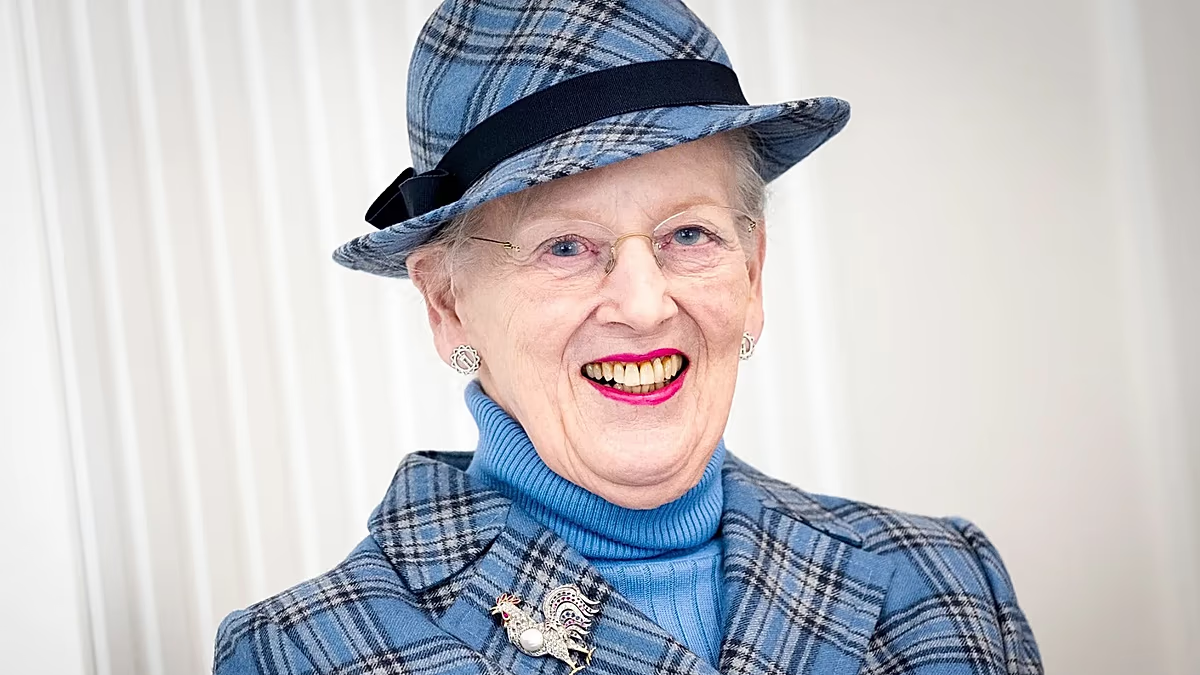



Denmark’s esteemed former monarch, Queen Margrethe II, has returned to her home at Fredensborg Palace following a brief hospital stay. The 86-year-old was discharged from Copenhagen’s Rigshospitalet on Tuesday, after undergoing what the palace described as a “balloon dilation of a coronary artery,” a common procedure to restore healthy blood flow to the heart. With the announcement came the gentle reminder that the Queen will require a period of quiet convalescence, leading to the cancellation of a planned theatre engagement on May 23rd. This news brings a collective sigh of relief from a nation that holds her in deep affection, a testament to the enduring bond formed over her remarkable 52-year reign, which concluded just last January with her historic abdication in favor of her eldest son, King Frederik X.
Her decision to step down marked a profound shift for a monarch who had long been a symbol of stability and continuity. Queen Margrethe had famously and repeatedly vowed that she would never abdicate, viewing the role as a lifelong duty. However, a significant back surgery in 2023 necessitated a period of reflection. With characteristic pragmatism and a deep sense of responsibility to the nation’s future, she reconsidered her position. In a moving New Year’s Eve address, she announced that the time had come to pass the crown, ensuring the monarchy remained in capable hands while she could step back from the most demanding physical aspects of the role. This act, far from being seen as a weakness, was widely respected as a wise and selfless transition for the institution she loved.
Beyond the crown and scepter, Margrethe has captivated her people through a rich and multifaceted life dedicated to the arts. She is not merely a patron but a prolific and accomplished artist in her own right. Her creative spirit has found expression in intricate costume and set designs for theatre and ballet, even earning her a Bodil award—Denmark’s premier film prize—for best costume design in 2024. A gifted linguist and translator, she worked alongside her late husband, Prince Consort Henrik, to translate the works of Simone de Beauvoir into Danish under a pseudonym. Perhaps most famously to an international audience, she brought her vivid imagination to the pages of J.R.R. Tolkien’s The Lord of the Rings, creating a series of celebrated illustrations that reveal her unique visual perspective.
This recent health episode is not an isolated event but part of a broader narrative of resilience that has defined the latter years of her reign. The Queen has navigated several health challenges with characteristic fortitude, from the major back surgery that precipitated her abdication to this latest cardiac procedure. Each event has been met with the same quiet dignity and transparency from the palace, fostering a climate of public concern and warm support rather than alarm. Her popularity, built over decades, is rooted in this very human authenticity—a quality that softened the formality of the monarchy and made the institution feel both modern and deeply personal to Danish citizens.
Now, as a Queen Emerita, her role has evolved but her presence remains a cherished part of Denmark’s fabric. Residing at Fredensborg Palace, the scene of so many family milestones and official events, she continues her artistic pursuits and enjoys a more private life, albeit one still in the public eye. The nation watches with fondness as she embraces this new chapter, understanding that the need for rest and recovery is a privilege well-earned. Her legacy is multifaceted: a trailblazer who modernized a centuries-old institution, a devoted public servant, and a vibrant artist who proved that sovereignty and creative passion can beautifully coexist.
As Queen Margrethe rests at Fredensborg, the wishes for her swift and complete recovery extend far beyond the palace walls. They come from Danes of all ages who grew up under her steadfast reign, from international admirers of her artistic contributions, and from all who respect a life led with such intellectual vigor and grace. Her journey from a young queen who boldly reshaped her role to an elder stateswoman who wisely knew when to pass the torch is a powerful human story. It is a narrative not just of monarchy, but of dedication, adaptability, and the enduring strength found in a life richly lived in service to both duty and personal passion.