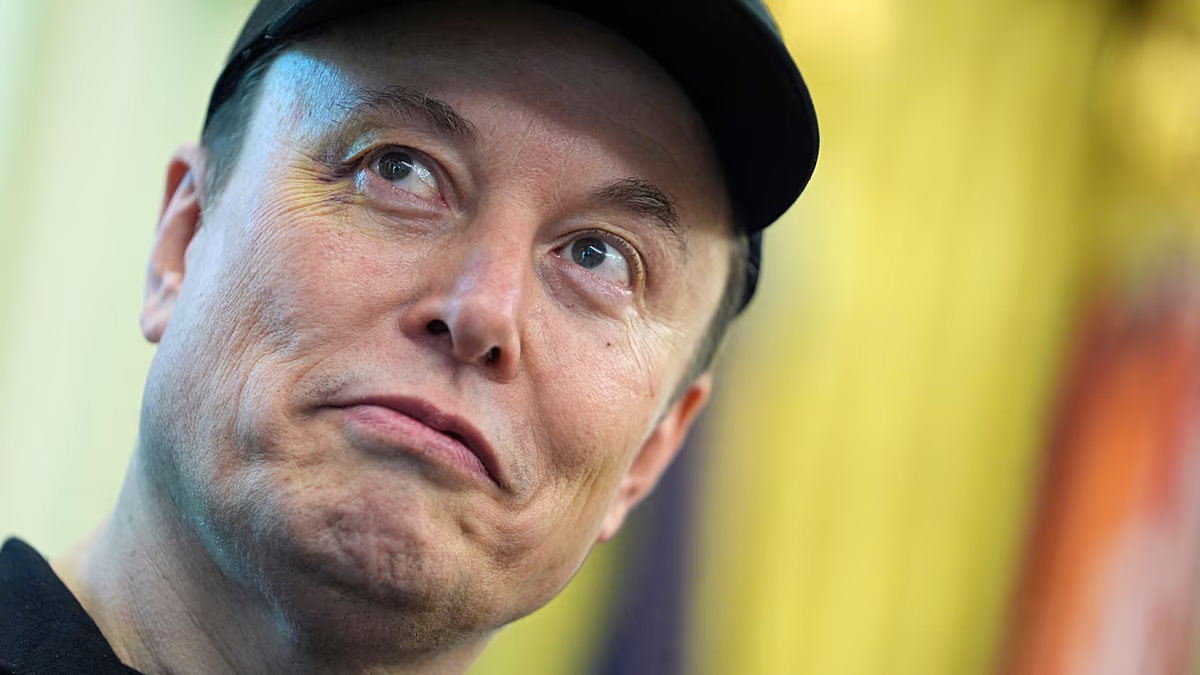




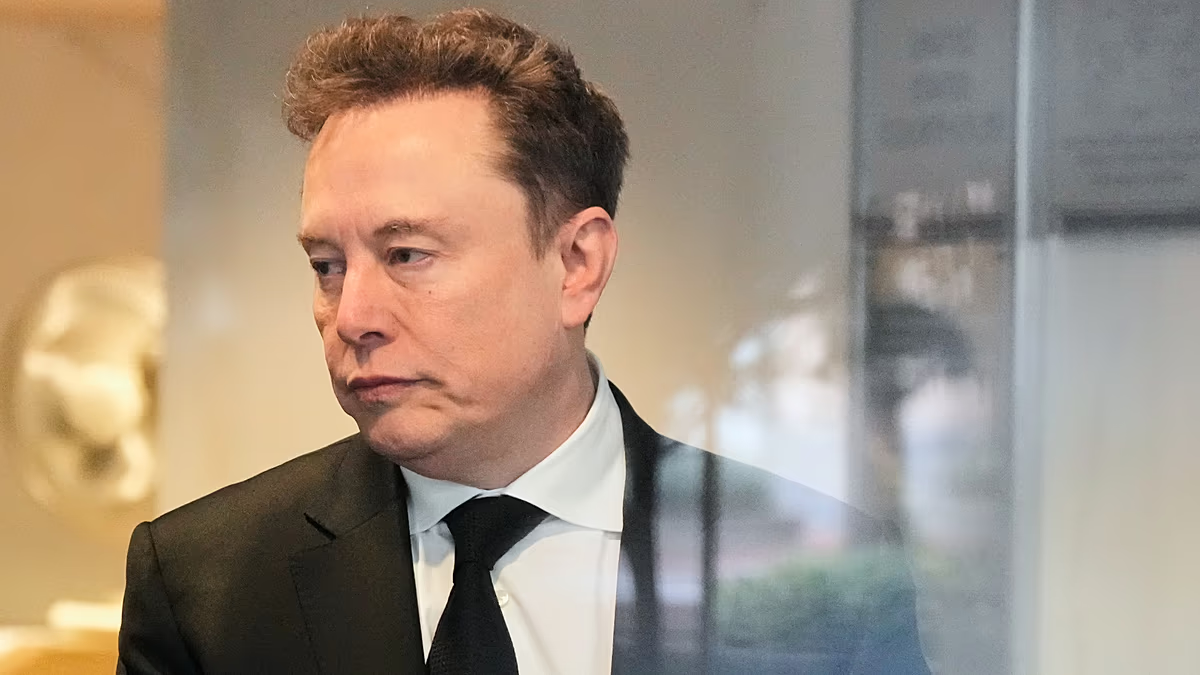
In a significant legal defeat for Elon Musk, a California court has dismissed his high-profile lawsuit against OpenAI and its top executives, Sam Altman and Greg Brockman. Musk, a co-founder and early financial backer of the AI research lab, had accused them of betraying a founding promise to remain a non-profit organization dedicated to developing artificial general intelligence (AGI) for the benefit of humanity. Instead, he alleged, they transformed OpenAI into a lucrative, for-profit enterprise valued at nearly a trillion dollars, enriching themselves in what he called a theft from a charity. However, after a three-week trial featuring testimony from the biggest names in tech, the core of Musk’s case was never examined. The jury, in an advisory role, determined he had waited too long to file his claims, missing a statutory deadline. Judge Yvonne Gonzalez Rogers swiftly accepted this verdict, dismissing the suit on what Musk decried as a “calendar technicality.”
The trial peeled back the curtain on the profound and bitter schism between two of Silicon Valley’s most influential figures, revealing a clash of egos, visions, and broken promises. Musk testified that the matter was simple: “it’s not OK to steal a charity.” He argued that Altman’s pivot to a for-profit structure, capped by a monumental partnership with Microsoft, constituted a breach of charitable trust. For their part, Altman and Brockman countered that there was never a binding, perpetual agreement to remain a non-profit. They portrayed Musk’s lawsuit as a strategic attack born from resentment after he failed to gain unilateral control over the company’s direction. OpenAI’s lawyer asserted the case was an “after-the-fact contrivance” designed by Musk to sabotage a flourishing competitor and overshadow his own “bad predictions” about OpenAI’s potential.
Central to the conflict was a fundamental disagreement over control and the path to safe AGI. Internal tensions flared early, with both Musk and