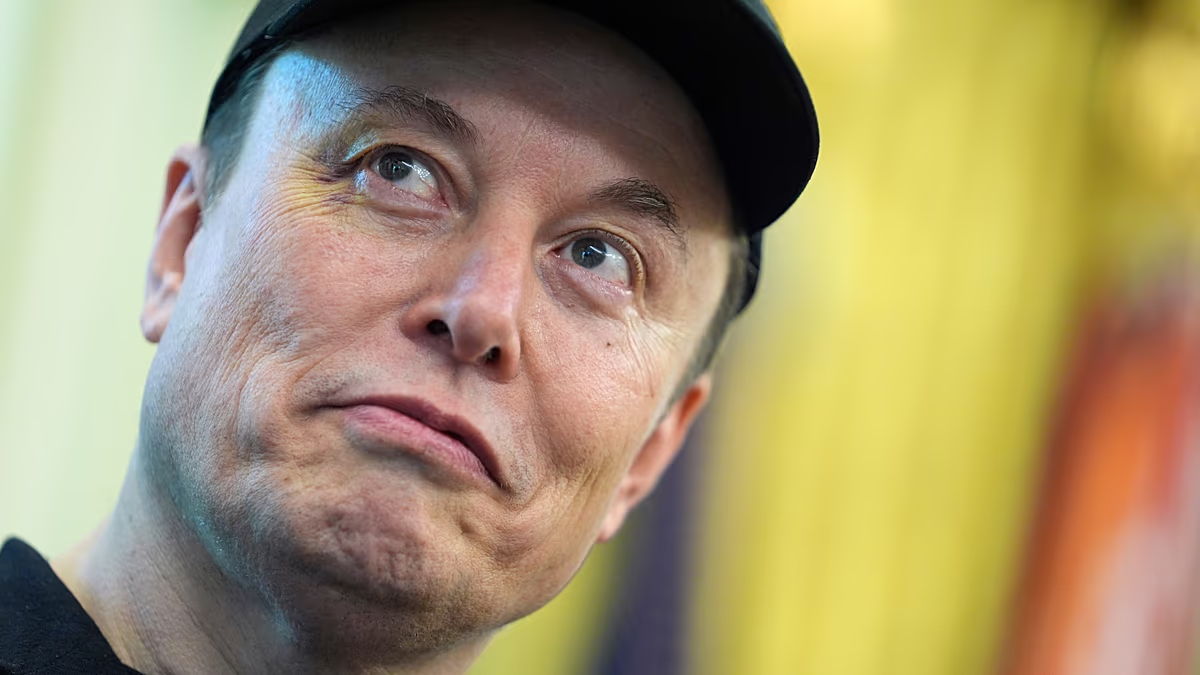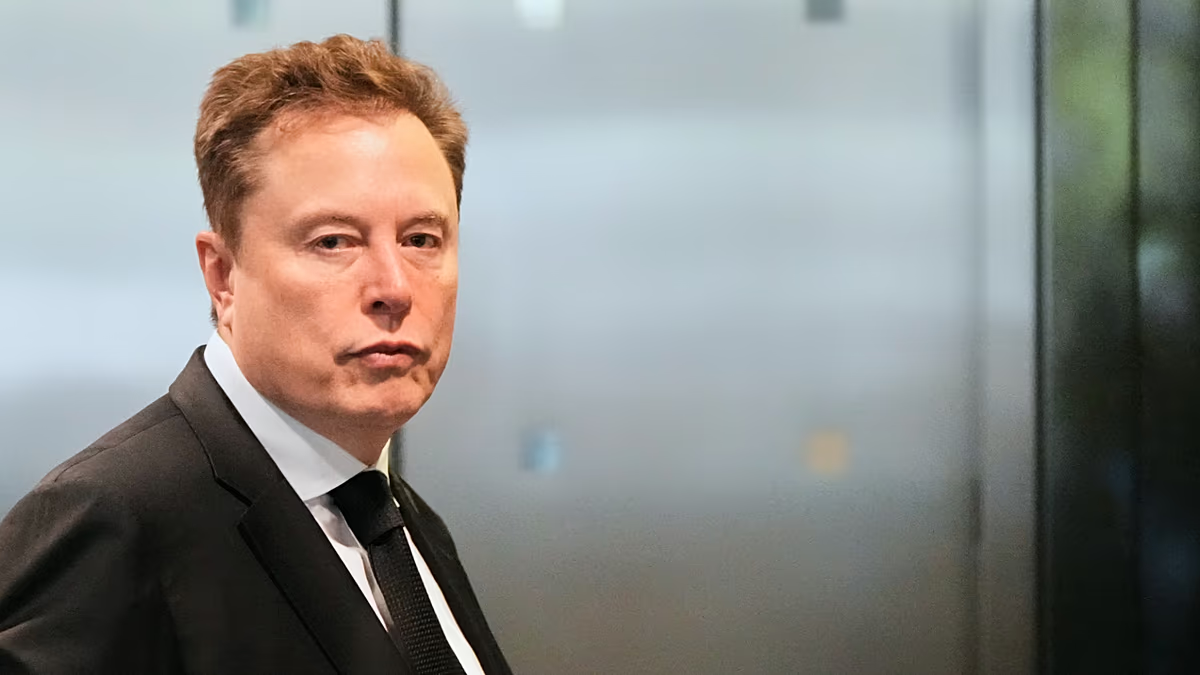




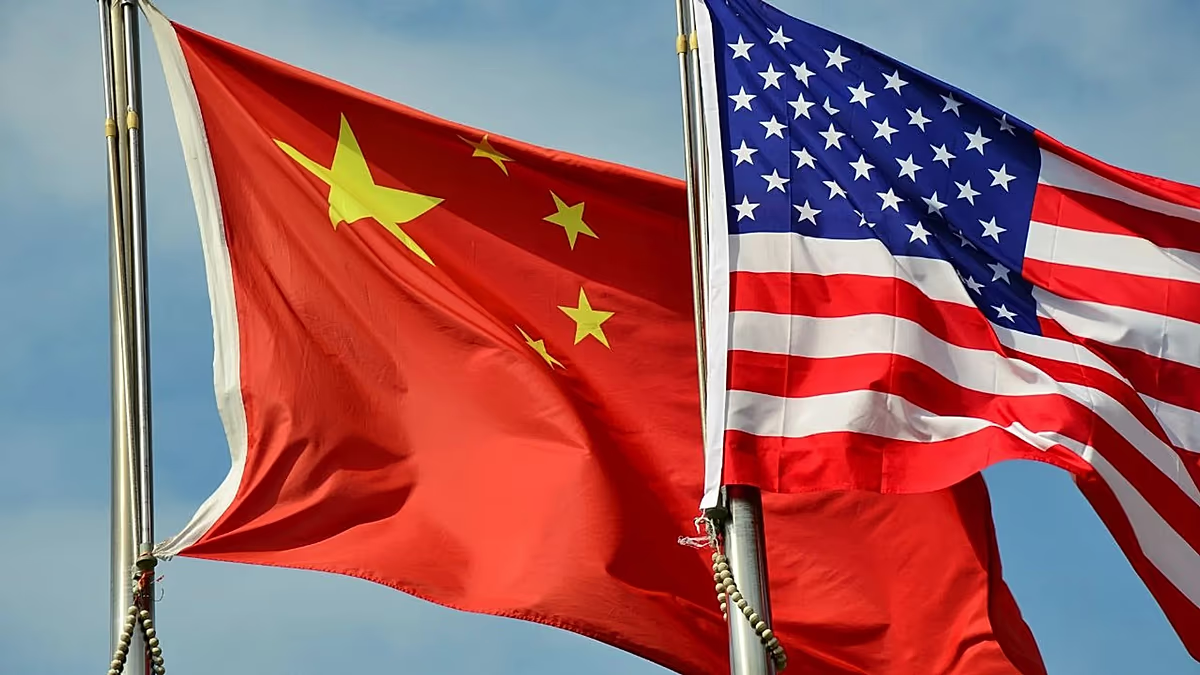
As President Donald Trump prepares for his pivotal summit with Chinese leader Xi Jinping, technology, long intertwined with trade and geopolitics, has emerged as a critical third pillar of discussion. While the official agenda will be dominated by urgent geopolitical flashpoints—such as the conflict in Iran and enduring tensions surrounding Taiwan—the presence of major U.S. tech CEOs like Apple’s Tim Cook and Tesla’s Elon Musk underscores the central role of innovation in bilateral relations. The conspicuous absence of Nvidia’s Jensen Huang hints at the particularly sensitive nature of certain technological frontiers. Experts anticipate that beyond semiconductors, a key focus will be the dawn of artificial intelligence-enabled warfare, a stark reality underscored by recent conflicts in Gaza and elsewhere. This new age of combat, where AI systems are deployed for targeting, intelligence, and cyber operations, presents profound ethical and strategic dilemmas that both powers can no longer avoid discussing, especially given their prior dialogues on the terrifying intersection of AI and nuclear security.
The urgency of this conversation is amplified by the rapid evolution of AI capabilities that directly threaten national security. Just weeks before the summit, the American AI firm Anthropic withheld its powerful cyber-focused model, “Mythos,” from public release, deeming its capabilities an unprecedented cybersecurity risk. This incident highlights a central tension: so-called “frontier AI” models can both defend and critically expose vulnerabilities in national digital infrastructure. David Leslie of The Alan Turing Institute notes that these risks, carrying implications for the highest levels of state security, are inevitable talking points. Compounding this is the unique character of the Trump administration’s approach to tech policy, which critics argue has been largely dictated by Silicon Valley rather than traditional diplomatic or national security channels. Consequently, the U.S. stance on issues like cybersecurity and intellectual property theft may be shaped more by the interests of accompanying tech titans than by career diplomats, adding a complex corporate dimension to state-level negotiations.
This summit occurs amidst a fiercely competitive technological race, where the landscape of advantage is constantly shifting. The United States has historically held the lead in venture capital, foundational infrastructure, and the design of cutting-edge AI chips. However, China has made staggering advances, nearly closing the gap according to recent analyses. Through aggressive state-led mandates, Beijing aims for over 70% AI penetration in key industries by 2027. It has fostered a vibrant ecosystem of companies like DeepSeek, which offers alternatives to Western models, and has aggressively pushed its tech giants—Huawei, Alibaba, ByteDance—into chip design to achieve self-sufficiency. While the U.S. excels in capital and hardware, China now leads in AI patents, research publications, and physical AI applications like robotics. This creates a dynamic of tense interdependence, where both nations possess strengths the other needs, making outright technological decoupling a mutually damaging prospect.
The interdependence extends beyond software into the very minerals that power modern technology. China’s dominance in rare earth elements—essential for everything from consumer electronics to military hardware—grants it significant leverage. As David Leslie points out, the U.S. position may be less strong than in the past, having depleted its own military stockpiles and facing the monumental task of rebuilding, which requires robust access to these very resources. This material dependency could influence negotiations. There is a conceivable scenario, as MERICS analyst Jacob Gunter suggests, where China might push for eased U.S. export restrictions on certain high-end technologies in exchange for addressing trade imbalances. However, Beijing’s past refusal of exemptions for chips from companies like Nvidia reveals a determined long-term strategy: to funnel all domestic demand toward homegrown producers, even if it means short-term delays, to ensure technological sovereignty.
Given these competing imperatives—of national security, economic ambition, and supply chain control—reaching a formal agreement on semiconductors or AI during this summit appears highly unlikely. As Gunter notes, these issues represent “red lines” in what many term a new Cold War. Figures within the U.S. national security establishment would fiercely resist any deal perceived as ceding ground in this foundational race. Therefore, the most probable outcome is that these deeply contentious topics will be set aside, with leaders focusing on areas where temporary, tactical understandings are more feasible. The goal may be less about grand treaties and more about managing competition, establishing basic guardrails, and preventing misunderstandings that could lead to escalation, particularly in military domains where AI is already being deployed.
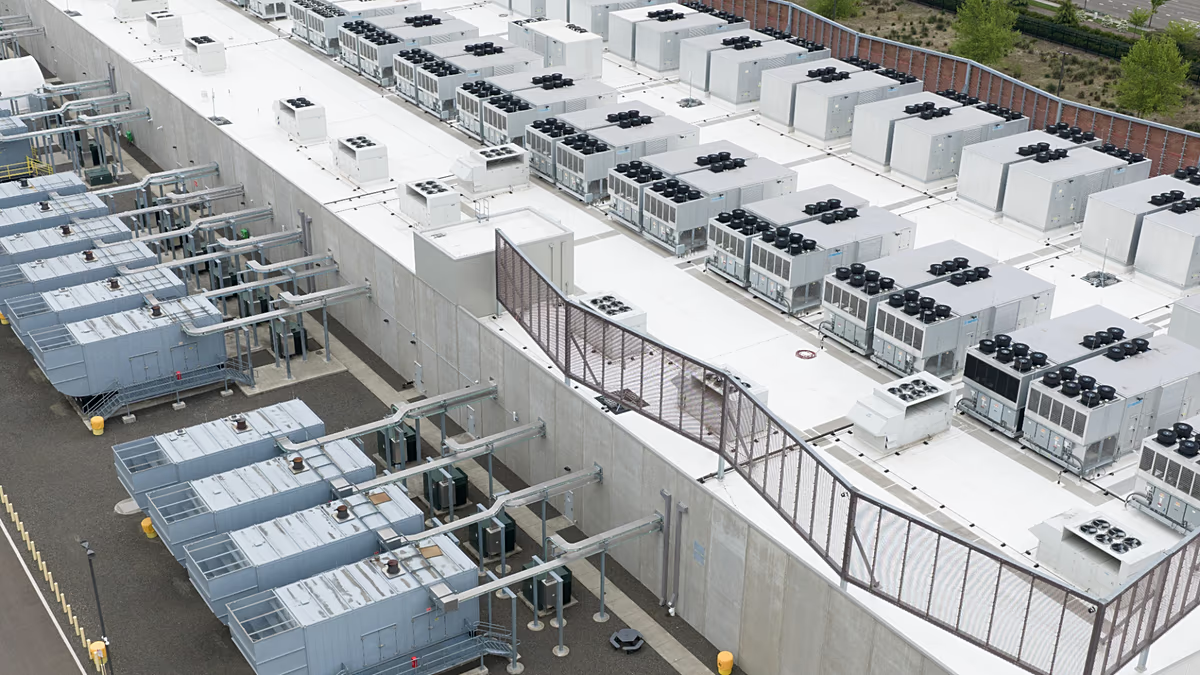
Ultimately, the breakneck pace of AI development presents a common, existential challenge that transcends this bilateral rivalry. In the U.S., a “techlash 2.0” is growing, with communities resisting the enormous energy and water demands of AI data centers and workers fearing widespread job displacement. In China, a more centralized system has enabled aggressive industrial policy and greater state control over the technology’s direction, framed as serving the public interest. Both nations, in their distinct ways, are grappling with how to harness a technology that promises immense prosperity but also poses unprecedented risks to stability, employment, and even human existence. While a collaborative global framework seems distant, this summit represents a crucial moment for the world’s two AI superpowers to acknowledge their shared responsibility. The hope is that they can begin a dialogue to ensure the race for AI supremacy does not become a reckless race to the bottom, but is instead guided by a mutual, if hesitant, understanding of the stakes for all of humanity.