


A Quiet Revolution in the Air: Britain’s Next Steps Toward a Smoke-Free Generation
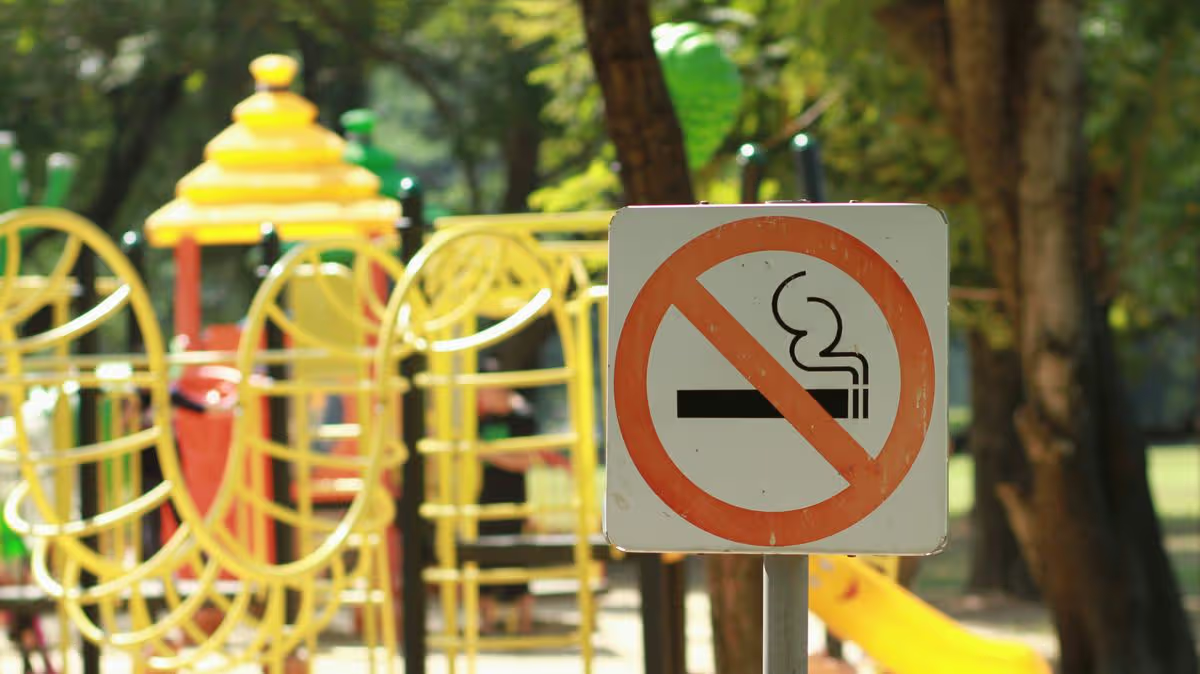
For decades, the battle against smoking in Britain has been a story of steady, determined progress. From the initial bans in workplaces and enclosed public spaces, the nation has gradually reclaimed its shared air. Now, as revealed by a significant new survey and ongoing government consultations, we stand on the cusp of a further, profound shift. This next phase moves beyond indoor spaces, targeting the very environments where community life unfolds outdoors. The public sentiment, as captured in a recent YouGov poll of over 13,000 adults, is overwhelmingly clear: the vast majority support extending these protections. An astonishing 93% of adults back smoke-free playgrounds, 78% support the measure at bus stops, and 62% would welcome a ban in the cherished pub garden. This isn’t a marginal view; it’s a mainstream consensus calling for cleaner air in the places we gather, wait, and play.
This public mandate is being channelled through the landmark Tobacco and Vapes Act, which recently received royal assent, legally preventing anyone aged 17 or younger from ever buying cigarettes. It’s a pioneering piece of legislation, making the UK the first European country to take such a definitive step toward a “smoke-free generation.” But the government’s vision, supported by charities like Action on Smoking and Health (ASH), sees this as a beginning, not an end. A formal consultation on expanding smoke-free and vape-free rules to specific outdoor settings, including playgrounds, hospital entrances, and school gates, closed on May 8th. The proposals aim to strike a careful balance, seeking to protect the vulnerable—especially children—while being mindful of impacts on businesses like pubs, where the traditional beer garden is in focus.
The driving force behind this expansion is a powerful combination of long-term public health strategy and immediate human concern. Government modelling suggests the new laws could dramatically reduce smoking rates, potentially slashing the number of smokers from over 5.5 million in 2023 to around 700,000 by 2056, and preventing an estimated 154,800 deaths in England by the century’s end. Beyond these staggering statistics lies a simpler, more visceral motive: shielding people from secondhand smoke. As Hazel Cheeseman of ASH notes, while indoor laws have been a “public health success story,” millions remain exposed to harmful fumes in outdoor settings. The desire for spaces where families can enjoy a park picnic, students can congregate on campus, or patients can get fresh air outside a hospital without encountering smoke is a powerful and reasonable expectation.
The conversation also thoughtfully encompasses the role of vaping. The government’s nuanced approach proposes creating vape-free spaces in many of the same outdoor areas targeted for smoking bans, particularly to denormalise the habit for young people. However, crucially, an exemption would protect the use of vapes in dedicated smoking cessation services. This distinction acknowledges vaping’s role as a less harmful alternative for adult smokers seeking to quit, while preventing its promotion in everyday public life. ASH further advocates for a national plan to reduce smoking in the home, recognising that the greatest exposure for many children happens behind closed doors, a complex frontier in the smoke-free mission.
Inevitably, these proposals spark debate about personal freedom and social responsibility. The image of a smoke-free pub garden, for instance, challenges a long-standing cultural fixture. The government insists its consultations are designed to “strike the right balance,” aiming to protect the vulnerable while limiting negative impacts on businesses. The strong public support revealed in the survey, however, suggests a societal reevaluation is already underway. The definition of a “common sense” public space is evolving to prioritise collective health and the right to breathe clean air, redefining where the freedom to smoke ends and the freedom from smoke begins.
As ministers now review the consultation responses, Britain is poised to enter a new chapter in public health. The journey from smoke-filled pubs and offices to the current landscape was transformative. The next steps—toward smoke-free playgrounds, transport hubs, and educational campuses—represent a deepening of that commitment. It is a quiet revolution, measured in consultation papers and survey percentages, but its goal is profoundly human: to ensure the air in our shared communal spaces is as safe and clean as possible, safeguarding the health of this generation and those to come. The path to a smoke-free generation is being paved, one outdoor space at a time.