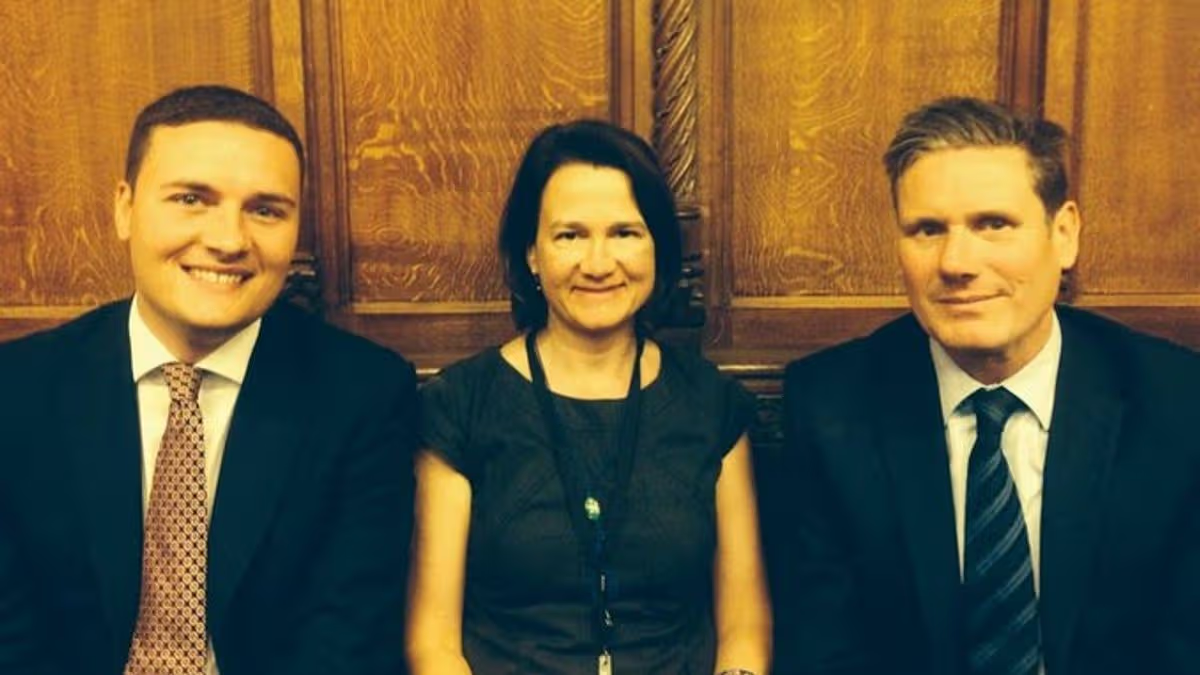



A photograph, frozen in time and now resurfacing across social media, captures a moment of unadulterated political dawn. It is 2015, and three newly-elected Labour MPs—Keir Starmer, Wes Streeting, and Catherine West—are seated together in the House of Commons, their faces illuminated by the blend of exhaustion and excitement that follows an electoral victory. Starmer himself shared the image, a digital relic captioned simply: “Taking our seats for the 1st time.” The trio, then unified by the shared novelty of parliamentary life and a common political project, presented an image of comradely solidarity. A decade on, this snapshot serves as a poignant and awkward preface to the profound fractures currently destabilizing the Labour Party, revealing how the pressures of leadership and governance can strain even the most promising of alliances.
Today, that unity has shattered, replaced by a very public and destabilizing internal crisis. The photograph re-emerged as Health Secretary Wes Streeting and Prime Minister Keir Starmer were poised for a crucial meeting, a context that imbued the image with heavy irony. Streeting, once a staunch ally, now represents the epicenter of a cabinet-level challenge to Starmer’s authority. The dissonance was sharpened hours before their summit, as Streeting attended a service at Westminster Abbey honouring Florence Nightingale and the nation’s nurses—a public display of ministerial duty that stood in stark contrast to the private turmoil roiling his party. This juxtaposition of official normality and backbench rebellion has become a defining feature of the government’s current paralysis.
The rebellion has found a vivid and unflinching voice in Catherine West, the third figure from that 2015 photograph. Appearing on the BBC’s Sunday with Laura Kuenssberg, West issued a dramatic public ultimatum to her parliamentary colleagues, urging senior figures like Education Secretary Bridget Phillipson to challenge Starmer directly. In a striking rhetorical turn, she framed the Prime Minister’s leadership as a managerial failure, comparing it to a failing school or hospital where the head or CEO must be replaced. “We need to modernise,” she argued, claiming the party under Starmer looked “very dated.” Her call to arms—effectively putting the party “on notice”—transformed her from a fellow traveler in that old photo into a chief agitator, symbolizing how deep the disillusionment runs, reaching back to the very intake that first brought Starmer to Parliament.
This internal pressure has crystallized into tangible political action, pushing the government to the brink. On a single day, the resignations of four junior ministers—Miatta Fahnbulleh, Jess Phillips, Alex Davies-Jones, and Zubir Ahmed—delivered a severe blow to the Prime Minister’s authority. In a particularly blistering resignation letter, Jess Phillips articulated the core grievance of the rebels: “Whilst progress has been made, we have not acted with the vision, pace and ambition that our mandate for change demands of us.” This sentiment, echoing through the corridors of Westminster, suggests a belief that the government is squandering its hard-won electoral mandate through excessive caution and a lack of transformative zeal, prompting key figures to conclude that loyalty now requires rebellion.
In response, a desperate fightback is underway from Starmer’s allies. Over one hundred backbench MPs are reported to have signed a letter of support for the Prime Minister, aiming to demonstrate that the rebel voice, while loud, does not command a majority of the Parliamentary Labour Party. Furthermore, a significant counter-threat has emerged: Deputy Prime Minister Angela Rayner is reportedly prepared to enter any prospective leadership contest not to support Streeting, but to directly challenge him for the crown. This move underscores the complex, multi-factional nature of the crisis; it is not a simple binary battle between leader and challenger, but a potential free-for-all that could reshape the party’s future. Starmer himself remains outwardly defiant, vowing to “fight on” and see through his promised ten-year project for national renewal, even as he admits the events have “destabilised” his government.
Thus, the journey from that hopeful 2015 photograph to today’s turmoil is a story of political promise corroded by the immense weight of governing. The fresh-faced MPs who once took their seats together are now central players in a drama that questions the very direction and vitality of their party. The crisis represents more than a personal fallout; it is a fundamental clash over pace, vision, and political identity in a period demanding clear and decisive action. As the Prime Minister attempts to “get on with governing,” the ghost of that unified past haunts the present, a reminder of shared beginnings now overshadowed by a profound and very public schism that threatens to define the remainder of this political era.