



A City on Edge: The Aftermath of a Violent Afternoon in Manchester
The familiar, bustling rhythm of a Manchester afternoon was shattered yesterday near the Denmark Road Sports Centre, as what began as a routine call escalated into a violent confrontation, leaving a police officer injured, a man in custody, and a community street sealed behind a web of blue and white tape. At approximately ten minutes to five in the evening, Greater Manchester Police received the kind of report that sends an immediate chill down the spine of any dispatcher and triggers an urgent, multi-vehicle response: a man was allegedly brandishing a knife in a public area. This single, stark phrase conjures the gravest of threats, transforming an ordinary street corner into a potential flashpoint of danger, and demanding an immediate and decisive intervention to protect the public.
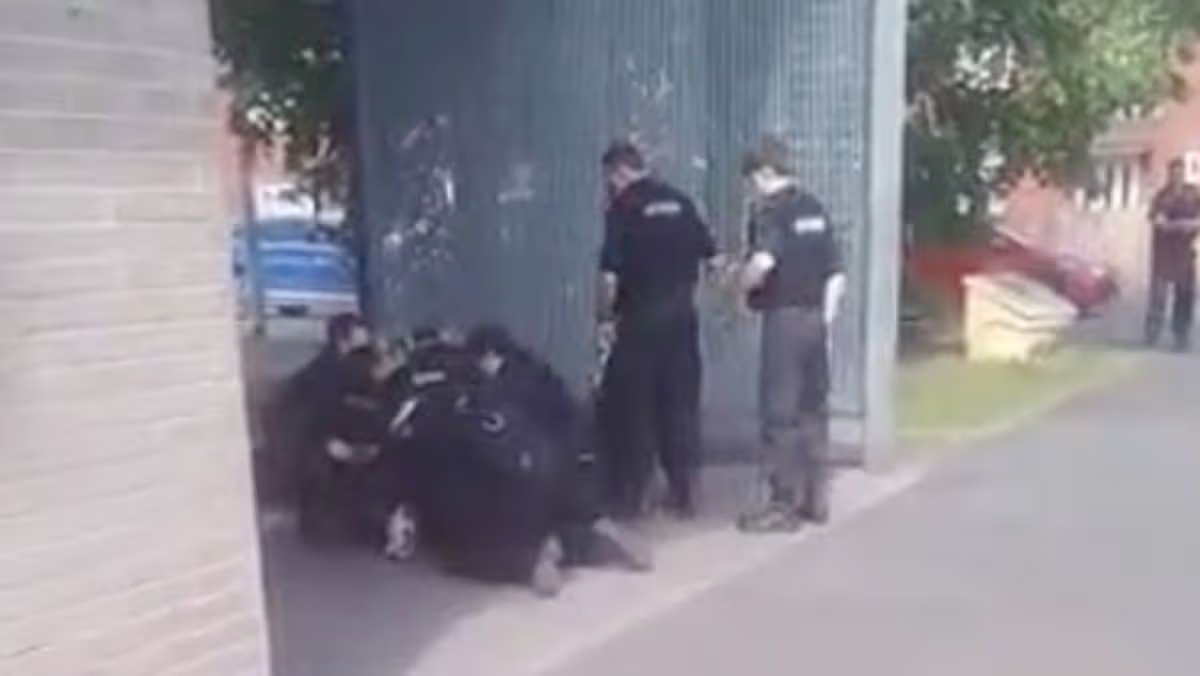
Officers descended upon the scene with the speed and coordination honed by training and grim experience, their sirens cutting through the air as they converged on Denmark Road. However, the situation they encountered swiftly deteriorated from a potential threat into an act of violence. According to an official statement from Greater Manchester Police, upon arrival and engagement, one of their officers was assaulted. This pivotal moment—the attack on a person sent to defuse the danger—fundamentally altered the nature of the incident, elevating it from a public order concern to a direct attack on the safeguards of society itself. The assailant, a man, was subsequently overpowered and arrested, but not before the tangible cost of the day’s chaos was exacted upon a public servant.
The arrested individual now faces serious accusations that paint a troubling picture of the encounter. He was taken into custody on suspicion of a triad of offences: assaulting an emergency worker, possession of a bladed article, and possession of Class B drugs. This combination of charges suggests a scenario fraught with multiple layers of risk—a lethal weapon, alleged drug involvement, and a direct, physical confrontation with authority. The officer, whose role is to stand as a shield for the community, became the target. Eyewitness Simon Bailey, speaking to the Manchester Evening News, provided a glimpse of the rapid, human response to this violence, noting, “The injured officer was pulled away and got treated.” This simple statement underscores the immediate comradeship and care that follows such an incident, even as the procedural machinery of arrest and containment whirred into motion around him.
Long after the initial adrenaline faded, the physical scar of the event remained imprinted on the neighborhood. As evening fell, a large police scene persisted, a stark visual testament to the gravity of what had transpired. Denmark Road and the adjacent Cecil Street were cordoned off, their normal flow of life interrupted by the silent language of police tape. Photographs from the area revealed a substantial deployment of force resources, with at least eight marked police vehicles visible, turning the locale into an ad-hoc command post. This imposing presence served a dual purpose: to thoroughly secure and investigate the scene, and to provide a visible reassurance that the threat had been neutralized. Authorities formally advised members of the public to avoid the area and urged motorists to seek alternative routes, acknowledging the widespread disruption caused by the necessary lockdown.
Beyond the official statements and logistical directives lies the human texture of such an event. For residents and passersby like Simon Bailey, the abstract notion of “police responding to an incident” became a startling, real-time spectacle. His account of approximately thirty officers on the scene speaks to the scale of the response, a mobilization of personnel that reveals how seriously such a knife threat is taken. The sight of an injured colleague being assisted, the coordinated rush to seal the streets, and the lingering presence of the investigation into the night—all these elements transform a news bulletin into a lived experience for the community, a reminder of the fragility of public peace and the suddenness with which it can be breached.
This incident in Manchester, while resulting in an arrest, is not a closed case. It opens into broader, more difficult conversations about the perils faced by emergency workers who rush toward dangers others flee, about the societal issues that culminate in such violent public encounters, and about the community’s resilience in the face of alarming disruptions. The officer’s assault is a sobering reminder of the personal risks inherent in the duty to protect and serve. As the suspect remains in custody for questioning, the legal process will seek accountability. But for the community around Denmark Road, the memory of the cordoned streets and the fleet of blue lights will linger, a vivid tableau of an afternoon when normality was held at bay by an unfolding drama of threat, violence, and the steadfast response it provoked.