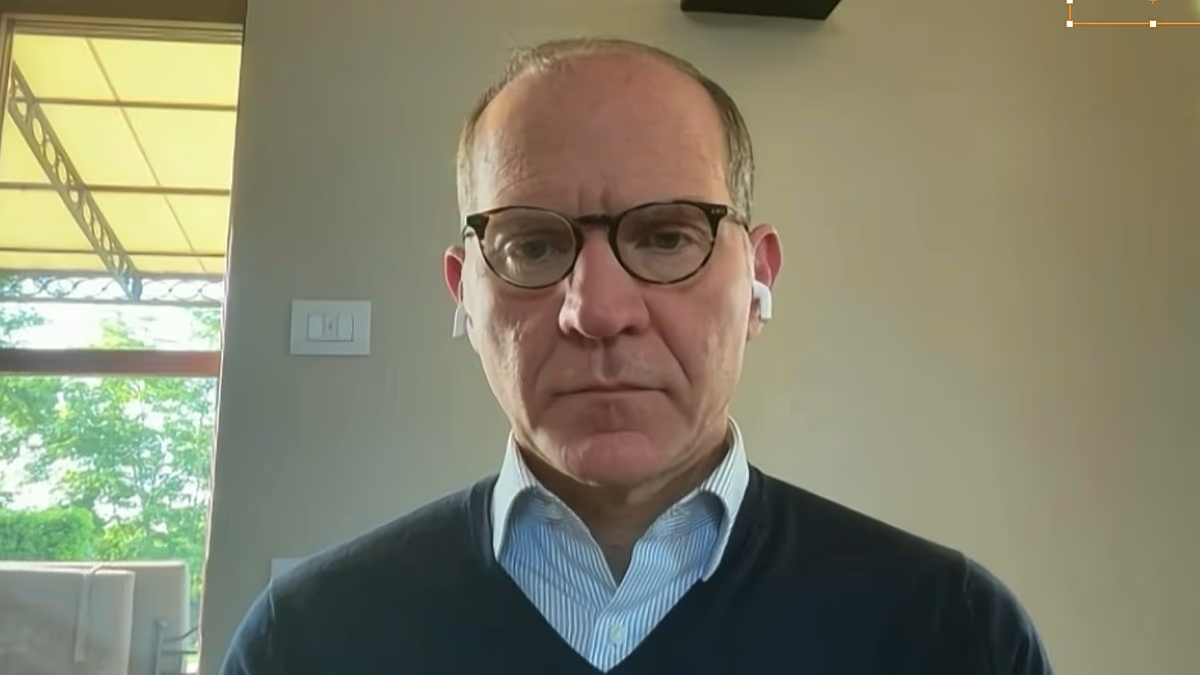
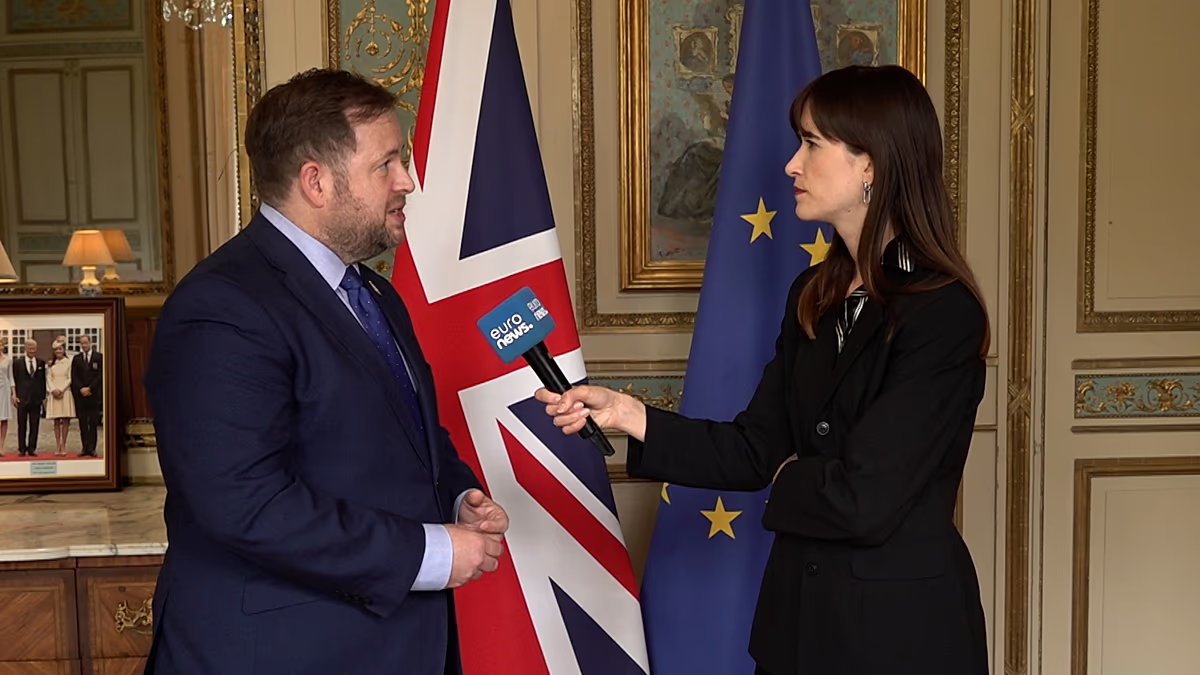


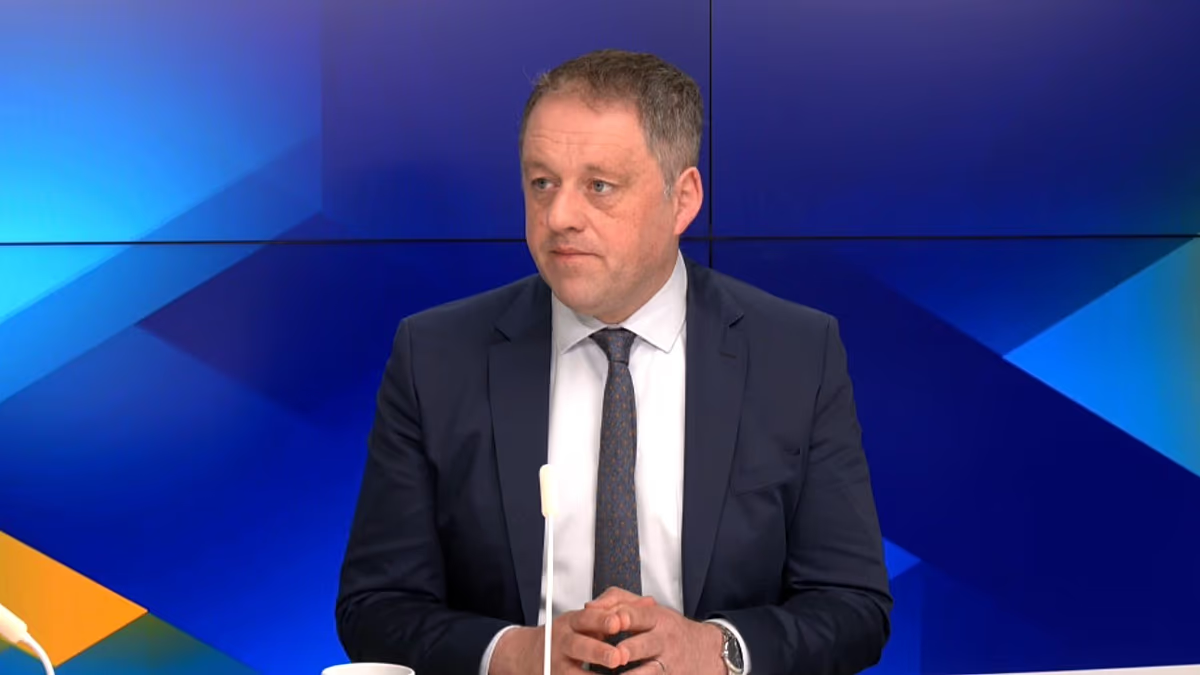
On a morning broadcast of Euronews’ Europe Today, Ireland’s Minister of State for EU Affairs and Defence, Thomas Byrne, offered a sober yet resolute assessment of Europe’s commitment to Ukraine. As EU defence ministers convened in Brussels to address Russia’s ongoing invasion and the Middle East conflict, Byrne underscored that Ukraine remains “very strong and forward in people’s minds in Europe.” His statement served as a crucial reminder that, despite the passage of time and the emergence of other global crises, the fate of Ukraine has not faded from the European consciousness. The central question, he emphasized, is no longer about whether to support Ukraine, but “how do we best help Ukraine.” He outlined a multi-faceted strategy that includes the provision of military aid, the maintenance of sanctions against Russia, the pursuit of diplomatic peace talks, and the long-term strategic goal of European Union enlargement to include Ukraine. This holistic view reflects a understanding that the response must be sustained and adaptable, blending immediate defensive needs with a vision for a stable, European future for Ukraine.
The context of Ireland’s upcoming role adds significant weight to Minister Byrne’s words. Come July, Ireland will assume the rotating presidency of the Council of the European Union, positioning Dublin at the very heart of diplomatic efforts to chart a path toward ending the war. This responsibility casts Ireland not just as a commentator, but as an impending facilitator of critical EU dialogue. Against this backdrop, Byrne defended the EU’s persistent use of economic sanctions, even as debates simmer among member states about their ultimate efficacy. Acknowledging that the 20 packages enacted so far have not ended the conflict, he argued they have inflicted “quite a significant impact” on the Russian economy. The logic, he suggested, is one of sustained pressure—a belief that continued economic strain on Russia and its population may eventually create internal leverage for change. “We need to continue putting pressure on Russia and indeed on its people,” Byrne stated, framing sanctions as a necessary, if imperfect, tool in a prolonged struggle of wills.
Diplomacy, however, remains an indispensable parallel track. Minister Byrne signaled a pragmatic openness to dialogue, noting that the issue of direct engagement with Moscow has resurfaced in discussions about potential peace talks. He clarified that Ireland has supported past outreach by individual leaders to Vladimir Putin and believes it is important to allow such dialogue if it holds genuine promise for ending the war. “We think it is important to allow that dialogue to take place if it’s going to end the war,” he said, striking a careful balance between principled support for Ukraine and a realist’s acknowledgment that wars ultimately conclude at the negotiating table. Yet, he was cautious not to get ahead of the EU consensus, describing the appointment of a special envoy to deal directly with Putin as “a consideration for another day.” This nuanced position reflects the delicate dance of supporting Ukraine’s battlefield position while keeping a door—however narrowly open—to a political solution that ensures its sovereignty and security.
The interview also highlighted how geopolitical shifts within the EU can unlock progress on other fronts. Minister Byrne welcomed a significant breakthrough: the EU’s agreement on sanctions targeting Israeli settlers accused of violence in the occupied West Bank. This move, long stalled, became possible only after Hungary’s new government dropped its previous opposition. “I think it’s very, very welcome that Hungary has changed its position on this,” Byrne remarked, noting that unanimity had finally been achieved. He then pointedly connected this shift to the broader European agenda, particularly the stalled process of Ukraine’s accession to the EU. Byrne hinted that the change in Budapest’s stance could have wider implications, stating, “The Hungarian government up to now has blocked the opening of accession talks formally with Ukraine, and that’s something we’d like to see change.” His comments subtly framed Hungary’s move as a test case, suggesting that a more cooperative Hungarian posture could unblock vital strategic processes crucial for Europe’s future security architecture.
In a revealing moment that touched on culture, sovereignty, and the principles of democracy, Minister Byrne was asked about Ireland’s absence from that year’s Eurovision Song Contest—a decision made amid controversy surrounding Israel’s participation. His response was a pointed lesson in the distinction between state and independent media. He stressed that the decision was made solely by Ireland’s public broadcaster, RTÉ, and not by the government. “We’re not Hungary. We don’t get involved in telling the media what to do in Ireland,” he insisted. This comparison was a deliberate and powerful contrast, underscoring a foundational democratic value. He framed the independence of RTÉ not as a mere policy, but as something “critical and central to our democracy over the decades.” In doing so, Byrne elevated a question about a song contest into a statement of national principle, implicitly criticizing models of governance where the state exerts control over cultural and media institutions.
In summary, Thomas Byrne’s interview painted a picture of a Europe navigating multiple, overlapping crises with determination and evolving strategy. The unwavering focus on Ukraine, the careful calibration of sanctions and diplomacy, the significance of internal EU political shifts, and the steadfast commitment to democratic principles all interwove to form a coherent outlook. As Ireland prepares to steer the EU Council, Byrne’s comments suggest a presidency that will champion continued support for Ukraine, seek pragmatic diplomatic openings, and leverage newfound consensus within the bloc. The path forward remains fraught with challenge, but the message from Dublin is clear: European unity, strategic patience, and a steadfast adherence to democratic values are the indispensable tools for confronting aggression and building a more stable future. The full complexity of this moment, from war rooms to broadcast studios, is captured in the nuanced positions laid out in this conversation, which viewers can witness for themselves in the interview above.