

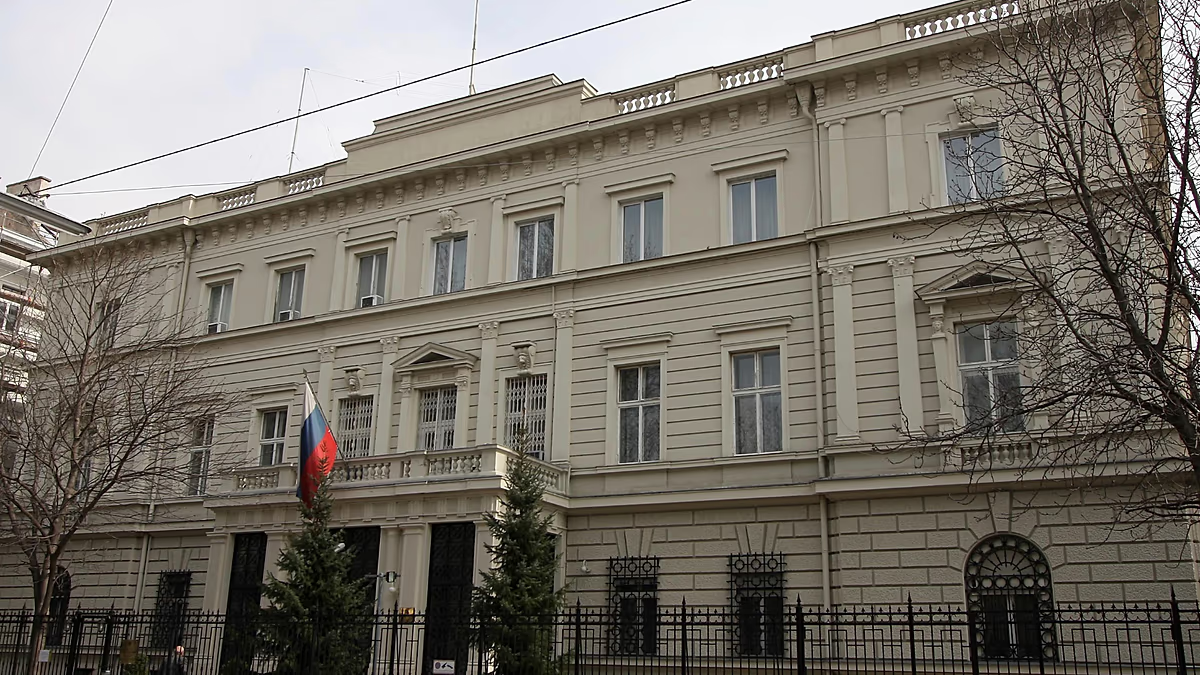


Austria’s recent expulsion of three Russian diplomats marks a significant shift in its posture towards espionage activities on its soil. Foreign Minister Beate Meinl-Reisinger framed the move as a necessary response to a national “security issue,” stating unequivocally that using diplomatic immunity for spionage is unacceptable. Her remarks included a pointed reference to the so-called “antenna forest” atop Russian diplomatic buildings in Vienna, bringing long-simmering suspicions into the public spotlight. This action signals Austria’s intention to adopt a tougher stance, aligning more closely with other European nations that have been more aggressively countering Russian intelligence operations since the 2022 invasion of Ukraine.
The focus of these suspicions centers on the unusual array of antenna systems and satellite dishes observed on Russian diplomatic properties. While embassies routinely use rooftop equipment for secure communications with their home governments, the scale and behavior of the Russian installations have raised alarm. An investigation by the Financial Times noted that these dishes frequently reposition themselves, an activity analysts find atypical for standard diplomatic links. Erich Möchel, an Austrian journalist collaborating with a group of technologists called Nomen Nescio, reported that one antenna array points westward toward commercial satellites carrying traffic between Europe and Africa, rather than toward satellites linked to Moscow, suggesting a purpose beyond simple embassy communications.
According to Möchel and his colleagues, one Russian compound appears to function as a dedicated signals intelligence station. They have observed dishes that are regularly moved to search for specific channels, alongside lightweight rooftop structures resembling radomes—protective enclosures that shield antennas and obscure their direction. This pattern of activity implies a systematic effort to intercept communications, potentially scanning for unencrypted data, satellite links, or mobile device metadata. Such technical details transform abstract suspicions into tangible evidence of possible espionage infrastructure operating under diplomatic cover.
This phenomenon is not unique to Russia or Vienna. Historical precedents abound, such as allegations that the US embassy in Berlin housed surveillance equipment, or reports that British intelligence operated a listening post atop their embassy there. Similarly, a 2023 investigation highlighted Russian diplomatic rooftops across Europe, from Warsaw to Brussels, equipped to intercept electronic communications. Former intelligence officials, like ex-KGB officer Sergei Jirnov, confirm that diplomatic antennas often serve dual purposes: legitimate communication and espionage. Claude Moniquet, a former French intelligence agent, explained that such setups can intercept a wide range of signals, naming Vienna, Brussels, and Geneva as major hubs due to their concentration of international institutions.
Vienna’s status as an espionage hotspot is magnified by its role as a host city for key international organizations, including the United Nations, the International Atomic Energy Agency, and OPEC. This diplomatic density creates a rich environment for intelligence gathering, attracting operations from multiple nations. While Austria has historically maintained a more neutral stance and expelled fewer Russian diplomats than some EU counterparts, the recent action and the minister’s stark language indicate a recalibration. The decision reflects a growing acknowledgment that the extensive antenna arrays are not merely an architectural curiosity, but a potential threat to national and European security.
In essence, Austria’s expulsion move is a declarative act, drawing a clear line against the misuse of diplomatic premises. It is a response to persistent, technically-substantiated reports that Russian facilities are engaged in signals intelligence collection far beyond the scope of permitted embassy communications. By taking this step, Austria is not only addressing a specific incident but also confronting a broader, enduring challenge: the exploitation of diplomatic norms for covert warfare in the heart of Europe. This development underscores the ongoing tension between diplomatic protocol and national security in an age where technical espionage capabilities are often hidden in plain sight, atop embassy roofs.