

A Growing Consensus: Europe Considers a Continent-Wide Social Media Ban for Children
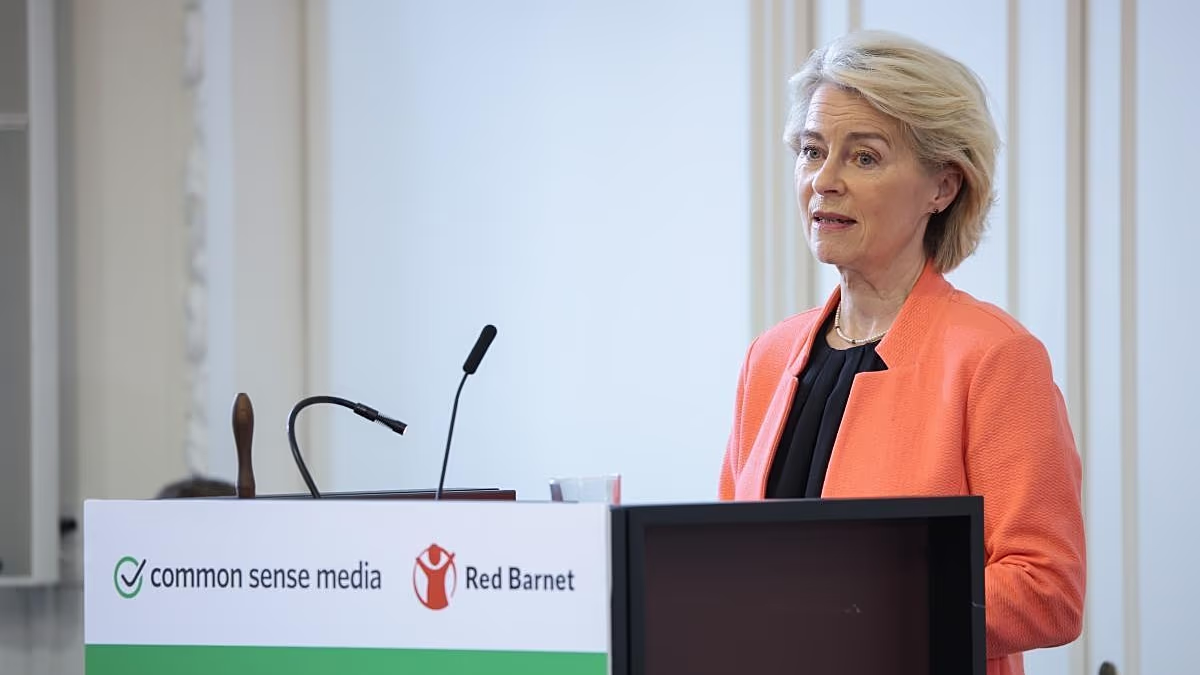
Across Europe, a significant shift is taking place in how governments view the relationship between children and the digital world. Mounting concern over the potential harms of social media—from addiction and social anxiety to exposure to inappropriate content—has propelled the issue to the top of the political agenda. This pressure, led prominently by member states like France, Spain, Greece, and Denmark, has now culminated in a stark proposal from the highest levels of the European Union. European Commission President Ursula von der Leyen has announced that the EU could propose a bloc-wide social media ban for children as early as this summer. This move represents a potential watershed moment, signaling a willingness to move beyond mere platform regulation toward more assertive, protective measures for minors in the digital space.
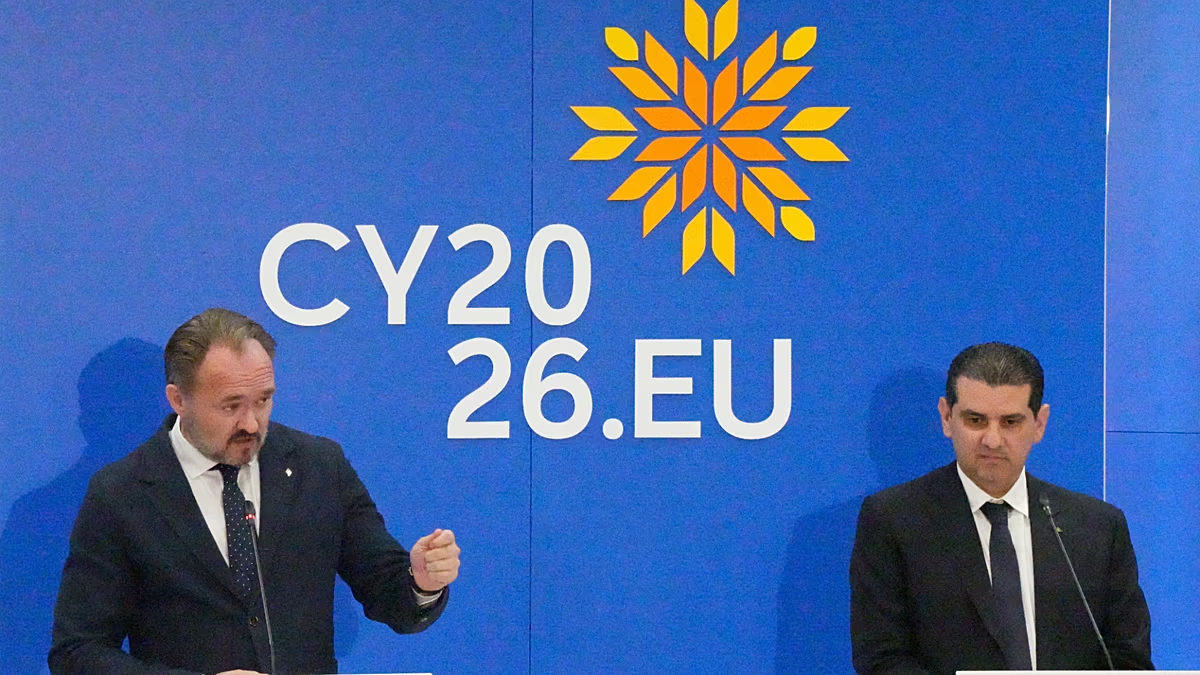
The driving force behind this push is a profound anxiety about the pervasive and rapid intrusion of technology into young lives. As President von der Leyen stated at a summit in Copenhagen, “We are witnessing the lightning speed at which technology is advancing – and how it penetrates every corner of childhood and adolescence.” This sentiment reflects a growing parental and societal fear that unchecked access is fundamentally altering childhood development. While several EU countries are already forging ahead with their own national laws—most notably France, which plans to ban users under 15 from platforms like Instagram and TikTok from September—there is a strong desire in Brussels to prevent a fragmented patchwork of rules. A harmonized EU-wide approach is seen as crucial for the integrity of the single market and for establishing a clear, unified standard for digital child protection.
At the heart of any effective ban lies a formidable technical and ethical challenge: reliable age verification. The EU cannot simply mandate a ban without providing a robust and privacy-respecting method for platforms to determine who is a child. To this end, von der Leyen pointed to a potential solution modelled on the bloc’s widely used EU Digital COVID Certificate. The idea is a dedicated age-verification app that would allow users to prove their age without oversharing personal data. However, this proposal is met with significant caution. Member states and cybersecurity experts alike have raised valid concerns about creating a centralized system that could become a target for hackers or inadvertently create a new database of minors’ identities. Resolving these privacy and security dilemmas is a critical hurdle that must be cleared for any ban to be both lawful and publicly accepted.
The proposed social media ban is not an isolated action but part of a broader, escalating crackdown on tech platforms under existing EU laws. Brussels has already flexed its regulatory muscle by placing giants like Instagram and Snapchat under formal investigation for potentially failing to protect minors under the Digital Services Act (DSA). Furthermore, the upcoming Digital Fairness Act is considering bans on specific “addictive design features,” such as infinite scroll and autoplay, which are seen as deliberately hooking young users. This multi-pronged strategy indicates a comprehensive re-evaluation of the digital ecosystem’s responsibility toward children. The EU is methodically building a legal framework that addresses not just access but also the very design of online services, aiming to make them inherently safer and less exploitative.
The EU’s deliberations place it within a global trend of governments reassessing the principle of unfettered digital access for the young. Countries like Australia and Indonesia have already implemented various forms of restriction, demonstrating that Europe’s actions are part of a wider international rethink. Yet, the EU’s potential move is particularly consequential due to the size of its market and its role as a global regulatory trendsetter. A bloc-wide ban would send a powerful signal to tech companies worldwide, forcing them to redesign core aspects of their service offerings for one of their largest audiences. The urgency framing this discussion is palpable, summed up by von der Leyen’s warning: “if we are slow and hesitant, it will be another entire generation of children that pays the price.” This statement frames the issue not as a matter of convenience, but of moral imperative and intergenerational responsibility.
As the summer deadline approaches, the EU stands at a crossroads. An independent expert panel is finalizing its assessment, which will inform the Commission’s legal proposal. The outcome will hinge on balancing the genuine risks to children’s well-being with the practicalities of enforcement, the imperatives of privacy, and the realities of young people’s social lives, which are increasingly mediated online. Whatever form the final proposal takes, the debate itself marks a pivotal moment. It challenges the long-held assumption that the digital realm is an ungovernable frontier, asserting instead that the safety of children must be a non-negotiable priority, even if it means imposing limits that were unthinkable just a decade ago. The coming months will reveal whether Europe chooses to erect a protective barrier around its youngest citizens in the vast and often uncharted territory of the internet.