

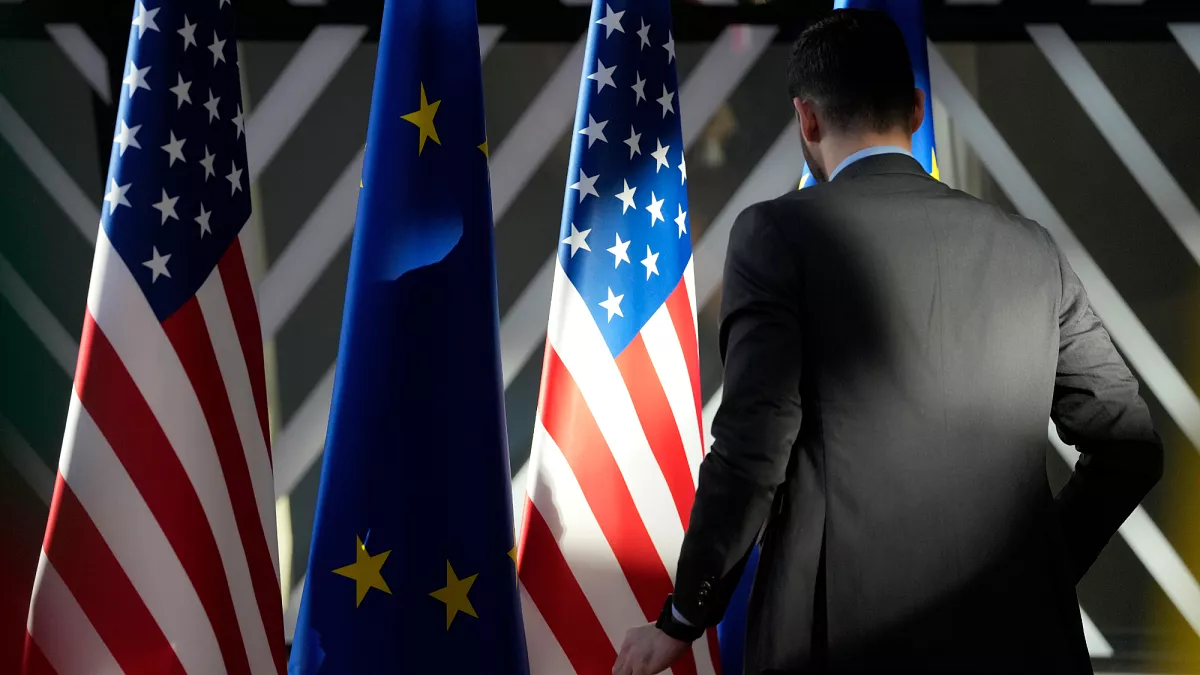
In the intricate dance of global trade, a high-stakes negotiation is unfolding between the European Union and the United States. At its heart is a provisional trade deal, brokered last summer between former President Donald Trump and European Commission President Ursula von der Leyen, designed to eliminate EU tariffs on US industrial goods. However, this agreement has been met with deep apprehension in the European Parliament. Lawmakers fear the pact could leave the bloc vulnerable, transforming from a tool for economic cooperation into a vehicle for political extortion. This concern is not abstract; it is underscored by a stark US ultimatum: approve the deal for swift implementation by July 4th, or face the potential doubling of tariffs on European cars—a move that would devastate a key industry. Consequently, Members of the European Parliament (MEPs) have deliberately delayed a ratification vote, insisting the agreement must be rebalanced with stronger safeguards to protect European interests before they can give their consent.
The core of the Parliament’s resistance has centered on installing a robust safety net within the deal. After intense negotiations, a significant breakthrough has been achieved with a provisional compromise on a crucial “safeguard mechanism.” This clause would empower the EU to temporarily reimpose tariffs on US goods if a sudden surge in imports seriously disrupts the European market. This tool is seen as essential to prevent domestic industries from being overwhelmed. Negotiators have also agreed in principle to include a “sunset clause,” which would set an automatic expiration date for the entire agreement unless it is consciously renewed by both sides. While the Parliament initially pushed for this to occur as early as March 2028, the final timeline is still being debated. These provisions represent a hard-won victory for MEPs, aiming to ensure the deal is not a permanent, one-sided commitment but a conditional partnership that can be reviewed and corrected.
Yet, a major roadblock remains, stalling progress in what has been termed the “sunrise clause” dispute. This clause defines the very moment the agreement would take effect. The European Parliament, led by cautious MEPs, insists that the deal should only “sunrise” into force once the United States demonstrates compliance with a key term: capping its tariffs on EU goods at 15%. This demand is a direct response to a recent US Supreme Court ruling that invalidated the 2025 tariff structure, prompting Washington to impose new duties that now average above the agreed ceiling. The European Commission, however, opposes this precondition, advocating for immediate implementation to meet the pressing July deadline. This standoff reflects a fundamental tension between strategic caution and diplomatic urgency, with MEPs unwilling to activate a deal the US is already technically violating.
Adding another layer of complexity are provisions directly addressing geopolitical coercion. Following former President Trump’s provocative threats earlier this year targeting EU countries over a potential US acquisition of Greenland, MEPs successfully pushed for clauses that would allow the suspension of the trade deal in response to threats against the EU’s territorial integrity. Furthermore, Parliament negotiators have sought to embed references to the EU’s powerful “Anti-Coercion Instrument” (ACI) within the agreement’s text. The ACI is the bloc’s ultimate trade defense weapon, capable of curtailing a country’s access to the single market through measures like restricting licenses and intellectual property rights. The European Commission is reportedly pushing back against both these elements, wary of explicitly linking the commercial pact to such potent political triggers and tools, fearing it could poison the well of cooperation from the outset.
Against this backdrop, the shadow of the Anti-Coercion Instrument looms large. Designed as a shield against economic blackmail, the ACI was a topic of heated discussion during the peak of transatlantic tensions last year, though it was never deployed. Its potential invocation represents a nuclear option in trade diplomacy. By seeking to reference it in the new deal, MEPs aim to create a clear deterrent, signaling that the EU will not tolerate using trade as a weapon for political gains. The Commission’s reluctance to include it highlights the delicate balancing act at play: how to arm the agreement with enough defensive teeth to secure parliamentary approval without making it so confrontational that it becomes unworkable or escalates tensions with a vital ally.
With the clock ticking toward the July 4th deadline, EU negotiators are in a race against time to bridge these final divides. The goal is to finalize the legal text by June, paving the way for a critical plenary vote in the European Parliament within the same month. The outcome will define more than just tariff levels; it will set the tone for a new chapter in EU-US relations. Will it be a relationship governed by mutual rules and shared benefits, fortified with agreed-upon safeguards against disruption and coercion? Or will it become an unstable pact, perpetually vulnerable to market shocks and political pressure? The final compromises reached in the coming weeks will answer that question, determining whether this deal becomes a foundation for resilient transatlantic trade or a testament to its fragile state.