


Paragraph 1: The Incident
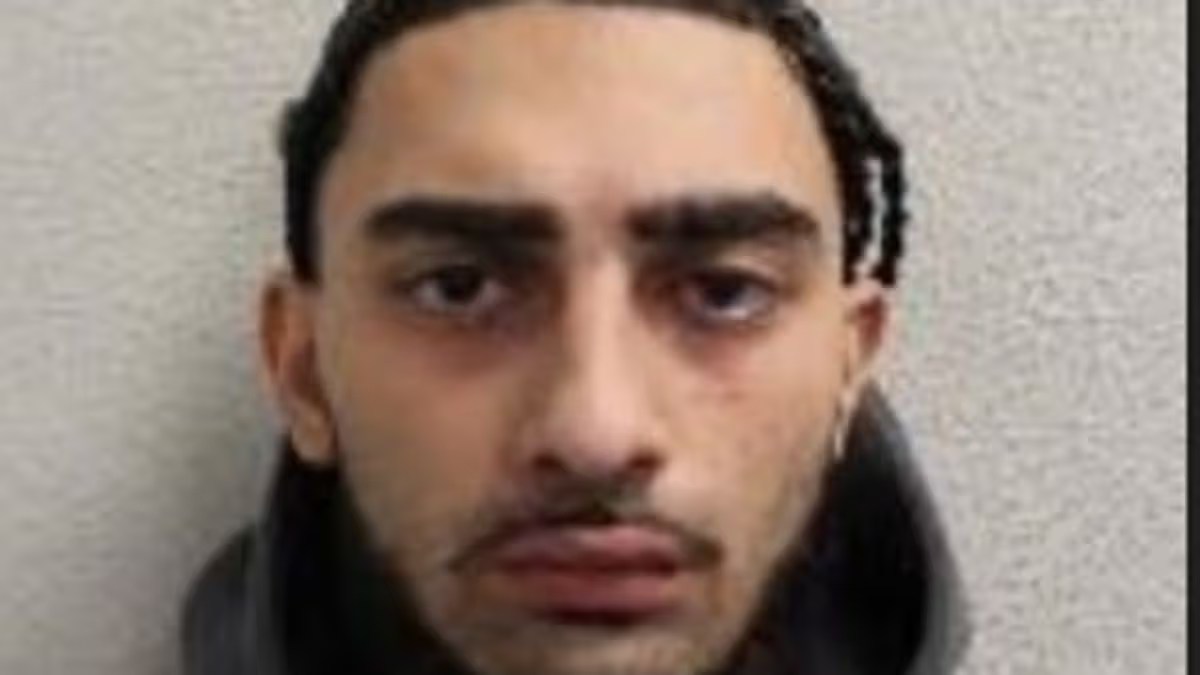
In August of 2025, a mass gathering of motorcycle enthusiasts in London, a scene typically associated with camaraderie and shared passion, was shattered by an act of brutal violence. Among the hundreds present, a 19-year-old man found himself the target of a sudden and terrifying attack. Without prior warning or obvious provocation, he was approached by 22-year-old Emad Al-Haj Shareef. The victim, initially oblivious to the danger, attempted to flee as Shareef, mounted on his motorcycle, issued threats. What ensued was a chaotic chase, captured in chilling detail by CCTV, culminating in Shareef discharging a firearm at close range. The bullet struck the teenager in the neck, where it remained lodged, leaving him gravely wounded as he stumbled and collapsed behind a parked car before staggering out of view.
Paragraph 2: The Immediate Aftermath & Investigation
The immediate aftermath was a scene of urgency and trauma. The injured teenager was transported to Hillingdon Hospital in West London, where staff alerted police to a gunshot victim at midnight. Meanwhile, the perpetrator fled the scene, initiating a rapid police investigation. The Metropolitan Police, combining eyewitness accounts from the large gathering with the stark visual evidence from CCTV, quickly identified Shareef as the assailant. His arrest followed within a day. The investigation expanded to include digital forensics, which uncovered a Snapchat video posted by Shareef himself, recording the earlier gathering at Piccadilly Circus, thereby definitively placing him at the scene.
Paragraph 3: The Evidence & Conviction
The case against Shareef was built on a compelling foundation of physical and forensic evidence. In a calculated attempt to evade justice, he had hidden the firearm used in the attack within a stolen vehicle. Police seized this vehicle, recovering not only the pistol and a magazine but also the jacket Shareef had worn during the shooting. This jacket became a critical piece of evidence, as forensic analysis revealed gunshot residue on its fabric, directly linking him to the act and dismantling any claim of innocence. This physical evidence, combined with the digital footprint and witness testimony, led to Shareef being found guilty of attempted murder at Kingston Crown Court in May 2026.
Paragraph 4: The Sentence & Official Response
On Monday, 13 May 2026, Emad Al-Haj Shareef was sentenced to 27 years in prison. The severity of the sentence reflected the gravity of the crime—a premeditated and executed attempt to kill in a public space filled with innocent bystanders. Detective Constable Paulina Rosol, who led the investigation, underscored the broader implications of the case. She stated that it starkly displayed “the consequences of gun violence, which can spill out onto our streets.” Her comments served as a sober reminder of the threat posed by firearms in communities. She also highlighted a determined police initiative, noting a 75% increase in firearms seized from London’s streets the previous year, and reaffirmed a commitment to target those who use violence to threaten community safety.
Paragraph 5: The Human Cost & Context
Beyond the legal proceedings and statistics lies a profound human cost. The victim, a 19-year-old whose life was abruptly endangered, faced not only a severe physical injury with a bullet embedded in his neck but also the lasting psychological trauma of a sudden, violent attack by a stranger. The incident transformed a community event into a landscape of fear, demonstrating how individual acts of violence can poison public spaces and shake the sense of security for all who witness or hear of them. The randomness of the targeting—the victim reported he did not know Shareef, though they were part of the same broader group—adds a layer of chilling arbitrariness to the violence.
Paragraph 6: Reflection on Violence & Community
This event serves as a stark microcosm of modern urban challenges: the intersection of social gatherings, reckless violence, and digital documentation. Shareef’s own recording of the event earlier in the day, later used as evidence against him, illustrates a troubling duality of technology. The final outcome—a lengthy prison sentence—provides a measure of justice and a clear societal condemnation of such acts. However, the footage of the chase and shooting, the image of the young victim being carried into the hospital, and the recovered weapon remain haunting reminders. They underscore the ongoing necessity for vigilant law enforcement, community cohesion against violence, and a collective recognition that safety on public streets is a fundamental right constantly requiring protection.