
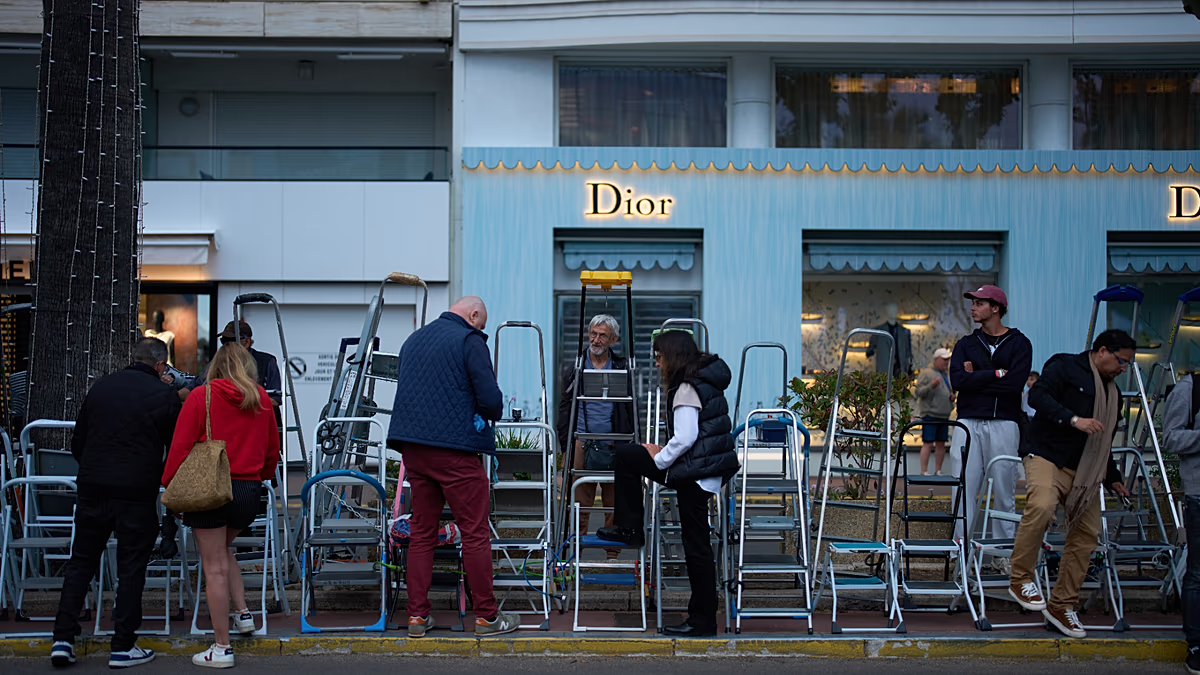


Every year, as spring settles on the French Riviera, a unique and devoted pilgrimage begins outside the iconic Palais des Festivals in Cannes. The world’s most celebrated film stars and directors are set to arrive, but the first luminaries to appear are the fans—true cinephiles whose passion compels them to arrive in the profound quiet before dawn. They come armed not with invitations, but with stepladders, folding chairs, and even lengths of chain, physically securing their tiny patches of pavement in a ritualistic claim to the best vantage points. This patient assembly under the fading stars is the unscripted opening act of the Cannes Film Festival, a testament to a love for cinema that is both visceral and unwavering.
The preparation for this day is akin to a military campaign, blending sheer endurance with meticulous strategy. Knowing they will face grueling waits stretching over twelve hours under the Mediterranean sun, these enthusiasts come prepared with coolers of food and water, sun hats, umbrellas for shade, and blankets for the early morning chill. They understand that the festival’s formidable security apparatus will transform the area into a labyrinth of barriers and checkpoints. Therefore, planning is paramount. Organisers open specific access gates on a strict, unyielding timetable, and public viewing areas are tightly prescribed. Veteran attendees spend weeks beforehand deciphering maps and debating which entrance offers the golden, albeit distant, glimpse of the fabled red carpet.
Yet, for these individuals, the protracted queue is far from a dreary ordeal; it is an integral and cherished part of the festival experience itself. A powerful sense of community blossoms on the curb. Strangers bond over shared cinematic loves, debating the merits of past Palme d’Or winners and speculating about the films in competition. They share sandwiches, sunscreen, and stories of festivals past. In these hours of shared anticipation, a temporary village forms, united by a common language of devotion to the art of film. The wait becomes a story to tell, a badge of honor that distinguishes them from the invited guests gliding past later.
Ultimately, the pinnacle of this long vigil is a fleeting, magical moment: the sight of a favorite actor or filmmaker ascending the red-carpeted stairs. From their designated pens, often separated by barricades and hundreds of meters, the fans’ view is distant. They peer through camera zooms or over the shoulders of security, hoping to catch the swirl of a gown or the flash of a familiar smile. It is not about autographs or selfies—those are impossible—but about participation in a shared global spectacle. That distant glimpse is a connection, a physical tether between the world of everyday movie lovers and the luminous galaxy of stars they admire.
This ritual, so peculiar on the surface, reveals a profound human truth about celebration and belonging. In a digital age where premieres can be live-streamed and celebrity images are omnipresent, these fans choose the authentic, tangible, and collective experience. They invest their time and comfort to be physically present at a historic moment in culture, to feel the collective gasp of a crowd, and to add their own voices to the applause that rolls toward the sea. Their patience is an active form of celebration, a way of saying that the communal act of witnessing matters.
Thus, as the first limousines approach and the air thrums with excitement, the festival truly begins with this chorus of eager voices from behind the barriers. The fans in their chained-together chairs are not merely spectators; they are the foundational energy, the unwavering heartbeat of Cannes. Their dawn-to-dusk vigil, a mix of logistical precision and simple hope, underscores that the magic of cinema extends far beyond the silver screen. It lives equally in the hearts of those willing to wait all day under the sun for just one brilliant, distant flash of its reflected light.