


In the wake of a challenging set of local election results for the UK’s ruling Labour Party, a narrative of accountability and geopolitical realignment is taking shape. Stephen Doughty, the Minister for Europe, has publicly stated that Prime Minister Keir Starmer has “accepted responsibility” for significant losses at the council level. This admission comes alongside pointed criticism aimed at the insurgent hard-right Reform UK party, which Doughty accused of duping voters with “false promises” rooted in nostalgic and misleading rhetoric about Brexit. The electoral shift was stark: Reform UK gained over 1,300 council seats across England, making notable inroads in Wales and Scotland, while Labour lost more than 1,100 seats and control of long-held councils. This outcome has cast a shadow over Starmer’s premiership, igniting internal party pressure and forcing a moment of public reckoning for the government.
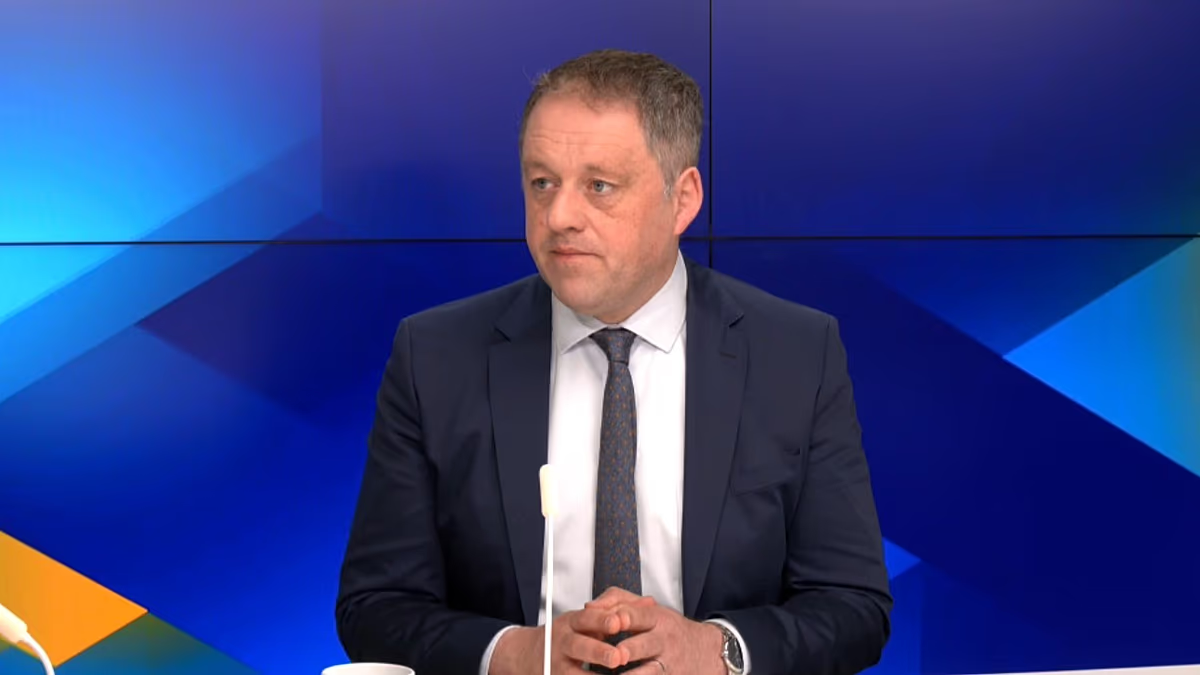
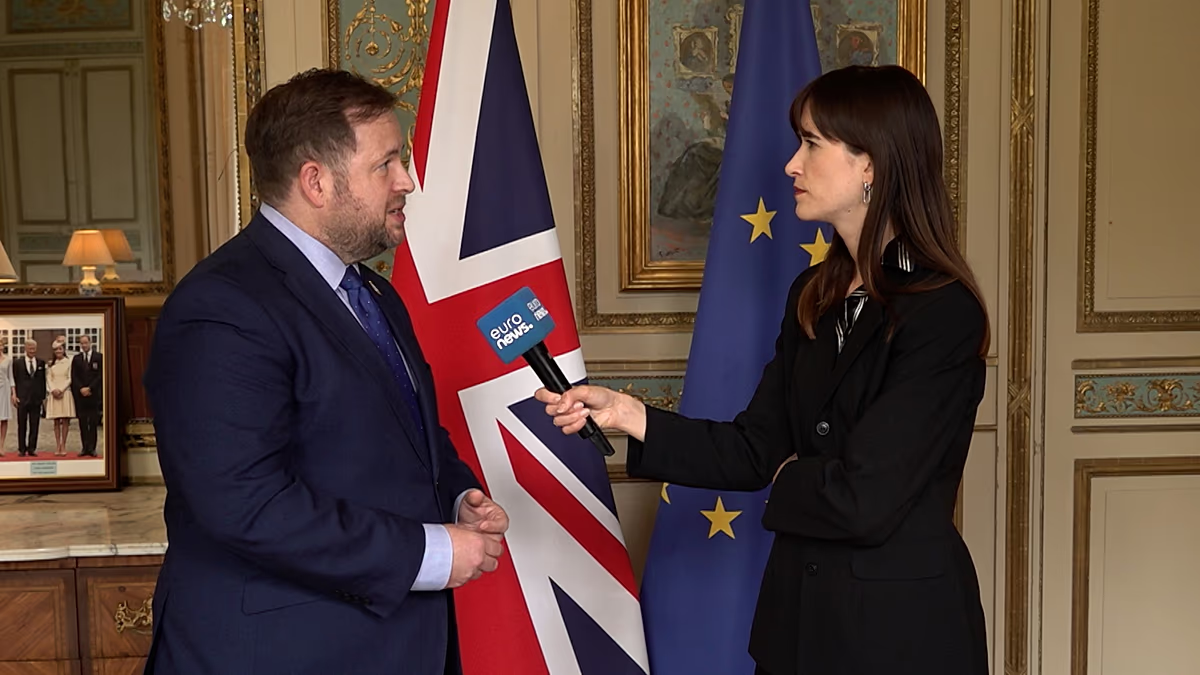
The core of Labour’s critique against Reform UK centers on a confrontation with the legacy of Brexit. Speaking on Euronews, Doughty directly challenged the claims championed by Reform’s figurehead, Nigel Farage. “He said Brexit would make us richer — it hasn’t. He said it would bring down migration. In fact, migration went up,” Doughty asserted, framing the current political struggle as a necessary correction to years of populist fantasy. For many voters, however, the present reality is defined not by political debates over the past, but by persistent economic strain. Doughty acknowledged this palpable frustration, noting that despite being in government, people “are still feeling the pinch in their pocket” due to global instability and high energy costs. This disconnect between Westminster politics and kitchen-table economics created a fertile ground for protest votes, which Reform UK successfully harvested.
In response to this electoral setback, Prime Minister Starmer has struck a defiant tone, vowing to prove the “doubters” wrong and confront the nation’s major challenges head-on. He has framed the political contest as “nothing less than a battle for the soul of our nation,” signaling his intent to reclaim a pragmatic, internationalist centre ground. Crucially, this mission involves a deliberate and strategic pivot toward closer cooperation with the European Union. While Starmer has unequivocally ruled out rejoining the EU, the single market, or the customs union, his government is actively pursuing deeper alignment with Brussels on foreign policy, security, and defence. Doughty defended this approach as essential for navigating “a very turbulent world,” with an eye toward the next UK-EU summit in the summer of 2026.
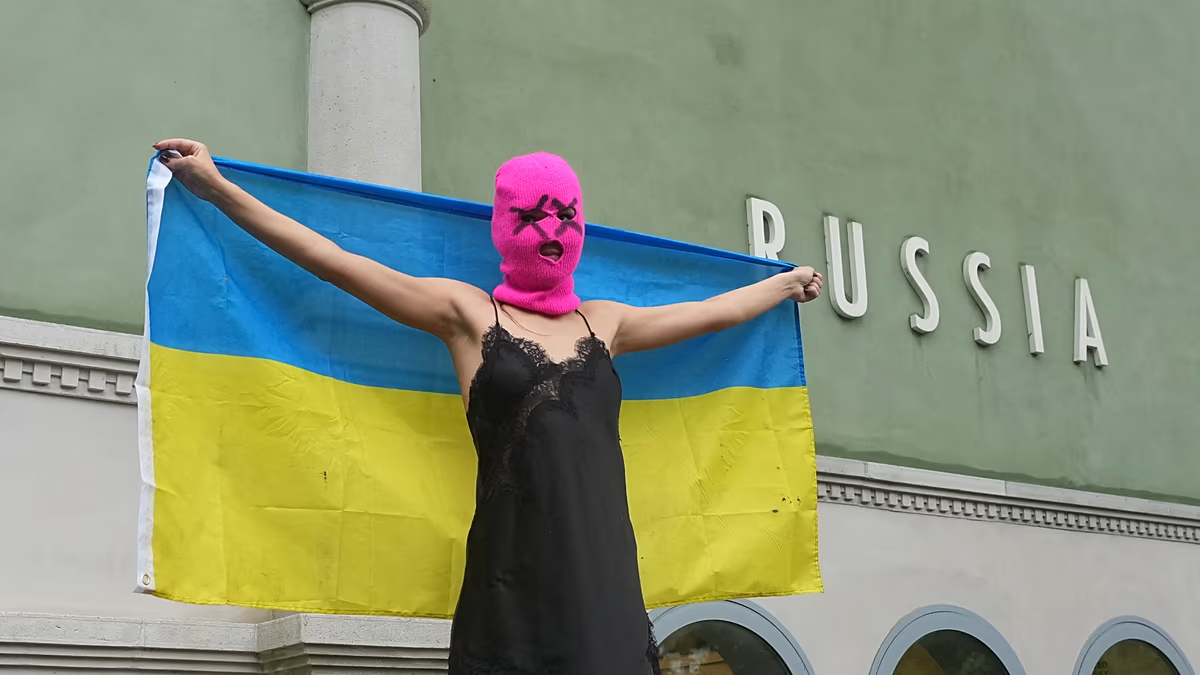
This re-engagement strategy is moving from theory to tangible action, most prominently in a united front against Russian aggression in Ukraine. The UK and EU recently confirmed talks regarding possible British support for the bloc’s substantial €90 billion loan package for Ukraine. Doughty was keen to reframe this potential contribution not as a “pay to play” fee for influence, but as a “strategic investment” in European and British security. This partnership extends beyond finances to moral and humanitarian leadership, as demonstrated by the UK’s commitment of £1.2 million to efforts aimed at locating and returning Ukrainian children abducted by Russian forces. Doughty described this as “the most heinous part” of the conflict, accusing Moscow of a deliberate campaign to erase Ukrainian identity.
Thus, the Starmer government finds itself navigating a complex dual mandate: addressing acute domestic discontent while reaffirming the UK’s role as a serious global actor anchored in European solidarity. The local election results serve as a stark reminder that the government’s internationalist vision must be coupled with demonstrable improvements in daily life at home. Doughty’s comments underscore that Labour recognizes it “has to be seen to be responding” to the economic anxieties that drove voters toward alternative parties. The path forward involves a delicate balancing act—delivering on a promised reset with Europe to bolster security and economic stability, while simultaneously proving that this foreign policy pragmatism translates into tangible benefits for British households.
Ultimately, the political moment captured here is one of transition and testing. The Brexit era’s stark divides are evolving into a more nuanced debate over the UK’s future relationship with Europe and the management of its own economy. Keir Starmer’s government, stung by voter disapproval but steadfast in its strategic course, is attempting to forge a post-Brexit identity that is both cooperative and sovereign, internationally engaged yet domestically focused. The success of this project depends on its ability to bridge the gap between the high stakes of global security, as seen in its support for Ukraine, and the pressing cost-of-living concerns that currently define the mood of the British electorate. The coming months will reveal whether this synthesis can rebuild the public’s trust and reshape the nation’s political soul.