

The recent escalation of geopolitical tensions in the Middle East, marked by military exchanges between the US, Israel, and Iran, sent immediate shockwaves through global energy markets. Unsurprisingly, this instability translated into a sharp surge in fuel prices, with consumers across Europe facing significantly higher costs at the petrol and diesel pumps. This direct “fuel supply shock,” as characterized by energy market analysts, underscores the vulnerability of liquid fuel markets to regional conflicts, where fears of disrupted supply routes and production quickly inflate prices. However, the story of household energy costs in Europe in the wake of this crisis reveals a more complex and divergent picture, highlighting a significant decoupling between the trajectories of electricity and natural gas for European consumers.
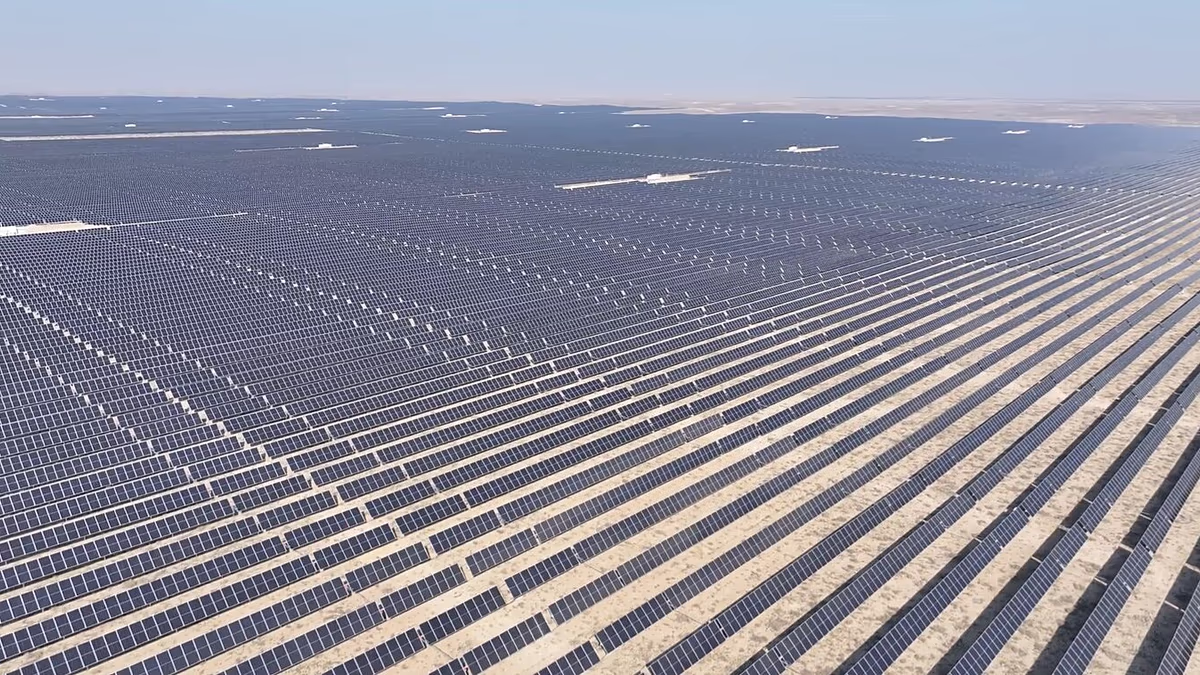
Contrary to the surge at the fuel station, average household electricity prices across European capitals actually declined by 3.1% between early February and early April 2026, according to the Household Energy Price Index (HEPI). This counterintuitive trend can be largely attributed to seasonal dynamics and regional energy mixes. As analyst Ioannis Korras notes, spring is a transitional period with moderate demand, falling between winter heating and summer cooling peaks, and often features increasing output from renewable sources like wind and solar. This allowed markets with robust renewable infrastructure, such as the Nordic countries and Iberia, to buffer themselves from the global fuel price spike. Notably, Tallinn, Copenhagen, Stockholm, and Madrid all saw price drops exceeding 10%, aided by this seasonal renewable bounty and, in some cases, direct government interventions like tax reductions that shielded households.
Nevertheless, not all European consumers benefited from this downward trend. The electricity price landscape was uneven, with significant increases in capitals like Rome (up 7.9%), Dublin, and Lisbon. This disparity largely hinges on a nation’s dependency on natural gas for power generation. In markets where gas-fired plants frequently set the wholesale electricity price—such as Italy, Ireland, and Greece—the geopolitical risk premium affecting global gas markets fed more directly into power bills. This creates a two-speed Europe: one where green transitions and seasonal advantages provide insulation, and another where lingering fossil-fuel dependence translates immediate geopolitical strife into higher household costs.
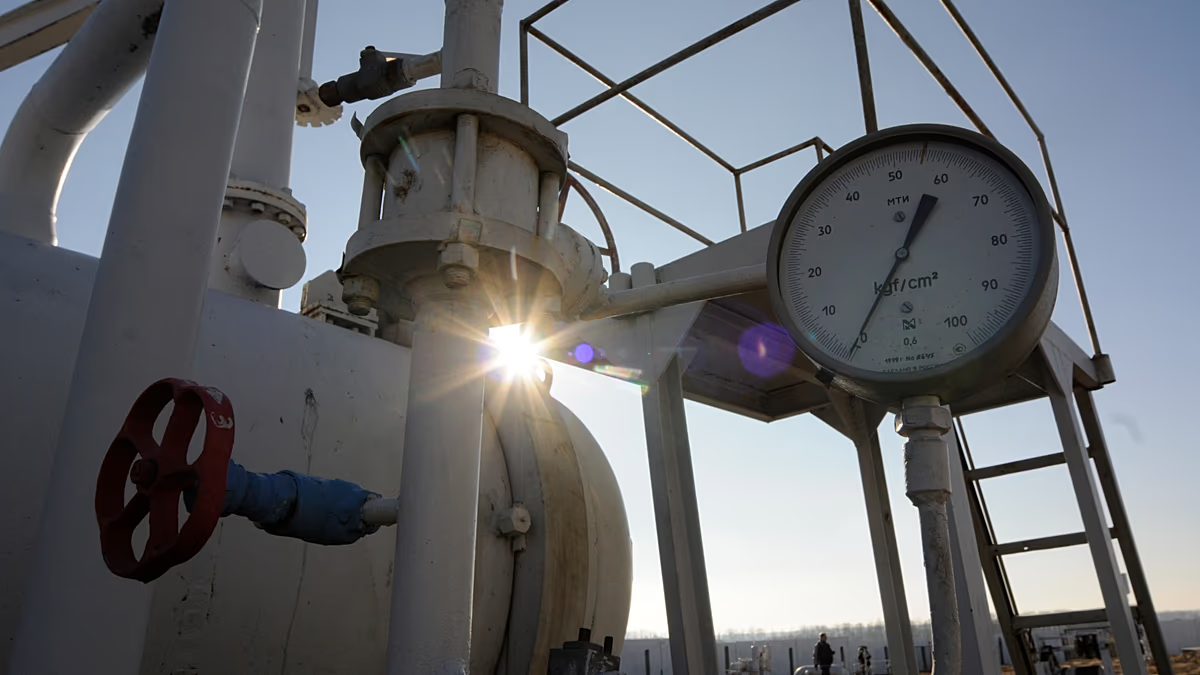
The path of natural gas prices tells a starkly different story, hewing much closer to the classic crisis narrative. Over the same period, average household gas prices in EU capitals rose sharply by 6.8%. Cities like Brussels, Berlin, and Athens experienced devastating increases of over 20%, with many other major capitals seeing double-digit growth. Gas, being a globally traded commodity with intricate supply chains, is far more directly sensitive to Middle Eastern tensions and broader supply constraints. The decoupling from electricity markets is thus “structural,” rooted in fundamental differences between locally influenced power grids and the interconnected global gas market. The few exceptions, such as price declines in Madrid and Ljubljana, again point to the powerful role of specific national policies and supply contracts in mitigating global trends.
This divergence has resulted in a dramatically varied energy cost burden for households across the continent. As of early April, the highest electricity prices in nominal terms were found in Bern, Brussels, Dublin, and Berlin, all hovering around 38-39 cents per kWh. At the other extreme, households in Kyiv, Budapest, and several Balkan capitals pay a fraction of that, often below 12 cents. The gap in gas prices is even more extreme, ranging from a mere 1.6 cents per kWh in Kyiv to a staggering 35.8 cents in Stockholm. This vast chasm is not merely a reflection of wholesale energy costs but is profoundly shaped by national policy choices on taxation, network charges, and subsidy schemes, which governments can and do adjust in response to crises.
In conclusion, the aftermath of the Middle East crisis reveals a European energy landscape at a crossroads. While drivers faced uniform pain from spiking fuel prices, homeowners experienced a split reality. Electricity markets, influenced by seasonal renewables and policy shields, demonstrated a resilient capacity to deflect global shocks for many. Gas markets, however, absorbed the full brunt of the geopolitical tremor. This episode underscores a critical lesson: accelerating the transition to diversified, indigenous renewable energy sources is not just an environmental imperative but a key strategy for geopolitical and economic resilience. As Europe navigates an unstable world, reducing its dependency on globally traded fossil fuels remains the most effective long-term buffer for protecting households from the volatile winds of international conflict.