



In a striking transformation of its energy landscape, Uzbekistan has rapidly integrated 5,600 megawatts of new solar and wind power into its national grid. This monumental leap forward is the result of strategic partnerships with global developers, signaling a profound shift in the nation’s priorities. The government, under President Shavkat Mirziyoyev, is aggressively channeling investment into renewable energy and modernizing its electricity infrastructure to power its future. This push has already yielded remarkable results: renewable sources now generate approximately 30% of the country’s electricity. With national electricity demand on a steady climb, the ambition is to raise that clean energy share to 54% by the end of this decade. As President Mirziyoyev highlighted, a staggering $35 billion in investment projects has already increased total electricity production by 1.5 times, reaching 87 billion kilowatt-hours. This expansion is not merely about generating more power; it is a calculated strategy to bolster national energy security, lessen a historical reliance on natural gas, and provide the reliable, abundant electricity needed to fuel broader industrial and economic growth.
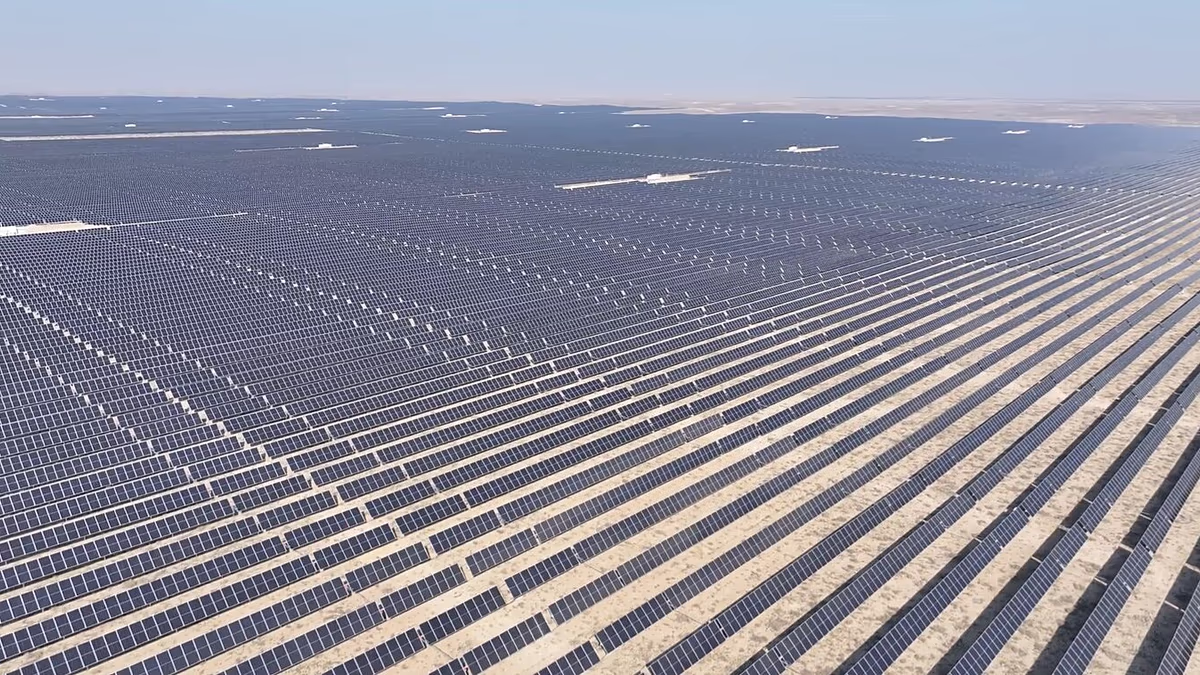
The physical manifestation of this green transition is visible across Uzbekistan’s regions, supported by a consortium of international financial institutions and private developers. Flagship projects are setting new benchmarks for the entire Central Asian region. A prime example is the massive solar power plant under construction in the historic city of Samarkand, backed by the Asian Development Bank (ADB). Upon completion, this single facility will boast a capacity of half a gigawatt, cementing its status as the largest solar plant in Central Asia. Kanokpan Lao-Araya, the ADB’s country director for Uzbekistan, notes the fundamental shift in approach, stating that while the country traditionally depended heavily on natural gas, it is now wholeheartedly embracing new technologies and methods of generation like wind and solar. Recognizing that a green grid requires more than just panels and turbines, the government is simultaneously investing in critical enabling technologies. This includes deploying energy storage systems to capture surplus renewable power and undertaking comprehensive grid modernization projects designed to enhance transmission capacity and ensure network stability amidst the variable nature of solar and wind energy.
Uzbekistan’s vision, however, extends far beyond simply greening its electricity mix. Authorities are weaving together the threads of energy transition and digital innovation, creating a symbiotic infrastructure for the 21st century. In a forward-thinking move, the nation is actively developing digital infrastructure directly linked to its burgeoning renewable sector, including artificial intelligence laboratories and large-scale data centres. International partners like Saudi Arabia’s ACWA Power are pivotal in this dual-track development. The company’s Chairman, Muhammad Abunayyan, announced the construction of a “100% green data centre” within the IT park in Tashkent, powered entirely by renewable energy and slated for completion very soon. This integration is a strategic masterstroke. Officials anticipate that the confluence of abundant, low-cost green energy and advanced digital infrastructure will create a powerful ecosystem capable of supporting future demand from energy-intensive fields like artificial intelligence and large-scale data processing, positioning Uzbekistan as a potential regional hub for high-tech industries.
The catalyst for this rapid progress has been a deliberate and successful drive to attract foreign investment, supported by significant economic reforms. Uzbekistan’s improving business climate is reflected in its notable jump of 14 places in the latest Index of Economic Freedom, where it entered the “moderately free” category for the first time. This improved standing has attracted a surge of foreign capital, particularly into the energy, infrastructure, and industrial sectors. Saudi Arabia has emerged as a particularly prominent partner, with ACWA Power standing as a testament to the depth of this relationship. Abunayyan reflected on a partnership that began in 2021 and now spans multiple sectors, affirming that serious investors find success in Uzbekistan, with his company’s total investment exceeding $26 billion. Alongside direct investment, institutions like the Asian Development Bank have played a crucial role in strengthening the foundational frameworks that attract private capital, helping the government develop robust Public-Private Partnership (PPP) models and financing mechanisms that de-risk projects and encourage private sector participation in large-scale infrastructure endeavors.
President Mirziyoyev’s administration has clearly linked the nation’s energy transformation to its broader economic and geopolitical aspirations. By systematically reducing dependence on natural gas for power generation, Uzbekistan can conserve more of this valuable resource for higher-value uses, such as chemical production or export, while insulating its economy from volatile fossil fuel prices. The construction of a resilient, modern grid is also a critical project for national development, aimed at eliminating past issues with reliability and ensuring that households and businesses—from burgeoning industrial zones to small enterprises—have consistent access to power. This reliable electricity is the bedrock upon which further industrialization and economic diversification can be built. The strategic partnerships with countries like Saudi Arabia also underscore a reorientation of Uzbekistan’s foreign economic policy, fostering deeper ties with key global players and integrating its economy into international networks of technology and finance.
Looking ahead, Uzbekistan’s journey presents a compelling case study in accelerated energy transition. The nation is not merely adding renewable capacity; it is undertaking a holistic overhaul of its power sector, integrating it with a forward-looking digital strategy, all within a reformed economic landscape designed to attract global capital. The planned rise to 54% renewable energy by 2030 is an ambitious target that will require sustaining the current pace of investment and project execution. If successful, Uzbekistan will have achieved a remarkable dual feat: securing its own energy independence and sustainable economic future, while simultaneously establishing itself as a renewable energy leader and an emerging digital contender in the heart of Central Asia. This transformation underscores a national consensus that the country’s prosperity is inextricably linked to a clean, modern, and intelligent energy foundation.