



The Prix Versailles, a distinguished architectural award established in 2015, has announced its highly anticipated list of the world’s most beautiful hotels for 2026. This annual recognition celebrates outstanding design across various categories, including hotels, restaurants, and transportation hubs. For the 2026 hotel selection, sixteen exceptional properties from around the globe were honored for their ability to blend enchantment and innovation while harmonizing perfectly with their local environments. According to Jérôme Gouadain, Secretary General of the Prix Versailles, these hotels exemplify design excellence, offering a form of hospitality that beautifies our surroundings and fulfills the deepest hopes of modern travelers. Each hotel, with its own distinct personality, provides a bright, optimistic outlook and fosters a meaningful dialogue within today’s culturally globalized world. Notably, seven of these sixteen architectural gems are located across Europe, offering a stunning array of destinations for future journeys.
Among these European standouts is Sir Prague in the Czech Republic, a hotel that masterfully bridges history and avant-garde design. Nestled near the Vltava River, it occupies a neo-renaissance building dating back to 1884. While preserving original features like stone façades and timber parquet floors, the interiors pay homage to Czech Cubism through curated vintage furniture. The Prix Versailles panel praised this “meticulous restoration” combined with a “splendid reinterpretation,” which has earned the hotel its esteemed design reputation. Meanwhile, in Übersee, Germany, the Chiemgauhof Lakeside Retreat offers a serene escape with panoramic views of Lake Chiemsee. Designed by Matteo Thun’s studio, its architecture draws inspiration from traditional Bavarian barns, creating a seamless blend of regional heritage and modern comfort. The use of natural materials, accented with subtle Japanese touches, promotes a life in harmony with nature, making it a sanctuary of understated elegance.
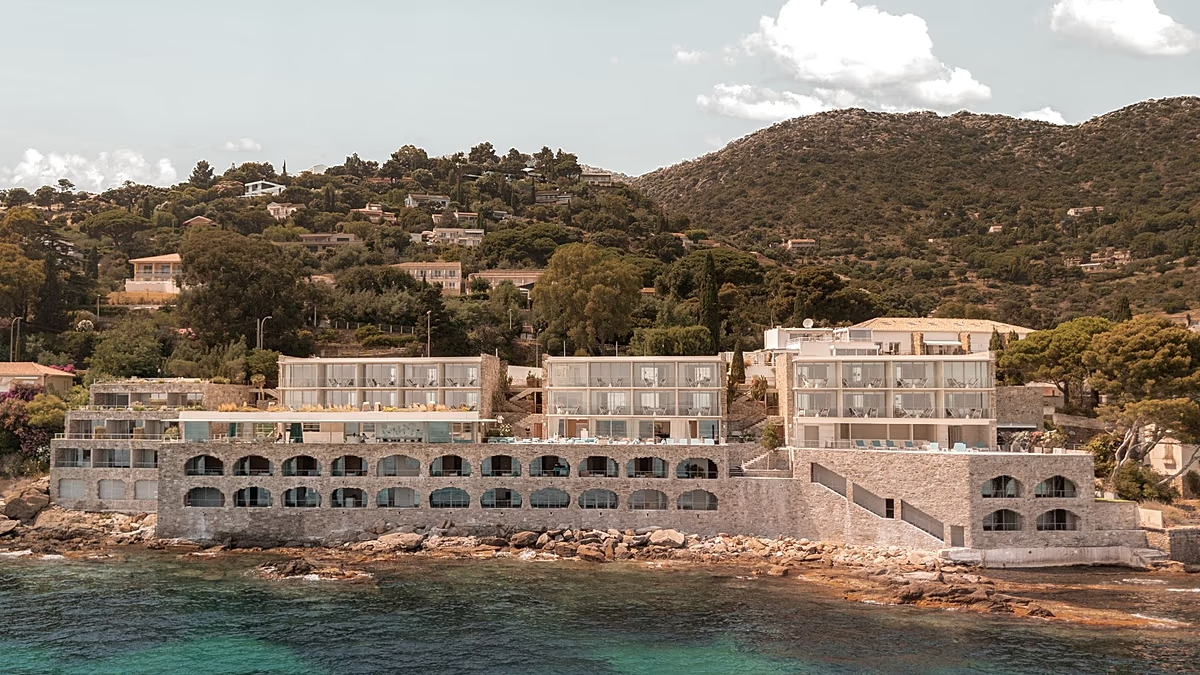
France contributes two remarkable properties to the list. In Paris, La Fondation, located in the 17th arrondissement and designed by PCA-Stream, is hailed as a role model for quiet luxury. This “arty cocoon” skillfully contrasts the building’s original layout and materials with abundant natural elements, featuring green walls, terraces, and hanging gardens. The panel anticipates that this Parisian mystery, which expertly anticipates every need of a five-star experience, will not remain a secret for long. On the French Riviera, the seaside resort Les Roches in Le Lavandou evokes the romantic impression of a 1930s ship floating on the water. Beyond its striking architecture, the hotel doubles as a private museum, adorned with artworks from contemporary creatives, enriching the guest experience with a deep sense of cultural immersion and playful elegance.
Journeying further south, Villa Dubrovnik in Croatia stands as a testament to mid-century modernism reimagined for today. Housed in a protected heritage building originally designed by acclaimed architect Mladen Frka in 1961, the interiors have been thoughtfully redesigned by Studio Arthur Casas. The new spaces utilize a palette of local materials—limestone, stucco, cotto, and oak—to create a soothing, natural aesthetic that complements the stunning Adriatic setting. In Rome, one of the year’s most notable openings, the Orient Express La Minerva, occupies a 17th-century palazzo. Architect Hugo Toro drew inspiration from the legendary railway lines for the décor, crafting an atmosphere that the Prix Versailles describes as “the epitome of timeless, understated luxury.” This property invites guests into a narrative of grand travel and history, right in the heart of the Eternal City.
The final European entry is the iconic Splendido, A Belmond Hotel, in Portofino, Italy. Following an extensive 18-month restoration, this property, set within a former 16th-century Benedictine monastery, has been magnificently revived. Martin Brudnizki Design Studio achieved what the panel calls “the perfect blend of Ligurian heritage and contemporary elegance.” A particularly exciting aspect of the renovation is the inaugural public opening of the historic Villa Beatrice, a former private summer residence inspired by Art Nouveau and Gothic Revival styles, adding yet another layer of history and charm for guests to explore.
In conclusion, the Prix Versailles 2026 list presents more than just a catalog of beautiful places to stay; it offers a vision for the future of travel and design. These seven European hotels demonstrate that true beauty in architecture arises from a deep respect for context—whether historical, cultural, or natural. They show that innovation is most powerful when it converses with tradition, and that luxury is increasingly defined by authenticity, sustainability, and a genuine sense of place. For the discerning traveler looking ahead to 2026, these destinations promise not merely a bed for the night, but an enriching experience that engages the senses, inspires the mind, and connects the spirit to the unique story of each remarkable location.