
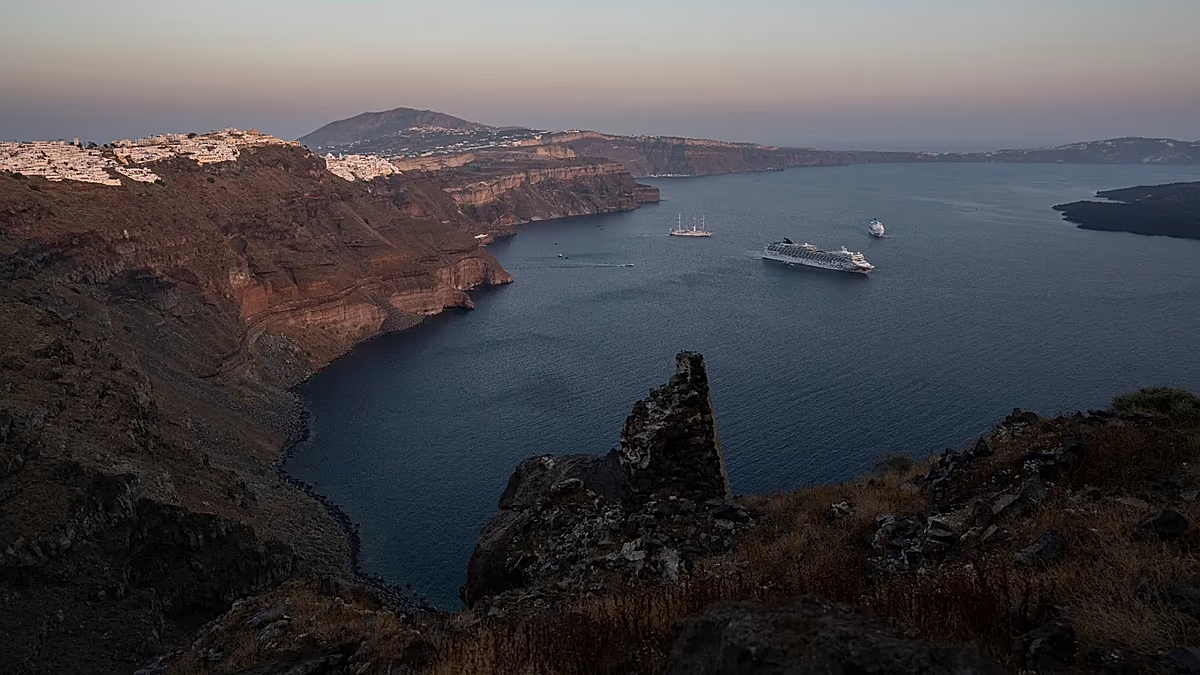


In a move that signals a pivotal shift in its approach to managing one of its most vital industries, Greece has unveiled a comprehensive new Special Spatial Framework for Tourism. Presented jointly by Tourism Minister Olga Kefalogianni and Environment and Energy Minister Stavros Papastavrou, this plan arrives at a critical juncture. The nation stands at a crossroads, celebrated globally as a premier destination yet increasingly strained by the pressures of its own success. With visitor numbers soaring year after year, the phenomenon of overtourism has become impossible to ignore, revealing urgent needs for infrastructure upgrades and environmental protection, particularly on its iconic but vulnerable islands. The central ambition of this framework is to transition from a model of sheer volume to one of valued quality, orchestrating a more intelligent and respectful development of tourism that safeguards the nation’s future.
The core philosophy of the new strategy is to bring order and foresight to an area that has often seen uncontrolled growth. It seeks to definitively end the era of unregulated expansion by establishing clear, enforceable rules governing where tourism investments can be made, how they should be built, and under what specific conditions they may operate. This represents a fundamental recalibration of priorities, shifting the focus from sheer economic gain to holistic sustainability. The government’s explicit aim is to alleviate the intense pressure on world-famous but saturated hotspots, redirecting attention and investment toward regions with untapped potential. This is not about stifling tourism, but about steering its immense power toward a more balanced and resilient development model that benefits the entire country.
To execute this vision with precision, Greece has undertaken an unprecedented geographical categorisation, dividing the country into five distinct regional types based on their unique characteristics and existing tourism burdens. First are the high-pressure areas, where strict new restrictions will be implemented to curb overtourism and prevent further degradation. Second are zones identified as having room for growth, where investments will be incentivized but must adhere to rigorous sustainability benchmarks. Third, special provisions are made for the diverse island destinations, acknowledging their unique logistical and ecological challenges. Fourth, the mainland will see a push to strengthen alternative and niche forms of tourism, such as cultural, gastronomic, and adventure travel. Finally, special status areas will receive enhanced protections to preserve sensitive and irreplaceable ecosystems from any disruptive development.
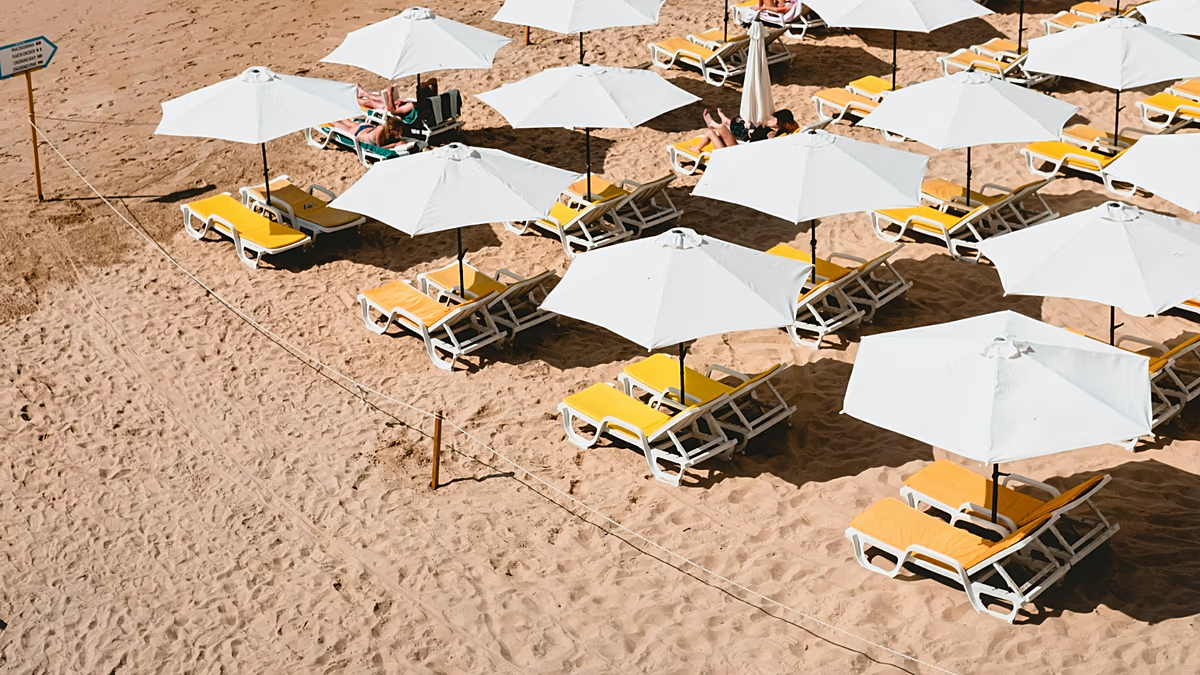
Among the framework’s most concrete and impactful interventions are specific caps on tourism infrastructure and strengthened environmental guardrails. A landmark provision sets a maximum allowable number of tourist beds on islands, a limit determined by the specific carrying capacity and size of each locale, preventing the kind of overcrowding that overwhelms local communities and resources. Equally significant is a robust reinforcement of coastal protection, mandating full preservation of the first 25 meters from the shoreline. Within this critical buffer zone, construction will be universally prohibited, with exceptions made only for projects serving a clear public interest, thereby defending Greece’s famous beaches from further encroachment and ensuring access for all.
This forward-looking plan is deeply rooted in a mandate to protect Greece’s priceless heritage, recognizing that its long-term appeal depends on the preservation of its identity. The framework extends its protective measures to the National System of Protected Areas, ensuring that natural treasures remain undisturbed. It also includes deliberate strategies to promote and revitalize traditional and abandoned settlements, turning them into living parts of the cultural landscape rather than relics of the past. Furthermore, particular emphasis is placed on safeguarding archaeological sites, monuments, and historical locations, ensuring that the footfall of tourism never comes at the cost of damaging the very history and culture that visitors come to experience.
In essence, Greece’s new Special Spatial Framework for Tourism is a bold declaration of intent for the 21st century. It moves beyond simply managing tourists to thoughtfully managing the entire ecosystem of the tourism industry. The ultimate goal, as emphasized during the plan’s presentation, is to cultivate a tourism model that acts as a responsible steward. This model must wisely harness the nation’s spectacular natural beauty and profound cultural resources not as commodities to be depleted, but as legacies to be nurtured. By intertwining quality, sustainability, and regional specificity, Greece is striving to ensure that its tourism sector drives a prosperous and sustainable development, securing the well-being of its environment, its communities, and its visitors for generations to come.