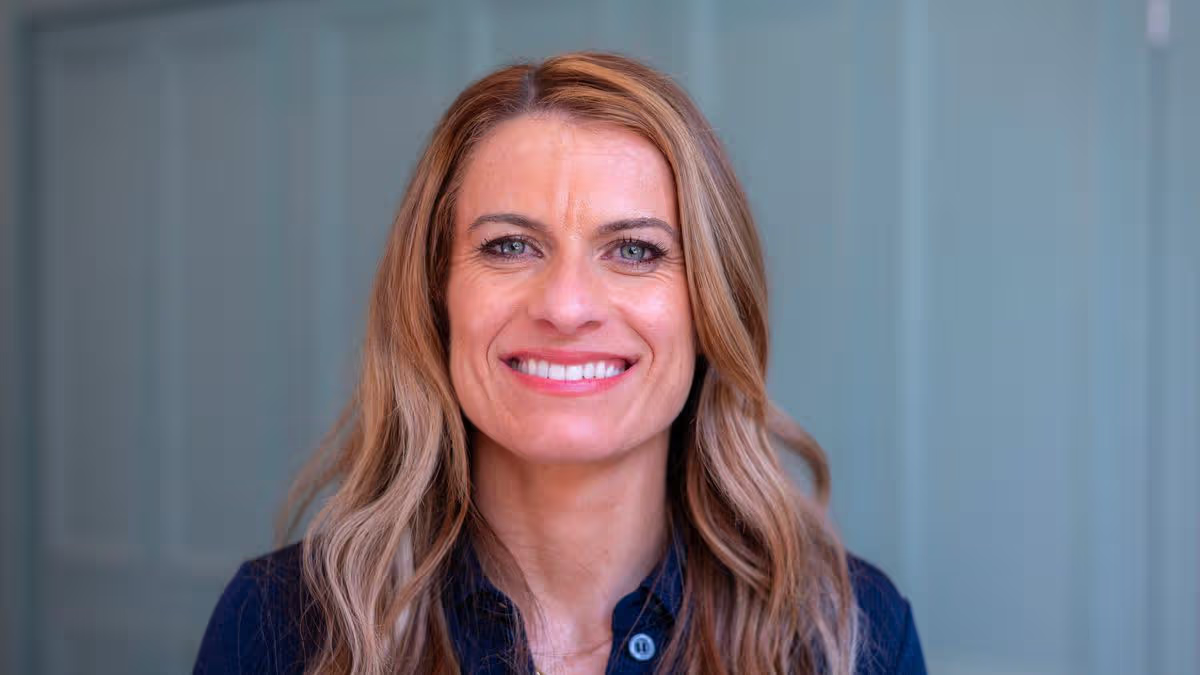
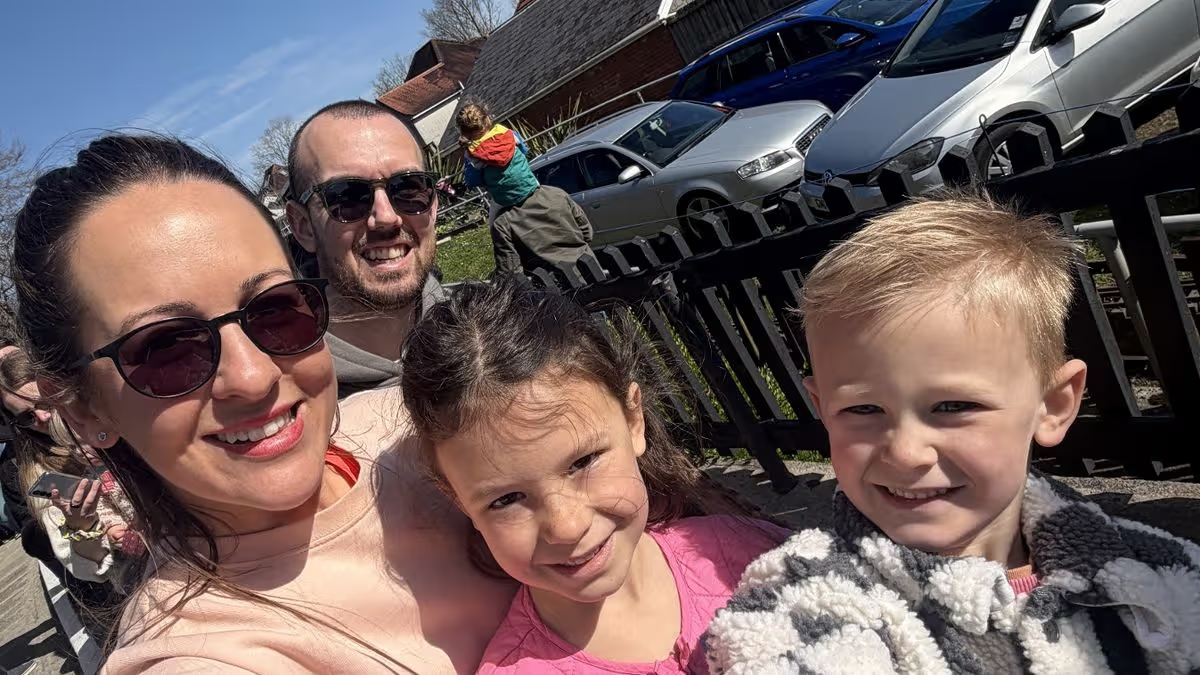



Charlotte Webborn, a 33-year-old maths teacher from Swansea, spent eight years dedicated to her classroom before reaching a breaking point. The career she had invested in had gradually drained her, not just of energy, but of the very presence she wanted to have in her own life. A long daily commute, combined with endless hours of marking and lesson planning that spilled into her evenings, left her perpetually exhausted. The most painful sacrifice, however, was time with her two young children. She describes leaving home by 7am, often missing breakfasts and school drop-offs, leaving those precious morning routines to her husband. The relentless pace meant that by the time she returned home, she had “nothing left” for her own family. This foundational conflict—giving her all to other people’s children at the expense of her own—became the central tension of her life.
Compounding this personal strain was a profound shift in the nature of the job itself. Charlotte observed that student behaviour, particularly following the Covid-19 pandemic, had significantly deteriorated, leading to constant low-level disruption in her lessons. Her role morphed from educator to full-time behaviour manager, spending more time firefighting over basic issues like toilet breaks than actually teaching maths. This daily struggle, coupled with what she describes as an ever-increasing burden of bureaucracy, inspections, and scrutiny, stripped the joy and purpose from her work. She felt micromanaged and distrusted, even in her planning time, and lamented that teaching was no longer about teaching. The cumulative effect was a state of complete burnout, where she would walk through her front door utterly drained, only to open her laptop again, stealing yet more hours from her family.
This unsustainable reality culminated in a decisive moment in January of last year. Recognising that she could no longer continue on that path, Charlotte resolved to make a radical change for the sake of her well-being and her family. She knew she wanted to continue teaching—the core passion for her subject remained—but she desperately needed a structure that allowed for a life outside of it. The traditional classroom model, with its inflexible hours and immense external pressures, had proven incompatible with the life she wished to lead. Her decision was driven by a desire to reclaim her energy, her time, and her presence at home before her children’s formative years slipped away.
Fortunately, Charlotte discovered a solution that aligned with her needs: Minerva Virtual Academy, an online private school for secondary-aged pupils. Beginning her role there in 2025, the shift to fully remote teaching was transformative. Suddenly, her day could include a gym class before her children woke, sharing breakfast with them, and walking them to school, all before logging on to teach at 9am. The gruelling commute vanished, and the boundaries between her professional and personal life became healthy and clear. The part of the job she loved—actual teaching—took centre stage again, freed from the overwhelming behavioural and administrative burdens of the physical classroom.
This new chapter has fundamentally improved Charlotte’s quality of life. She reports having energy, experiencing significantly less stress, and, most importantly, being a present and patient mother. Her husband notes the positive change has impacted their entire household. Charlotte now states unequivocally that she would never return to a traditional classroom, having found a balance she once thought impossible. Her personal story reflects a broader, alarming trend within the UK education sector. Her new employer’s research, alongside surveys from organisations like Education Support and the National Education Union, paints a stark picture of a profession in crisis, with overwhelming majorities of teachers reporting unmanageable workloads, poor mental health, and a severe lack of work-life balance.
Charlotte Webborn’s journey from burnout to balance is therefore more than a personal success story; it is a microcosm of a systemic issue. While her move to online teaching provided a personal remedy, her experience underscores the urgent need to re-examine the structures, demands, and support systems within traditional schooling. Her story poses a critical question: if a dedicated and experienced teacher is driven out of the classroom to find professional fulfilment and a healthy personal life, what does that say about the environment we have created for educators? Ensuring that passionate teachers can thrive without having to sacrifice their own wellbeing and families is not just an individual concern, but a necessary condition for the health of the entire education system.