



Here is a humanized summary of the oil discovery announcement, structured into six paragraphs.
In a significant development for the nation’s economy, Iraq has announced the discovery of a major new oil field in its southern Najaf province, near the border with Saudi Arabia. Announced by the Oil Ministry in early May 2026, this find is being hailed as one of the most important in the country’s energy sector in recent memory. The initial estimates are staggering, suggesting that a single exploration patch within this vast area holds more than 8.8 billion barrels of crude oil. This discovery arrives at a critical time, offering a potential boost to Iraq’s long-term economic stability and energy ambitions.
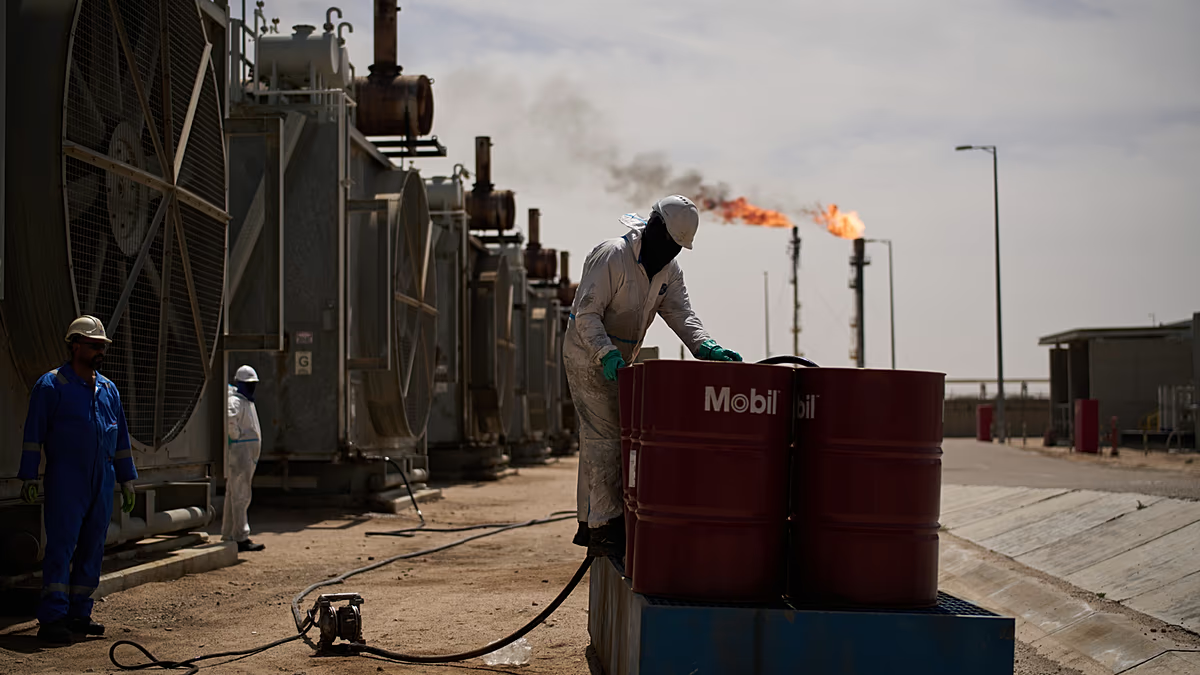
The newly discovered field, known as the Qurnain block, spans an enormous 8,773 square kilometers in southwestern Iraq. It lies roughly 180 kilometers from the capital, Baghdad, in a geologically promising region along the Saudi frontier. The rights to develop this area were secured in October 2024, and recent drilling at a well named Shams-11 has already yielded promising results. Tests confirmed the presence of high-quality light crude oil, with an initial flow rate of over 3,200 barrels per day, signaling a highly productive reservoir.
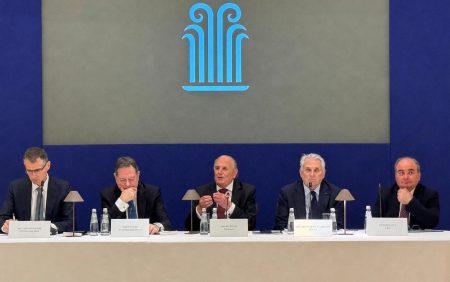
Progress on this venture was highlighted during a high-level meeting between Iraq’s Oil Minister, Hayan Abdul Ghani, and representatives from the Chinese company ZhenHua Oil. ZhenHua, acting through its subsidiary Qurnain Petroleum Limited, is the lead operator on the project, managing exploratory drilling and seismic surveys in partnership with the Iraqi government. The discussions focused on employing advanced drilling techniques to enhance efficiency and speed up the field’s development, underscoring a shared commitment to transforming this discovery into a producing asset swiftly.
This project represents a substantial Chinese investment in Iraq’s future. ZhenHua Oil has presented an aggressive investment plan to fast-track the field’s development and bring it to commercial production at the earliest opportunity. The collaboration is part of a broader strategic effort by Baghdad to bolster its oil infrastructure. Notably, Iraq is pushing forward with plans to construct a major new pipeline from the southern hub of Basra to Haditha in the west, near the Syrian border. This pipeline is designed to carry up to 2.5 million barrels per day, aiming to create a new, more flexible export route for the country’s crude.
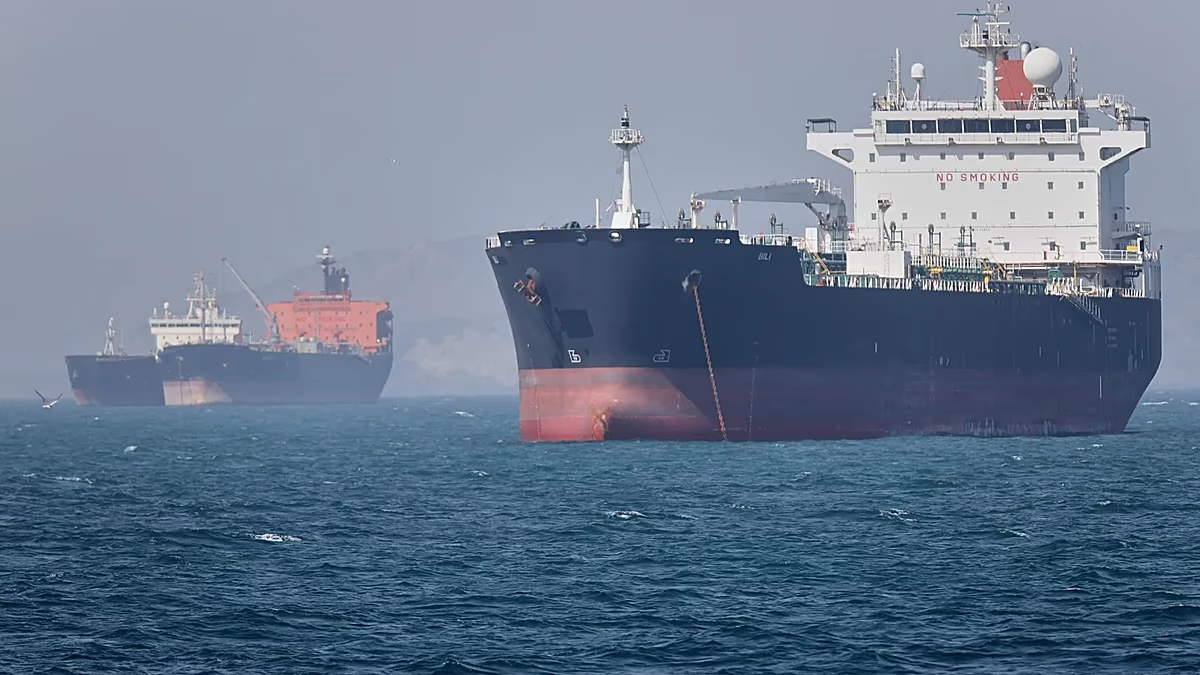
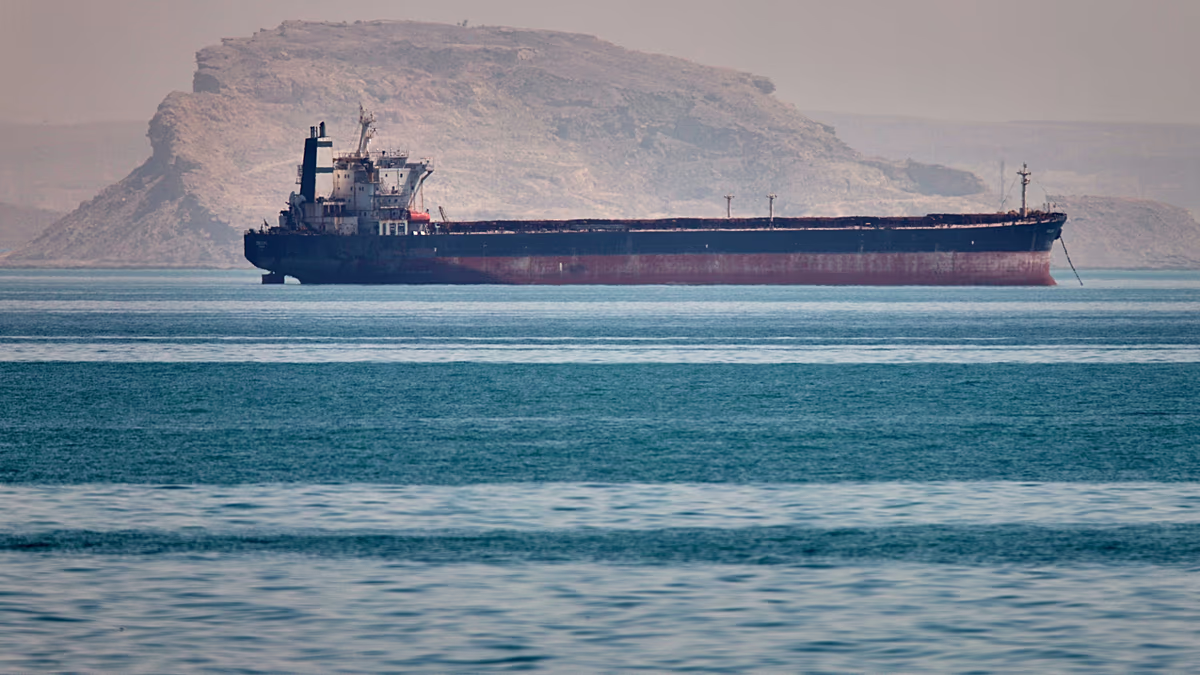
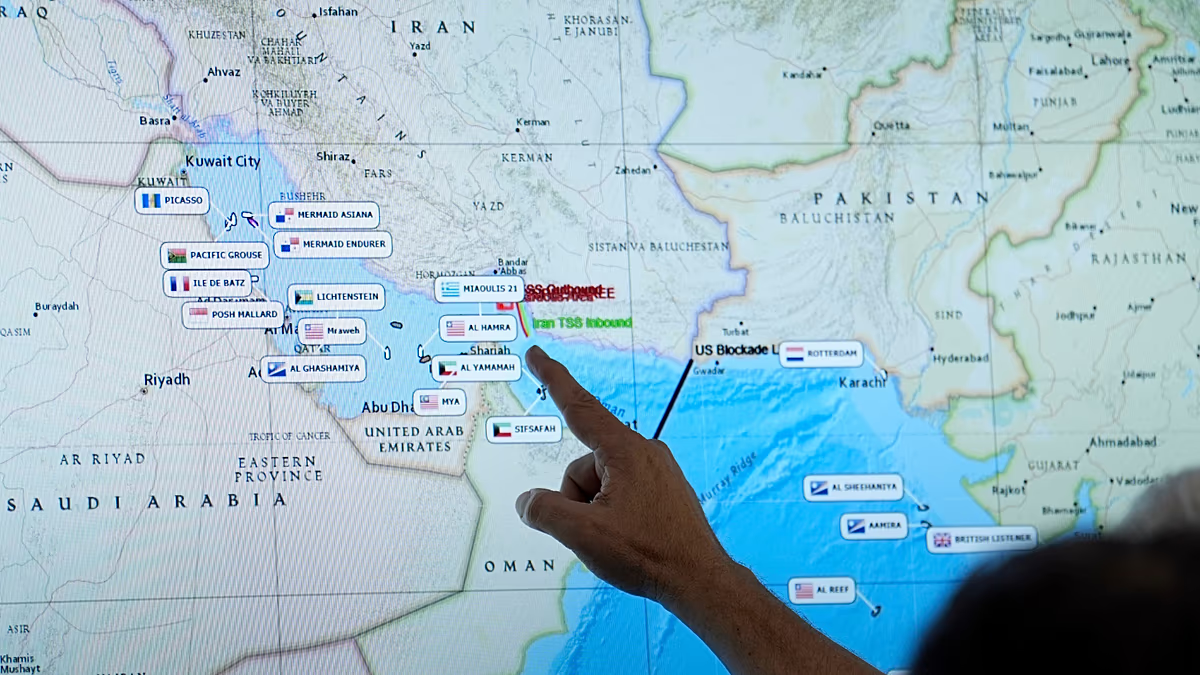
The urgency behind these developments is sharpened by the severe challenges currently facing Iraqi oil exports. Regional instability, including the ongoing conflict in the Middle East and disruptions in the critical Strait of Hormuz, has placed enormous pressure on the nation’s ability to ship its oil to global markets. As the third-largest producer in OPEC, Iraq’s pre-crisis output was approximately 4.5 million barrels per day, with about 90% of its exports funneling through the vulnerable Strait of Hormuz. The recent toll is stark: official data shows that in March, exports plummeted to 18.6 million barrels for the entire month, generating just $1.96 billion in revenue—a dramatic 71% drop from the previous month.
Therefore, the discovery in Najaf is more than just a geological success; it is a beacon of hope for Iraq’s economic resilience. By partnering with international firms like ZhenHua and pursuing ambitious infrastructure projects like the Basra-Haditha pipeline, Iraq is working to diversify its export options and reduce its dependency on unstable maritime chokepoints. This new oil field, with its vast potential, could provide a crucial foundation for recovery and growth, helping to secure the country’s position as a leading global energy supplier for decades to come despite the turbulent regional landscape.