

Navigating Uncharted Waters: The Strain on UK Drivers Amidst Global Tensions
For UK motorists, the road since late February has been a costly and uncertain one, marked by a relentless climb in fuel prices that has strained household budgets. The trigger for this financial pressure stems not from domestic policies, but from distant geopolitical fault lines, primarily the conflict involving Iran, Israel, and the United States. As hostilities escalated, global oil markets reacted with predictable volatility, sending shockwaves directly to British forecourts. The situation has created a pervasive sense of frustration for drivers, who watch the numbers on the pump tick upward with each fill-up, transforming a routine errand into a significant financial consideration. This isn’t merely a statistic; it’s a tangible reduction in disposable income for millions, affecting commutes, family trips, and the logistics of small businesses that rely on road transport.
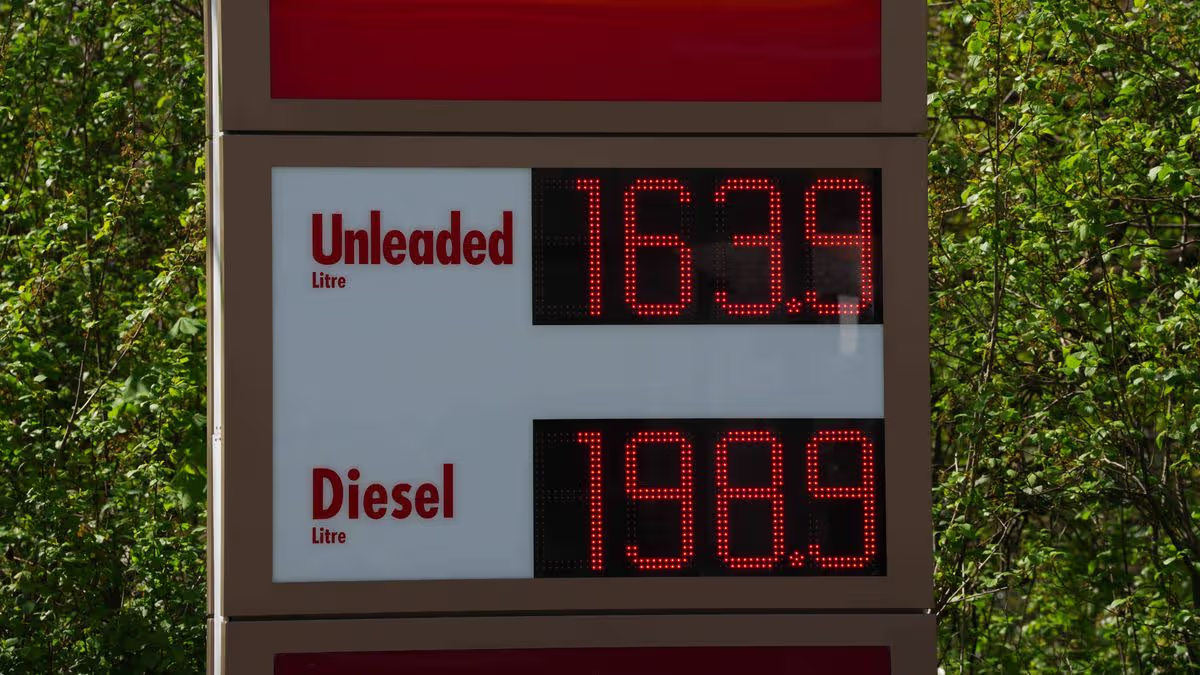
The current price landscape, as highlighted by the RAC in a recent alert, presents a mixed but largely bleak picture. Petrol has climbed to an average of 157.6 pence per litre, hovering just a penny below its peak since the Iran conflict began and reaching its highest point since late April. Diesel offers a sliver of relief, with prices slowly receding to around 188p per litre, yet still remains punishingly high. The critical advice from motoring organisations cuts through the complexity: drivers are urged to shop around diligently and use price-comparison tools. This simple act of vigilance is one of the few immediate actions individuals can take to mitigate the impact, a small but vital form of self-defense in an unpredictable market. The message is clear—in the absence of control over global events, consumer awareness and choice are paramount.
At the heart of this crisis lies the Strait of Hormuz, a narrow maritime chokepoint controlled by Iran, through which roughly one-fifth of the world’s seaborne oil passes. For over two months, the flow through this artery has been severely disrupted, becoming a focal point of military posturing and exchanges of fire. These incidents, even when described by figures like former US President Donald Trump as a “love tap,” have profound consequences. Each flare-up threatens to destabilize the fragile ceasefire and sends jitters through the oil markets, demonstrating how localized military actions can ripple out to dictate the cost of living for families thousands of miles away. The strait is more than a geographic feature; it is a barometer for global energy security and a direct link to the price paid at the pump in Britain.
The human and economic narrative is underscored by stark numbers. Since the end of February, the cost of petrol has surged by over 20 pence per litre, while diesel has experienced an even more dramatic hike of around 50 pence. On some forecourts, prices have breached the psychologically daunting £2-per-litre mark. This isn’t abstract economics; it represents hundreds of pounds added to annual driving costs for the average person. For taxi drivers, delivery fleets, and farmers, these increases are existential threats to their livelihoods, forcing tough decisions about operations, pricing, and viability. The ripple effect extends beyond the forecourt, potentially contributing to broader inflationary pressures as transportation costs for goods and services rise.
The diplomatic and military situation remains fraught and volatile. Accusations fly between Washington and Tehran, with the US justifying strikes as defensive responses to attacks on its ships and Iran condemning them as violations of sovereignty and ceasefire agreements. This tense standoff, mediated through third parties like Pakistan, leaves the oil market in a state of suspended anxiety. The promise of a sustained lower oil price—the only genuine remedy for lower pump prices—remains elusive, hostage to the next headline from the Gulf. As RAC policy officer Rod Dennis noted, only a lasting period of stability and lower oil prices, measured in weeks not days, can promise real relief. Until then, the market remains on a knife-edge.
Ultimately, the experience of the UK driver over recent months is a potent lesson in global interdependence. The cost of filling a car tank is woven into a complex web of international diplomacy, military strategy, and global commodity markets. While individuals can exercise prudence by comparing prices, a lasting solution lies far beyond the forecourt. It depends on de-escalation and stability in a region thousands of miles away, and on the development of more resilient and diverse energy strategies at home. For now, motorists continue their journey, watching both the road ahead and the distant horizons of geopolitics, hoping for calmer waters ahead.