



Paragraph 1: The Stalemate
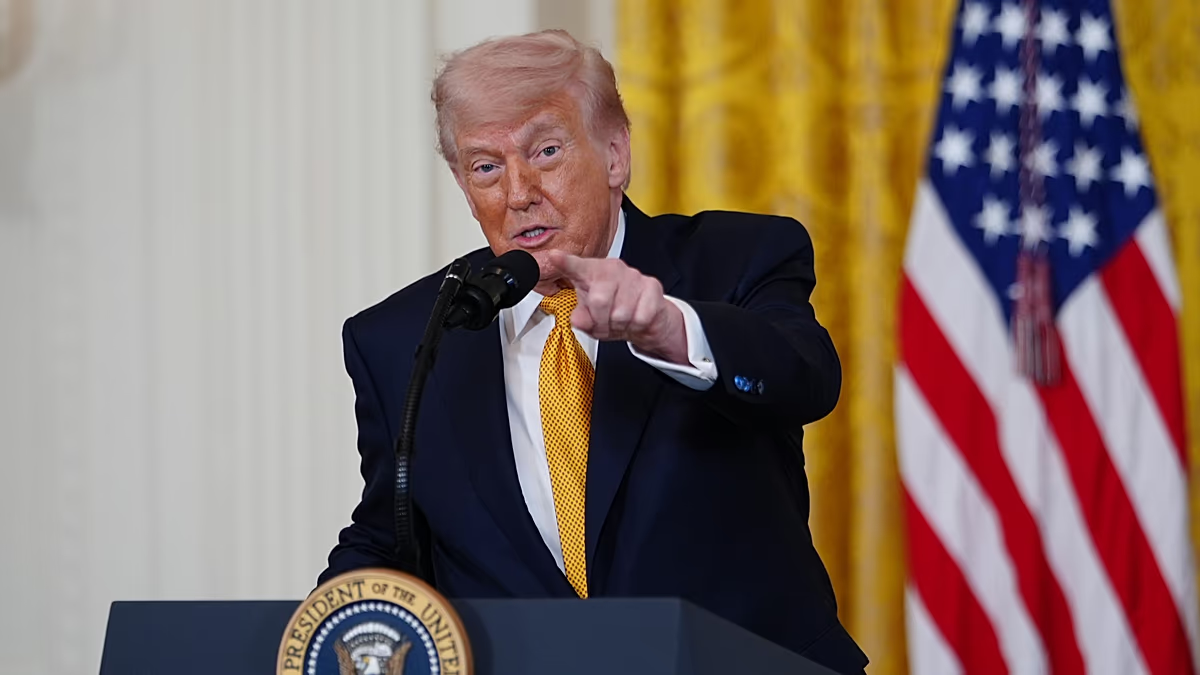
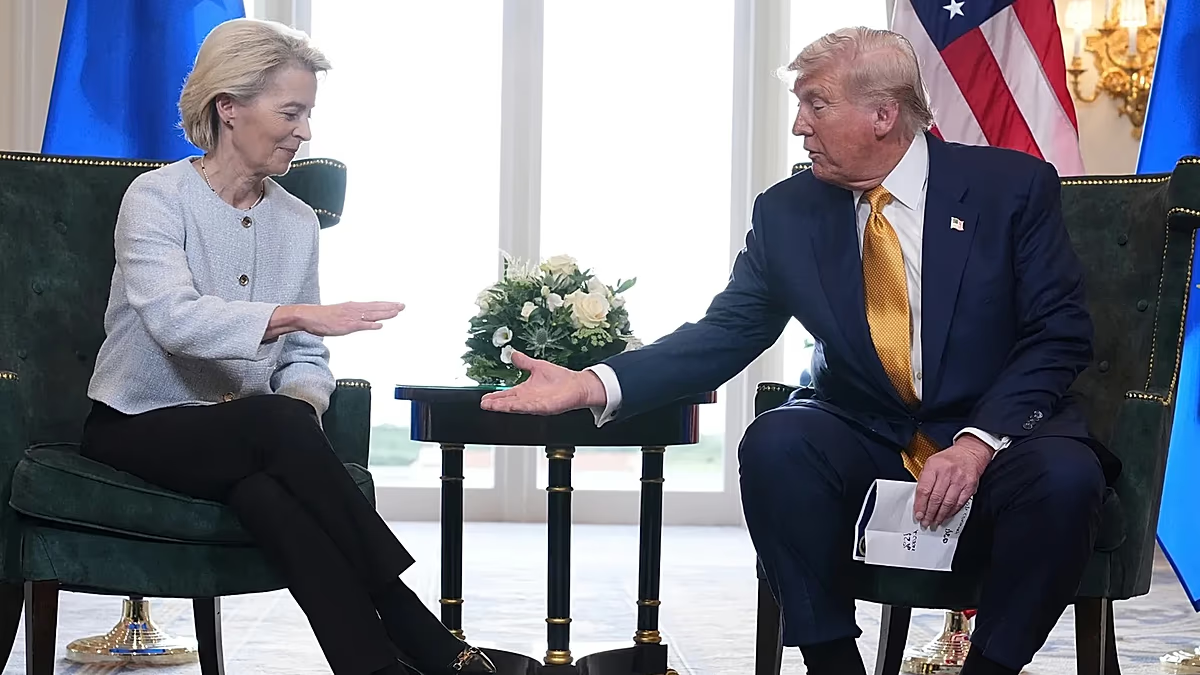
The simmering tensions between the European Union and the United States over a critical trade agreement have reached a new crescendo. Following a deal signed in Turnberry last year between European Commission President Ursula von der Leyen and US President Donald Trump, Washington is now demanding swift action. Trump has set a hard deadline of July 4th for the EU to fully implement the agreement, specifically by eliminating all tariffs on US goods as promised. Failure to comply, he warns, will result in new punitive tariffs on European products entering the American market. This ultimatum places immense pressure on Brussels, where the complex machinery of EU legislation is grinding through the necessary steps to enact the deal. However, negotiations between the European Parliament and the member states, the two co-legislators required to pass the law, recently stalled, leaving the process in a precarious deadlock just weeks before the deadline.
Paragraph 2: A Defence of Democratic Process
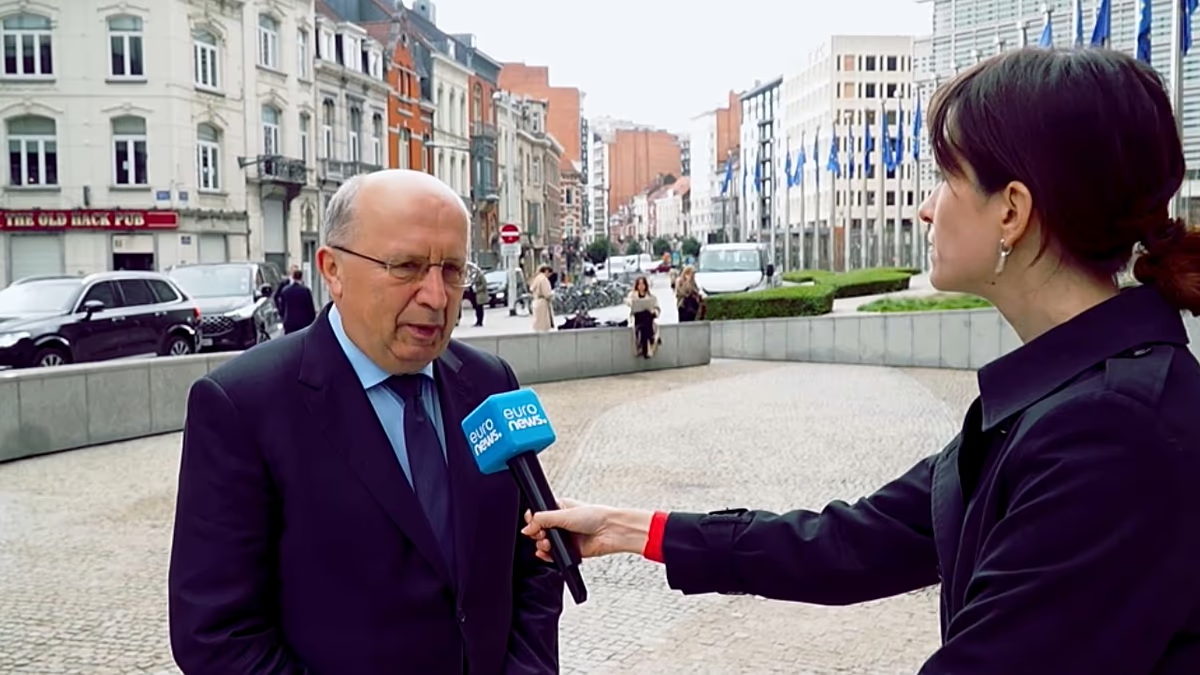
In response to this American pressure, a key European figure has issued a firm and principled rebuttal. Bernd Lange, a German Member of the European Parliament (MEP) who is leading the negotiations on the EU side, defended the bloc’s legislative process as non-negotiable. He explicitly rejected the notion that European lawmaking could be accelerated by threats from abroad. “European legislation cannot be dictated by threatening social media posts from Washington,” Lange stated. “Our democratic procedures are not negotiable. Even in stormy weather, we stay firmly on course.” This statement underscores a fundamental clash not just over trade terms, but over values: the EU’s commitment to its own meticulous, multi-layered democratic process versus the US administration’s preference for rapid, unilateral action. Lange’s position highlights that for Europe, the legitimacy and integrity of its internal procedures are as important as the external agreement itself.
Paragraph 3: The Core of the Dispute
The impasse in Brussels is not merely about speed; it is rooted in substantive concerns about the agreement’s fairness and durability. Since the deal was struck, the European Parliament has been its most vocal critic within the EU. Many lawmakers view the terms as lopsided, arguing that Europe shoulders a disproportionate burden: committing to major investments in the US and reducing its tariffs to zero, while facing a continued 15% cap on tariffs for its own exports to America. Furthermore, Trump’s subsequent threats—such as proposing 25% tariffs on EU cars, well above the agreed cap—have exacerbated European distrust. Consequently, Parliament suspended the deal earlier this year and has since insisted on attaching robust safeguards as conditions for its final approval. These safeguards are the very items that caused the recent negotiations with member states to fail, creating the current legislative stalemate.
Paragraph 4: Parliament’s Safeguards: A “Safety Net” for Europe
The safeguards demanded by the Parliament are designed to create a protective “European safety net.” They include a “sunset clause” that would automatically terminate the agreement in March 2028, preventing it from becoming a permanent, unbalanced fixture. More critically, they establish a suspension mechanism. This would allow the EU to quickly pause the deal if Washington issues new economic threats, if US imports cause significant market distortions in Europe, or if the US engages in what the EU perceives as economic coercion. Lange argues these measures are essential not only because of political volatility but also due to growing legal uncertainty in the US. He pointed to recent American court rulings that have blocked or declared certain tariffs illegal, demonstrating that the US trade policy landscape itself is unstable. “All of this underlines how important a stable European safety net is,” Lange said, emphasizing that the EU must retain the autonomy to act swiftly if the American position shifts unexpectedly.
Paragraph 5: The Principle of Sovereign Capability
Lange’s argument extends beyond immediate negotiation tactics to a broader principle of European sovereignty and strategic foresight. He contends that accepting the deal without these conditional safeguards would be “reckless and short-sighted.” For Europe, the goal is not simply to placate Washington with hurried compliance. It is to uphold the agreement while simultaneously preserving the EU’s capacity to defend its own economic interests and legal order. “Europe must remain capable of acting,” he asserted. This reflects a deep-seated concern that the EU could be locked into a long-term framework that might later be exploited or undermined by unpredictable US policy changes, leaving Europe vulnerable without a recourse mechanism. The safeguards are, therefore, seen as instruments of responsible governance, ensuring that European integration and autonomy are not sacrificed for the sake of transatlantic diplomacy.
Paragraph 6: The Path Forward
Despite the firm stance and stalled talks, the process is not abandoned. Lange confirmed that a new round of negotiations between EU lawmakers and member states is scheduled for May 19th. Both sides hope this session will break the deadlock and produce a compromise text that can be formally approved by the Parliament in June. This timeline is crucial, as it aims to meet Trump’s July 4th deadline, potentially averting the threatened wave of new tariffs. The coming weeks will test whether the EU’s institutions can reconcile their internal differences—balancing member states’ desire for stable trade relations with Parliament’s demand for protective clauses—under intense external pressure. The outcome will determine not only the fate of this specific trade deal but also demonstrate how the European Union navigates the delicate balance between honoring international agreements and steadfastly protecting its own democratic and legislative integrity.