



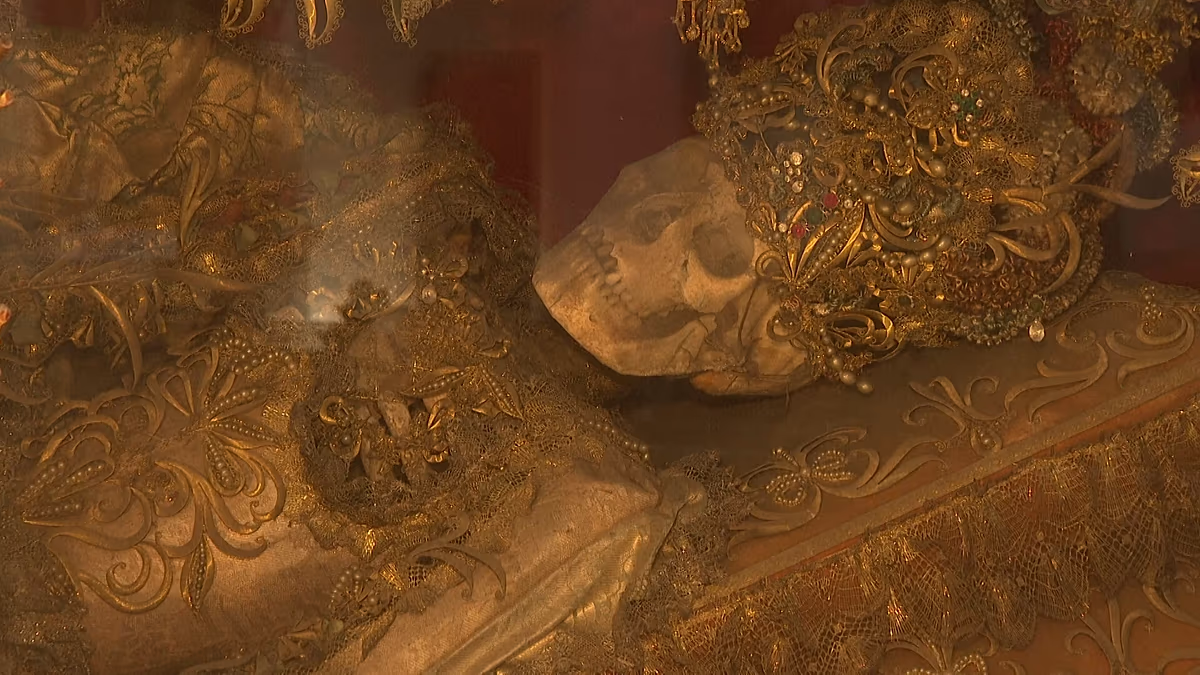
Nestled within a quiet monastery church in the serene landscapes of southern Germany, four extraordinary figures stand in silent, bejeweled splendor. Known as the “catacomb saints,” these are not mere statues but fully articulated human skeletons, each meticulously adorned with lavish trappings of silk, gold thread, and glittering precious stones. For centuries, they have held a place of honor upon their altars, their bony fingers clutching symbols of faith, their skulls crowned like royalty. They are a breathtaking and paradoxical sight—a vivid fusion of mortal remains and transcendent artistry, where the stark reality of death is deliberately cloaked in the most luxurious materials imaginable. Their silent presence immediately commands attention, evoking a profound sense of history and a deep, contemplative wonder about the hands that so carefully assembled them and the era that demanded such elaborate veneration.
These sacred relics were not originally from German soil. They were transported with great reverence from the ancient Christian catacombs beneath Rome during the 17th and 18th centuries, a time of great religious fervor and artistic excess known as the Baroque period. While their true identities were lost to time, they were collectively believed to be the remains of early Christian martyrs—men and women who died for their faith in the brutal persecutions of the Roman Empire. This attribution, though archaeologically uncertain, was spiritually potent. To a Church still reeling from the Protestant Reformation, these physical connections to a purer, heroic Christian past were invaluable. They served as tangible anchors for faith, powerful tools for inspiring both awe and piety. Their journey from the dark, dusty tunnels of Rome to the gleaming altars of Baroque Bavaria was thus a pilgrimage in reverse, transforming anonymous bones into named saints like Saint Valentinus and Saint Deodatus, and turning local churches into destinations for the devout.
The elaborate adornment of these skeletons is the key to understanding their purpose. The Baroque era was one of sensory overload in service to the divine; it was an age that believed in making the glory of God and the triumph of the saints visible, tactile, and overwhelming. Skilled artisans, often goldsmiths and embroiderers, spent countless hours weaving silk and silver thread into intricate patterns that draped the skeletal forms. They fashioned delicate crowns, ornate armor, and glass casings for the relics, inlaying them with agate, amethyst, and other gems. This was not a macabre act but a deeply theological one. The intention was to visualize a core Christian belief: the resurrection of the body and the eternal reward awaiting the faithful. The jewels symbolized the heavenly light awaiting the soul, while the silk and gold represented the imperishable, glorified body promised in the afterlife. The saints were presented not as decaying corpses, but as radiant, victorious beings already participating in celestial splendor.
Today, centuries removed from the intense religious climate that created them, the catacomb saints continue to captivate all who encounter them. They serve as a powerful bridge across time, but the nature of their impact has subtly shifted. For modern visitors, they are multifaceted attractions. Historians and art lovers marvel at them as exquisite time capsules of Baroque craftsmanship and religious ideology, studying the intricate needlework and goldsmith techniques that have survived in pristine condition. Others are drawn by a more anthropological curiosity, intrigued by the complex human relationship with death, sanctity, and material culture. The saints prompt deep questions about how societies memorialize their heroes and conceptualize the afterlife. Yet, for many, the initial reaction remains a visceral and personal one—a fascinating unease at the juxtaposition of familiar human bones with such opulent decoration. This unsettling quality is part of their enduring power, challenging contemporary sensibilities and sparking introspection about mortality, belief, and the stories we tell to make sense of both.
The journey from sacred relic to historical artifact and tourist curiosity raises poignant questions about legacy and memory. Once the focal point of intense local veneration and community identity, these saints now primarily exist in the public consciousness as remarkable, if somewhat eerie, works of art. Their silence, which once spoke of heavenly mysteries to pilgrims, now speaks to us of a lost worldview. They are reminders of a time when the spiritual and material worlds were intimately intertwined, when the bones of the dead could be openly celebrated as conduits to the divine. In our more secular and medically clinical age, their display can seem alien. Yet, by preserving them, the monastery does more than maintain a tourist site; it safeguards a unique dialogue between art and faith, between death and adornment, inviting us to understand the past on its own terms.
Ultimately, the catacomb saints of southern Germany are far more than bizarre curiosities. They are profound narrative objects, layered with meanings both intended and perceived. They tell a story of post-Reformation Catholicism’s confident, theatrical flourish, of a community seeking connection to its ancient roots, and of artisans who channeled their highest skills into a vision of holy triumph. Standing before them, one is confronted with the full spectrum of human endeavor—our fear of death, our longing for the eternal, and our relentless drive to create beauty as a response to both. They remind us that history is not just recorded in documents, but is often etched in bone and set in stone, gold, and gem, waiting in quiet churches to tell their complex, glittering, and unforgettable tale.